Meeting to focus on El Dorado Boulevard widening project

November 25th, 2017

A public input meeting regarding the El Dorado Boulevard Widening Project will be hosted by Houston City Councilman Dave Martin, the City of Houston Public Works and Engineering Department (PWE), and Harris County Precinct 2 Commissioner Jack Morman’s office Thursday, Nov. 30, from 6:30 to 8 p.m.

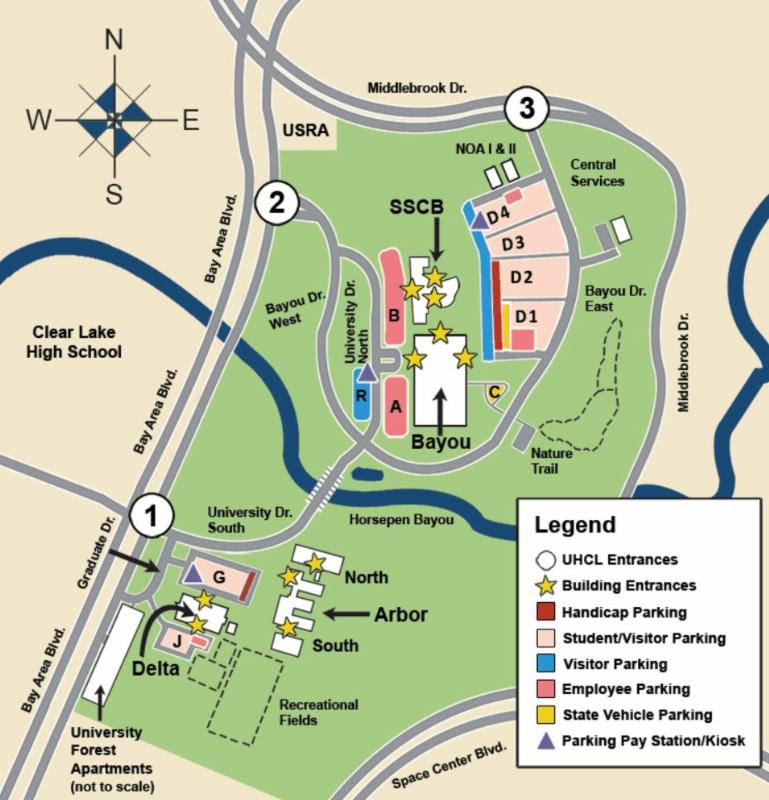
The meeting will be at the University of Houston – Clear Lake’s Bayou Building, in the Garden Room.

As development has increased in the area, Councilman Martin has received several concerns from residents about future traffic on the section of El Dorado Boulevard, south of Clear Lake City Boulevard to Horsepen Bayou, which is currently two lanes. In response to these concerns, Martin asked PWE to investigate and conduct traffic counts along this section of roadway.

After assessing the traffic counts, PWE determined El Dorado Boulevard is capable of accommodating current traffic. However, Martin believes the widening of El Dorado Boulevard is essential as the area continues to develop. By partnering with Commissioner Morman, the city and county are able to work together and develop three alignment options to improve current and future mobility in this area.

The goal of this meeting is offer residents the opportunity to provide input about these alignment options, as well as address any concerns or wishes for the project prior to finalizing the design.

There will be free parking for attendees in Lot R. Please see the map below for reference. For more information, contact the District E office at 832-393-3008 or via email at districte@houstontx.gov.

It’s Embarrassing

June 1st, 2016

GOS616By Michael W. Gos

Washington on the Brazos, Texas

Sometimes life can seem overwhelming.  We often feel completely burned out after long periods of intense work or during difficult times in our lives.  In response, we can start to feel sorry for ourselves and sometimes, in extreme cases, just shut down completely.  I know I do.  I’m sure it’s not much different in your line of work.

By the end of a semester, I am absolutely spent.  Unfortunately, in academia, in that last week or two of every semester there is a mad scramble to schedule meetings. This happens mostly to make up for the fact that the chairs of committees have failed to do anything all semester long and are afraid that maybe someone will notice.  Committees have to have some progress to report, and administrators have to rush to do things before the faculty disperses to locations around the world.  As a result, the last week of the semester is filled with giving finals, grading finals and attending up to four meetings a day.  I’m sorry for others who feel guilty about their lack of performance, but that does not constitute an emergency on my part.  In the last week of the semester, I do what I have to do in order to finish out my classes properly, but that’s all.  The meetings go on without me.  And all the while, I’m thinking “poor me.”

Sound familiar?

We were at Washington on the Brazos to learn more about the founding of Texas as a nation.  I was especially curious as to how Texas became so small when in 1836 it covered parts of what are now New Mexico, Colorado, Arkansas, Oklahoma, and Kansas and even stretched into Wyoming. (It turns out that reduction in size happened much later when Texas sacrificed its independence in order to join the U.S.)  I had been to the Alamo, to Goliad, Gonzales and San Jacinto.  I even walked part of the original El Camino Real, but I was still vague on the political part of the picture.  How did Texas get a Declaration of Independence and a Constitution written and ratified unanimously in just over two weeks?

Richard, our guide, told us the story in vivid detail.  While the constitutional convention may have lasted only 15 days, some of those days were pretty trying.  Independence Hall was then pretty much as we see it today—a small wooden structure originally designed to be a mercantile store.  It had cutouts for windows, but no glass—just a few raggedy muslin curtains that they hoped would keep the harsher elements out.  When the delegates began deliberations on March 1, 1836, it was a warm spring morning.  But by that afternoon, when they had agreed on and signed the Declaration of Independence, the temperature had plummeted and rain pelted the building.  But weather was just the beginning of the difficulties they faced. The tiny structure housed the 59 delegates morning till night, day after day in the heat and the cold.  Bathing was uncommon back then so I can only imagine the smell.

When they finally disbanded with the constitution complete and ratified 15 days later, Santa Anna’s army was less than 60 miles away.  Whatever peace the delegates had in their lives prior to that fortnight was now gone.  Having finished their work, their signatures on the Declaration made them all marked men.

When Santa Anna’s troops arrived a few days later, they found the town completely deserted.  Afraid for their lives by mere association with the events that took place there, every one of the town’s residents evacuated with the delegates.  Washington remained a ghost town until Santa Anna was defeated at San Jacinto.  For all they knew at the time, the revolution could have taken years to play out.  And what if they came up on the losing side?

I tried to imagine what their lives must have been like then—on the run, looking over their shoulders all the time, never being able to rest and relax.  Frankly, that’s not much of a life.  There also had to be some degree of guilt over the decisions they made.  Before they left, they had learned about the fall of the Alamo and the Runaway Scrape (the evacuation of the women and children of Gonzales and the burning of the town).  They were clearly aware of the consequences of their actions.  That had to weigh heavily on their shoulders.

Looking back we see them as heroes, as the men who gave us the lives and the Texas we have today.  But sometimes I wonder if we ever think about what they had to live through, the sacrifices they made, to make it happen.  At the end of a semester I can just say “no mas” to constant demands on my time and energies.  I can feel sorry for myself and go home, hide and “lick my wounds.”  These men could not go home.  They no longer had homes to go to.  And for them, it wasn’t just a matter of being emotionally and physically spent; it was dealing with the ever-present danger of death.  Rest?  That was out of the question.  They had to keep running and keep fighting.  For them, it never let up.

The average age of the men at the convention was just over 37 years.  We may think of that as young today, but these were, in their time, aging men who I’m sure would have rather been thinking about relaxing in retirement than running from the Mexican Army.  Yet they chose to make this sacrifice.

Why?

I have to admit, I don’t understand what causes a person to make the decision to give of himself that way.  Surely they were aware of the consequences of their actions.  And yet they chose to sacrifice the peace, safety and tranquility we all desire in order to accomplish a goal they believed in—one they might never live to see come to fruition.  I know I could never do that.  Maybe it’s selfishness, maybe cowardice, but it is not something I am, or ever would have been constitutionally able to do.

I guess that is why they are famous historical heroes and I’m just me.  I’ll probably continue to moan and whine about my workload, especially at the end of every semester, and I’ll continue to feel sorry myself.

And I’ll try not to think too often about the 59 men at Washington on the Brazos in the spring of 1836.  The comparison embarrasses me.

Capillaries consist of valves, que es urotrin which are flap-like frameworks that protect against backflow of blood.

One More Click

May 1st, 2016

LonghornsBy Michael W. Gos

Boerne, Texas

I was sitting in the park by the bronze longhorns when it “clicked.”

Boerne is a small Hill Country town that is sort of a miniature version of Fredericksburg.  Or perhaps Fred is Boerne on steroids.  Both are the shop-till-you-drop kind of places that can keep women occupied all day.

I can’t shop.  Like most humans, I was born with the shopping gene.  However, like most men, I decided early in life to sacrifice the shopping gene in exchange for a special gene that allows me to go to the bathroom alone and to find my way in and out quickly.  I think it was a good trade.

Normally, I would find a local watering hole and stay there until the women-folk were satisfied with their day’s work and then we would all go on to The Creek restaurant for dinner.  But this day was magnificent—a Hill Country Chamber of Commerce kind of day.  I decided to instead sit with my girlfriend Maggie Mae (remember her?  My Labrador retriever?) in the park and just watch people and maybe read a little.

Of course, whenever that happens, it isn’t long before my thoughts turn to philosophical questions.  The first topic that jumped into my head was happiness.  After all, isn’t that just about everyone’s No. 1 concern in life?  It certainly has been a hot topic among philosophers for at least the last two and half millennia; they all ask the same questions.  Strangely though, I don’t remember reading many answers.

That got me thinking.  Why would there still, after all these centuries, be such an eternal seeking for truth, happiness and the meaning of life if the answers really existed?  Surely after more than 2,500 years, someone would have stumbled on an answer.  If any of the great minds did so, they never bothered to write it down.  And if these guys couldn’t find the answers, why would I be so arrogant as to think I would be able to?  That left just one option: one can only assume the answers simply don’t exist.

When my thoughts lead to an unpleasant impasse like this, it always makes me uncomfortable and I usually try to escape by changing the subject—thinking about something else.  Sometimes I get up and walk around to get my mind off it.  But walking down Main Street with nothing but little shops selling things I have absolutely no interest in is not my idea of a good time either, so that would have been even more depressing.  Instead, Maggie and I decided to just close our eyes and take a nap.

I’m not sure how long it was; it felt like just seconds.  I heard a loud click, almost like a door latch snapping into place.  That woke me up.  I looked at Maggie and saw that she, with her super hearing, was still out cold.  I looked around at the few other people strolling through the park.  No one else seemed to be disturbed by the sound either.  I decided I must have been dreaming.

Studying philosophy is a lot like trying to open a safe that is guarding a treasure.  We want the treasure, in this case, the secret to happiness.  But in order to get it we have to go through a series of very exacting steps in precisely the right order (left 16, right 34, left 22). Each number we dial in appears to do nothing, a tiny click at best.  But in spite of that, we dial on because it is human nature to continue the quest for fulfillment.  Sometimes that quest requires a journey that takes years—maybe even the bulk of our lives.  Most of the time we get the numbers wrong and the safe remains solidly locked, holding the answers inside.  It is only when each of the tumblers is properly activated, when everything is aligned precisely in its proper place that the door opens. I think that is what happened that afternoon.  The click I heard was that last tumbler falling into place.  And then, I finally understood.

There were times in my life when I absolutely knew I was unhappy.  I even admitted it out loud to a friend once, an act I consider to be extremely crass and almost never let happen.  When I was unhappy, there was never a question about it.  I knew it and felt it deep in every fiber of my being, 24 hours a day.  But what about the rest of the time, times when I didn’t feel that way—when I wasn’t profoundly unhappy? Mostly, I felt nothing.  I had no awareness of being either happy or unhappy.

Sure, there were times of occasional ecstatic highs—times when I was in love, or had accomplished some goal I had struggled long and hard to gain.  But I was always abundantly aware that these were momentary blips on the happiness monitor.  They did not constitute true, long-term happiness—just a nice break from the dullness.  Most of the time, there was nothing at all, no awareness of happiness or the lack of it.  That is, until that afternoon in Boerne when I heard the click.

Sitting there on the bench napping, the last tumbler clicked into place and years of searching finally came to fruition.  The door to the safe opened.  I never would have guessed its contents.  The treasure I had searched for in vain for decades lay there before me.

Looking inside, I saw the whole picture.  I realized that, except for those times when I was clearly unhappy, I had really been happy all along—all those years.  I know what you’re thinking—what is this lunatic talking about?  Well, it’s really quite simple.  When I felt nothing one way or the other, it was because I was really happy.  The question is, why did I not realize that sooner.  Why did I understand it now?

There in the park in Boerne, I realized that happiness is like air…we are only aware of it in its absence.  It is around us all the time.  And like air, we take its presence for granted to the point where we no longer even notice it.

As Maggie came awake, opening first one eye, then the other, I couldn’t help but smile.  I thought about just how easy it is to determine if you are happy.  If you have to ask yourself if you are happy, you are.
And then a man, who for the first time knew that he was happy, joined the group for dinner at The Creek.

Generation Gaps

December 1st, 2015

The bank had become to historical society.

The bank had become to historical society.

By Michael W. Gos

Comfort, Texas

It all started over a few bottles of honey.

Many decades ago, an old man I know fell in love with Fain’s honey.  It wasn’t available in Baytown, where he lived, but it didn’t matter because he could always get it in Hill Country, and since he made several hunting trips there a year, he just packed in a supply every time he traveled.  It was a good system and it served him well for more than 40 years.

But as he grew older he found he no longer had the inclination, and eventually even the ability, for the many trips he took when he was younger.  His journeys there were fewer and further apart.  He still wanted to spend time at the beer lease with his sons and grandsons, if only just to sit around the fire and do the Wild Turkey thing.  And he still got his honey.

But then his 80s came and even those trips stopped.  It wasn’t long before his supply of Fain’s ran out.  It was then he thought of me.  He had heard I was headed to San Antonio for a conference and asked if I would be willing to make a run into Lowe’s Food Market in Comfort to get him ten or twelve bottles.  I told him I’d be happy to.

It had probably been ten years since my last trip to Comfort.  I remembered it as a quaint little village that had a wool exchange and an egg hatchery.  That was about it.  But it was big enough to have a weekly newspaper and some beautiful old buildings “downtown,” a couple of blocks off the highway.  One of those buildings housed Lowe’s Food Market, a Norman Rockwell image of a 1950s tiny town grocery store.

Ten years is not that long of a time and I have a pretty good memory, but when I drove down High Street where I thought I remembered Lowe’s being, I found I was wrong.  Thinking perhaps my memory had failed me, I drove down Main Street, then Broadway, the two streets in town that paralleled High Street.  Thinking my memory must really be failing, I even drove along 473 to look.  Still having no luck, I finally violated the sacred man code and stopped at a gas station to ask directions.

The attendant said, “It used to be back on High Street, but it burned down a couple of years ago.  Now there’s just a vacant lot there.”  He said he’d heard they were planning on rebuilding on Front Street, but as far as he knew, that hadn’t started yet.  Accepting that I had failed in my quest, I decided to move on.

While I think I do a good job of hiding it, the fact is I have a sentimental side.  I like to take out old memories now and then and look at them.  Since I had come this far, I figured I might as well take advantage of the opportunity.  I got back in the car and drove along High Street again to see if I could find the exact spot where the store used to sit.  As I looked more closely at the buildings in the old downtown section, I noticed that the library was pretty much as I remembered it; so were a couple of five and dime-type stores.  But almost everything else was different. The bank had become the historical society. There was a Beatles-themed bar, three small restaurants, a couple of gift shops and even an ice cream store.  None of these were at all familiar to me.

Disappointed, I decided to drive on toward Bandera where I hoped I’d be able to find the honey.  As I pulled on to Highway 27, I found myself obsessing over the changes I had encountered in Comfort.  It was no longer the town I remembered.  I suppose to someone seeing it for the first time, it would still be a sweet, quaint little Hill Country town.  But they didn’t know the Comfort that I knew—and it made me sad.

I understand we can’t live in yesterday; things change over time.  That’s just mankind marching on.  And I can also appreciate the fact that the mundane everyday tasks of our lives sometimes become easier as a result of these changes, but it seems to me our quality of life suffers as a result.  As I turned onto FM 173, I remember thinking, “I’m not sure all this change is worth the price.”

My God!  I was so shook up by that thought that I pulled over to the side of the road to try to calm myself and think this through.  Decades ago I heard those exact words come out of my father’s mouth.  His general view of life was that the whole world was going to hell in a hand basket.  Of course, at the time I just laughed it off.  Only the old see the world that way.  As a teenager, I thought the world was great just as it was, and the few changes that were happening, I saw as improvements.  To a teenage boy, my father might as well have been a space alien.  His views were as completely incomprehensible to me, as I’m sure mine were to him.  Back then we called it the Generation Gap.  But this day, as I drove away from Comfort, I was struck by the realization that somewhere over the years, I had become my father.

As time goes on I am beginning to suspect that we are all really more similar than we are different.  As I look back on it now, I realize I didn’t become my father at that moment in Comfort; I suspect I have always been him.  I just didn’t know it.  The idea we had way back then about a generation gap came from a mistake in the way we viewed each other.  Quite simply, we had been comparing apples to oranges.

Every year Beloit College puts out its “Mindset List” for college faculty.  It is a list of the experiences and worldviews of incoming college freshmen that is designed to help faculty understand the critters they are about to encounter.  According to the list, for members of the 2015 freshman class, the Daily Show with Jon Stewart has always been the only news program that really “gets it right,” and when they see wire-rimmed glasses, they think Harry Potter, not John Lennon—or John Denver. The list goes on.

Obviously, the world seen by these students is radically different from the one I live in.  I’m sure these young people see the world as it is today and think it has always been this way.  They may see problems, but if they do, they view them as obstacles that were created by previous generations and view any changes that take place as improvements.  In essence, they see the world exactly as I saw it at their age.

In the late ‘60s, I was a boy of 17 looking at my father, a man of 48.  Back then, I had a Fender guitar—he only saw a (expletive) guitar that constantly needed to be turned down.  I loved my top 40 music.  He heard only noise.  Today, I hear a car driving down the road booming and vibrating and think, “turn down that (expletive) radio.”  Truth is, it is probably an MP3 player.  I wonder—what if, as that teenage boy, I could have met my father when he was 17?  I suspect we would have been very similar in our worldviews.

Now, several years later, I still haven’t returned to Comfort to see the new Lowe’s Market building.  I doubt if it can be as cool as the old one.  But then, that is exactly what my father would have said.

Nassau Bay picks new city manager

November 1st, 2015

Jason Reynolds

Jason Reynolds

The Nassau Bay mayor and City Council have selected Jason Reynolds of Arlington, Texas as the new city manager.

The task force, comprised of Mayor Mark Denman, Mayor Pro Tem Sandy Mossman, former Mayor Don Matter and former Johnson Space Center Human Resources Director and Nassau Bay resident Harv Hartman, reviewed over 75 applicants.

At a Special Meeting on Sunday, Oct. 4,Council met and made the final decision to offer the position to Reynolds, who was the development operations manager for the City of Arlington.

Reynolds has accepted the position and is excited about this opportunity to join the City of Nassau Bay. “I am awe struck by the community and like the vision of their leaders. It seems like an excellent place to live and work,” said Reynolds, who is a retired Army paratrooper with a passion for community service.
He holds a certification as a Certified Public Manager. He also has a Master of Urban Planning degree, a Master of Business Administration and a B.S. in Workforce Leadership.

“It was an arduous, but certainly worthwhile, effort for our task force to search for City Manager Chris Reed’s successor,” Mayor Denman said. “We will never replace Chris, but we think we found someone that will continue his great work and progress; and that includes working with the great staff he has assembled. The city is functioning very well, we do not want to see momentum interrupted, employee retention is very important to us. I am confident Jason will jump right in and ensure we stay on the great path Chris and staff have put us on.”

Reynolds will officially begin work Nov. 1, and current City Manager Chris Reed will remain with the city through the end of this year, offering his full support during this transition.

Brisket for Breakfast

November 1st, 2015

gosbbqLexington, Texas

by Michael Gos

“Let me sleep on it.”

We have all said that at some point in our lives.  Most of us have done it many times. It is one of those things we don’t even think about—we just say it robotically.  It’s instinctive because deep down at some subconscious level, we know it is the right thing to do.  Can you imagine what would happen to a centipede if someone asked, “What do you do after your 13th leg hits the ground?”  Asking for time to sleep on an issue is like that centipede walking.  We don’t have to stop to contemplate what we are saying.  We just say it.  And that is a good thing.  I’d hate to imagine the human version of that centipede lying in a crashed and crumbled heap trying to figure out what he was supposed to do after the 13th leg.

Lexington is a tiny town, just over one square mile in size with fewer than 1,300 residents. Every Saturday, farmers from around the area come to town for a cattle auction that starts just past noon.  But long before that, they go to breakfast—at Snow’s Barbecue.

Over the years, I have made it a point to try all of the best barbecue joints in Texas.  I guess you could say I am an aficionado.  My wife thinks I’m more of an addict.   It’s a matter of perspective, I guess.  I keep track of the rankings published by the “experts” (people who are supposed to know more about this than I) just in case a new upstart place breaks into the elite level.

I had tried all the rest of the top ten places in Texas, but because of the difficulty in scheduling, this one remained. Texas Monthly said it was the best brisket in Texas.  The New Yorker topped even that, calling it the best barbecue in the world. But to get some, you have to go on a Saturday and get there early.  Snow’s opens at 8 a.m. on Saturdays only.  They close when they run out of meat, generally well before noon, but the brisket runs out long before that. Be prepared to wait in line.

While a lot of the patrons are getting large amounts of brisket to take home and eat later, enough are having it for breakfast that the tables (both inside and out) are usually full.  I got there at about 9:30 and I was glad to discover that Miss Tootsie Tomanetz still had brisket coming off the pits.  (Yes, a woman pit master! Do you know how rare that is in Texas?)

I was in line less than a half hour when I got my plate full of brisket.  I grabbed a couple of cups of the free beans and the usual “fixins” — pickles, jalapenos and onions. Then I sat down and dug into the most heavenly brisket I have ever experienced.  After savoring the first bite, I tried the second with a dollop of the fabled sauce they make.  It was sacrilegious!  The best sauce in the world would only serve to lower the quality of this piece of perfection.  I never touched the sauce again.  The meat was magical.  I couldn’t call this a religious experience.  It was more than that.

As I drove through Hill Country later that day, I kept thinking about my morning and the experience I had at breakfast.  I’ve been to all the barbecue places in Lockhart and Luling, several in east Texas, many in West Texas, some around Abilene and even Cooper’s in Llano.  Never have I had an experience like this.  Was Tootsie’s brisket really that far beyond everything else I’ve tried?  Or was there something else at work here?

Miss Tootsie Tomanetz visits with a regular at Snow’s BBQ

Miss Tootsie Tomanetz visits with a regular at Snow’s BBQ

There is something special about mornings — something that makes the world look better.  Get up early and listen to the birds putting on their morning concert.  Look around.  Smell the coffee.  Everything seems so much cleaner, so much clearer, so much brighter.  Hondo Crouch called it “that magic time of day when just thousands and thousands of insignificant miracles are happening.”

After a good night’s rest, our minds, like the day, are clearer.  We can think things through better and consequently we can make better decisions.  In the morning, when everything is new, we are far more likely to see what is true and to see it clearly.  That is something we know instinctively, so we say, “Let me sleep on it.”

I don’t claim to be the first to discover this principle.  Ernest Hemingway’s most recent posthumously published book (July 2000) is titled True At First Light.  What might be different in my way of looking at it is that I see this as more than just a simple truth—it is, in fact, a metaphor for something much larger.
Seeing the truth, and seeing it clearly, sometimes requires more than just a fresh day at first light.  Sometimes it needs a fresh start altogether, a whole new beginning.  Most of the positive major events in our lives are preceded or accompanied by new beginnings.  We change jobs, partners, geographic location or maybe our way of looking at the world.

These new beginnings allow us to see the world more clearly, to operate with heightened senses that allow us to take in and process more information — more of the detail that has always been available to us but that we were unable to access because we were in old patterns, using old ways of thinking.  The new beginnings allow us to see truths that were previously hidden from us by the hazy light of mid-day.  Only in the early morning light — of day, and of life — can we see the world without its shadows.  Truth requires new beginnings.

Perhaps Ms. Tootsie’s brisket isn’t really that much better than all of the other outstanding barbecue places I have visited over the years.  Maybe instead, she has hit on a universal truth and learned how to capitalize on it.  Like our minds, our physical senses are at their peak in the early mornings. Our senses of sight, smell and most important, taste, are working at their absolute best. That creates a golden opportunity.

So I took a night to sleep on it. The next morning I decided maybe her real secret is brisket for breakfast.

The Mists of Time

October 1st, 2015

Mission San Francisco de los Tejas

Mission San Francisco de los Tejas

El Camino Real, Texas

By: Michael Gos

Why are we so interested in history?  Sure, there is that fact that if we fail to learn from it we are doomed to repeat it.  But that only works on a logical, rational level.  We have to think about it in order for it to become a factor.  The real draw we feel seems to be more visceral—something in human nature.  It gives us wisdom, I suppose, but there is still something else that pulls us to it.  And it seems the more we learn, the more we want to know.  Soon we find ourselves looking further and further back in time—Rome, Greece, Lascaux.  We have even developed a series of tools that help us to connect to people and events in history.  We have historical markers along our highways, historical parks and sites like Colonial Williamsburg and the Alamo, and even a history channel.

Growing up in Indiana, I didn’t have the good fortune of a Texas history class in school.  Of course, I knew about the biggies—the Texas myths.  The whole world has heard about Austin’s colony, the Alamo and the Republic of Texas.  But beyond that…nothing.  When I finally found my way to Texas, that all changed.  I became ravenous in my appetite for historical information and time has only sharpened that desire.

For over 20 years I have heard about El Camino Real de los Tejas, the King’s Road.  And for the same 20 years, I’ve wanted to see it.  It ran from Natchitoches, Louisiana, to San Antonio and then branched off into smaller roads that ran all the way to Mexico City.  In all, it was over 1,000 miles long.

It is advertised as running “roughly” along Louisiana Highway 6 and Texas Highway 21.  But I didn’t want to see the approximate route; I wanted to see the actual road, to stand on the same dirt that thousands of American refugees traveled to find their way to that paradise on earth that is Texas.  In my research I discovered that there are still a very few places where you can see the original road.  The problem is that most of these places are hidden in the deep woods and on private property.  But I had heard that if you are willing to hike a bit and can orienteer, there is a place where it can still be seen—in Mission Tejas State Park.

Mission Tejas is one of the Civilian Conservation Corps parks, but for me the main historic interest went a bit further back in time.  The namesake old log church, Mission San Francisco de los Tejas, is amazingly rustic, right down to the old iron axe used as a door latch.  It was the first Spanish mission in Texas, operating long before the more famous ones in San Antonio, and was located here because of the proximity to El Camino Real.  It wouldn’t last long as a mission however, as the local Nabedache Indians eventually ran off the priests when they believed that the holy water used in ceremonies was causing sickness and death from smallpox.

There isn’t a real trail to the old road, but we were told if we walked along the park road to a spot about halfway between the mission and campsite number seven, then head down the hillside and into the woods, we just might get lucky and eventually stumble our way to a rare stretch of the old road still surviving today.  Heading down the hill, we made our way along what couldn’t even be described as a deer path and we managed to lose track of that a time or two.  Backtracking allowed us to find the last good spot and re-evaluate our path from there.  But eventually we ran out of “trail” altogether and had to switch to trail blazing.  We meandered around for about 20 minutes seeing nothing but dense woods.  But then, we looked up and there, in the middle of the dense forest, it lay.

Now, more than 150 years later, it had become overgrown with grass and low brush, but years of compressing by human feet, horses and wagon wheels had made the soil so compact that no trees could grow there.  Right there, in front of us was a long tree-lined corridor, less than 20 feet wide that was once the most traveled road in Texas.  We took our time as we strolled along it, thinking about all the history and all the famous people who came across this very spot where we stood.  It was awe-inspiring.

There is no question—it was a thrilling experience.  I was surprised at the depth of my reaction.  It tapped into my soul.  The last time I felt this way was on a train to Oxford, England.  As we neared the university, the skyline filled with spires.  For the first time in my life I experienced my profession, education, as elevated to the level of religious fervor.  And it was all because of the history of the place. Worlds apart (old versus new, Europe versus America) and separated in time (1090 A.D. versus 1800), these two places affected me in the same way—they touched something deep inside that I didn’t even know was there.

Why do we react this way in the presence of history?  And why is the reaction greater the further back in time we go?  When I have questions like this, I tend to turn to the experts: philosophers, researchers and psychologists. Carl Jung had something to say about it.  He argued that the human psyche, that universal consciousness we all share, is not of today, but rather, reaches back into prehistoric ages.  The further back we go, the closer we get to touching that true essence of who we are as human beings.  And it feels good.

It is really easy in the rush and madness that is our world today to lose track of ourselves.  We are so absorbed in the matters at hand that we have neither the time nor the inclination to think about who we are as members of our species. My wife says when I have a task in mind, I am totally blind to everything else going on around me.  She says I could walk right past a fire in the kitchen while on my way to take out the garbage and never even notice.  I like to call that my highly developed ability to focus, and it has served me well over the years.  She is not convinced.  But when I am “in the zone,” I get a lot done, so I apparently value that focus over my human psyche.

As the sun fell low in the sky, we headed back through the woods and up the hillside to the mission.  We still needed to drive to Nacogdoches to our base camp for the night—a log cabin deep in the woods with its own long history.  It was time for a rest and a chance to maybe give up that power to focus, for just one night.  But I couldn’t stop thinking about all the men and women who walked that same road I stood on that afternoon.  They carved out the Texas I so love.

It’s Magic

August 1st, 2015

IMG_0723By Michael Gos

El Camino del Rio, Texas

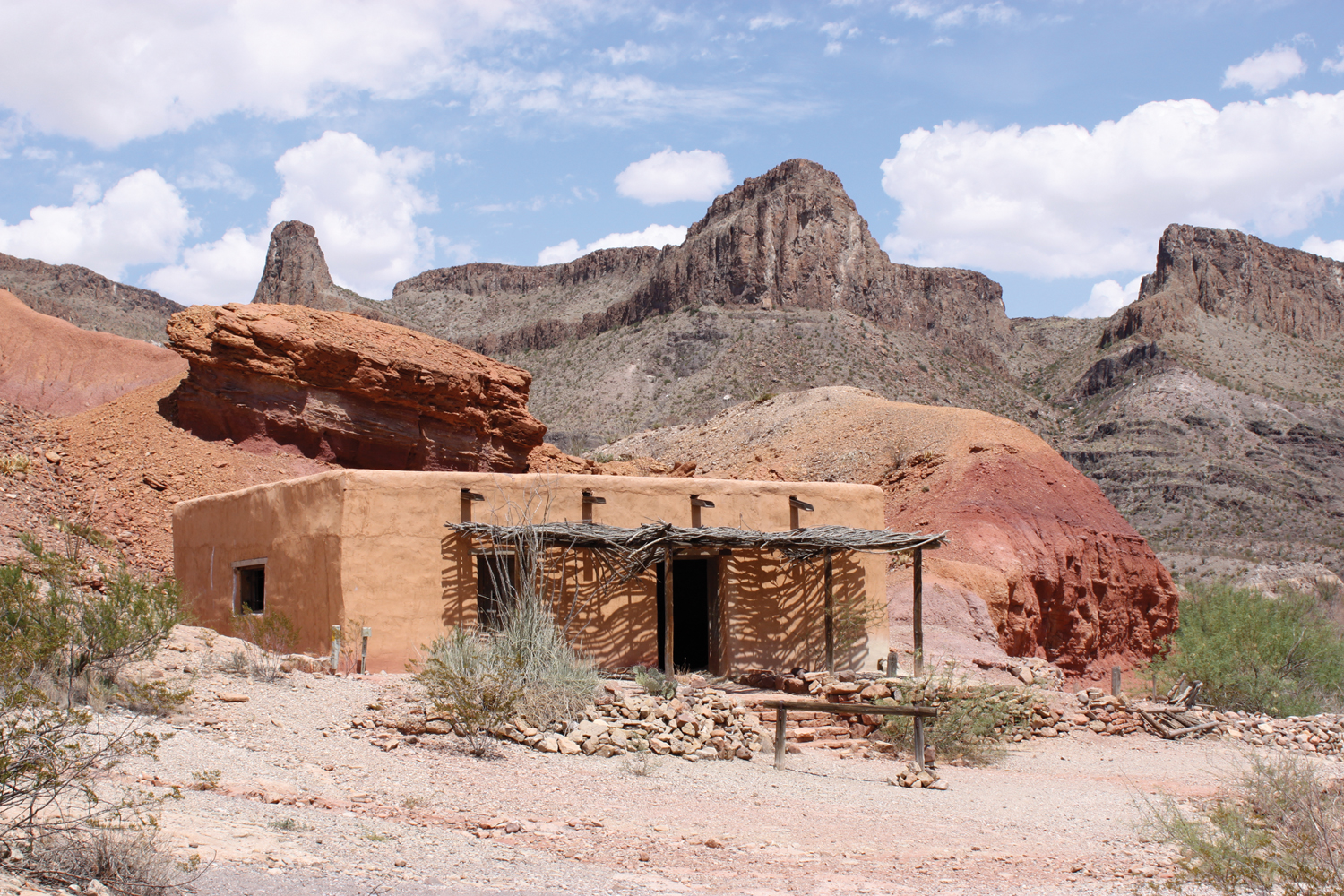
A lot has been written about the most beautiful drives in Texas.  Most people include on their lists the Willow City Loop near Fredericksburg when the bluebonnets are in bloom and the River Road between New Braunfels and Canyon Lake. There is almost unanimous agreement that the number two most beautiful drive in Texas is the three sisters (Ranch Roads 335, 336 and 337) from Vanderpool, through Leakey and on to Camp Wood.  And number one on just about every list? Of course, El Camino del Rio (FM 170) that runs along the Rio Grande from Lajitas to Presidio.  The run from Lajitas to the Santana Mesa Overlook just beyond the teepees at the roadside picnic area is particularly spectacular. So on about a third of my trips to the Big Bend area, and every time I take a first-timer, I take an afternoon to enjoy the drive.  On several previous trips I had noticed a sign indicating a “Contrabando Movie Set” but I always passed it by.  On this trip I had plenty of time to kill so I thought, “Why not?”

To me, movies have always been sheer magic.  The ability of the cinema artists to create creatures and settings that I know don’t exist, yet look so real, has always fascinated me.  I had seen this particular “town” before in the movie The Streets of Laredo and in the Brooks and Dunn video “My Maria.”  But here, on the actual set, I was disappointed.  I found myself wondering how I could have possibly seen this place as real in those works.  It just didn’t work for me now that I was really here.  I could easily tell that everything was fake.  I couldn’t tell for sure what the real composition was, but it looked like stucco over chicken wire.

That got me to thinking about just how the artists made something like this look so real on the screen.  What is the secret behind that feat?  Was it computer-altered?  Did they play with the lighting?  How did they make this place look like a real frontier desert town 150 years ago—like Boquillas looks today?

Before I left, I took a few photos of the buildings on the set anyway.  The “town” may look lame, but at least I would have a few photos as memories of an unproductive side trip.

But long after I left, the dissonance remained.  Why did something so clearly fake convince me on the screen?  Whenever I am faced with questions like this, I generally “think out loud,” mulling over my concerns and questions.  Unfortunately for him, my best friend Kevin is generally the victim of these ruminations.  So later that night, I gave him a call.

Kevin is an engineer and has a strong scientific orientation, so I was somewhat surprised to hear him say he believed that sometimes it is better not to know how things are done.  His experience had been that once you know, it loses the magic that made it so special in the first place—sort of like finding out how sour cream or hot dogs are made.

At first the artist side of me had a positive reaction to that.  My right brain understood the magic of creativity.  But deep down, I too have a fairly strong scientific orientation.  As I spent more time thinking about what Kevin said, I began to think that he had to be wrong.  At least some of the time, understanding how things are done makes you truly see what is magical in our world—magic you would have never known existed if you didn’t understand the workings behind the scene.

Consider the memory system in the first and second-generation computers.  Physically, the core memory unit was a large square frame box with thousands of small wires running from top to bottom, lined up in rows from front to back.  Thousands more wires were strung running from left to right, again lined up in rows, front to back.  None of these crisscrossing wires actually touched, but they came very close to it.

Wherever two wires “near-crossed”, a little metallic donut circled the juncture.  To store something in memory, the donuts were magnetized or not (1 or 0).  How do you magnetize the right donut in this matrix of thousands of donuts?  You shoot 55% of the electricity needed to magnetize down the vertical wire that intersects the donut and 55% of the electricity needed down the horizontal wire that intersects.

The result is that in only one place in this massive structure is there enough power to magnetize a donut, and that is where the two wires near-cross.

Now here’s the magic.  As we look at it now, this design is so simple, elegant and easy-to-understand.

And yet, who would think of such an approach to the problem of computer memory?  What kind of a mind comes up with something like this?  What happened in that guy’s head sure feels like magic to me.

Or even more so, try out the one of the early methods of detecting whether a fetus would have the genetic disease cystic fibrosis.  Before genome work, one way researchers could determine if the baby would have cystic was to take a sample of the amniotic fluid from the mother’s womb and put it on a live clam.

If the cilia in the clam stop moving in 30 minutes, the baby would be born with cystic.  Again, simple, elegant, and it makes perfect sense.  Among other complications, cystic fibrosis clogs the alveoli in the lungs.  Cilia are some of the smallest structures commonly available in living organisms.  It stands to reason that what will clog the alveoli later will clog cilia more quickly.  But again, what kind of a mind thinks like this?

After I got home I loaded the pictures into the computer.  When I took my first look at the photos on the full screen, I was stunned.  They were magnificent!  They looked as real as the town looked in the movie and video.  But I was there in person; I took those photos. I know the “town” didn’t look like that at all.  Yet here it was on my computer screen—as real as it could be.  How did that happen?  How did my photography skills, lame as they may be, make that happen?

It took me several weeks to figure it out…and I’m still not positive I have it right, but I’m pretty sure it has nothing to do with my abilities as a photographer.  I think what is happening is the man who designed and built the Contrabando movie set had the uncanny ability to see, not with human eyes, but with the eye of the camera—an ability I clearly lack.  He could see what the camera would see and he built accordingly.  The photos I brought back give strong evidence for this interpretation.

Life is a never-ending process of learning.  As a child, I sometimes found it to be a chore.  There were a few things I found interesting, but for the most part, learning was work, pure and simple.  I’m sure a lot of other people have viewed school that way as well, at least for a while.  But at some point in life most of us figure out that learning isn’t really work at all; it’s fun.  Let’s face it, we all love magic.  I guess the more I learn about how things in the universe work, the more magical it all becomes.

I think it’s time to take apart that old-time crystal radio I have in the attic.  I always wondered how that worked.

La Vie Dansante

July 1st, 2015

GosimageBy Michael Gos

Hondo, Texas

While some people know Hondo, Texas, as the birthplace and childhood home of Luckenbach’s Hondo Crouch, most of us know it because of the rather famous signs along highway 90 at either end of town.  And it is probably a good bet that if you don’t live in the area, your only experience with Hondo is as a milestone on the way to Garner State Park.

I was passing through town, not on my way to Garner but rather to Marathon in Big Bend country, when I decided to stop at the Sonic to share a couple of cheeseburgers and a diet cherry limeade with my ever-hungry running buddy, a Labrador retriever.  We were sitting outside at a picnic table and eavesdropping on a family sitting nearby.  Apparently the parents were trying to convince their thirty-something son that he should move back home to San Antonio.  Through the conversation, I was able to determine that he lived there in Hondo and worked as a night produce manager at the local HEB.  His parents seemed disappointed at both his choice of job and home.  They said he should be able to do much better than that given he had a college degree, and they practically begged him to come back to the city where good jobs were more plentiful.  He replied that he wanted to live in Hondo because from there it was a short trip to both Concan and Bandera, two places he seemed to be rather fond of.  They kept reminding him of the fact that he could probably find a better job in the city.  The repetition became tedious even for me.  I could only imagine what he must have felt and how many times he had heard this before.

Failing to get through to him with their first ploy, they even tried asking him to consider taking a job in the city and commuting the 45 minutes or so to and from work.  He balked at the idea of giving up an hour and a half of his day driving to work.  He said that was time he could spend in much more pleasant endeavors.

As my dog and I were leaving, I heard him say that he would rather work in a grocery store the rest of his life than live in the city.  For me, the conversation was mercifully over.  I’m sure he wasn’t so lucky.

I think most of us understand that millennials, those reaching adulthood around the turn of the century, think differently than the baby boomers or generation X-ers who came before them.  While we older ones work long hours and often take our work home with us, millennials give a good eight-hour effort and then, when the day is over, it’s over.  Work is completely out of their minds.  There is a total separation between work and life.  We boomers went where the jobs were—lived where we had to live to get those jobs; the millennials decide where they want to live and then find a job there.  They feel that life is too short, or too important, to let work dominate or dictate major life decisions.

I would imagine that this pattern of questioning the values of a younger generation is not unique to boomers and gen X-ers.  Throughout history, each generation has looked at the ones coming up after them and seen young people who they view as somehow inferior.   Most of the time they have been wrong.   I think my generation might be the exception.  As boomers, our parents were from what is often called “the greatest generation.”  Perhaps they were right in their view of us.  While they went down in history as the greatest, we boomers are likely to go down in history as the most pathetic generation.  Look at how we have taken the world we were given in the fifties and early sixties and changed it into the world we see today.  History will not look kindly on us for that.  But even in spite of our own shortcomings, like all generations before us, we tend to see the millennials as lazy and prone to making irrational decisions.  We think they should spend more time and effort bettering themselves and planning and preparing for their future.

Personally, I have mixed feelings on this.  There are times when I lament time I have wasted.  I wish I had begun earlier with savings, retirement planning and home ownership.  I’m sure that would have made my parents rest easier.  It certainly would have made retirement more realistic.  But then, at other times, I think about the time I spent in Guadeloupe, Martinique, London, Paris, Oxford and Cozumel and wish I had done more of that.

But you can only dwell on the past for so long.  Eventually you have to think about the future—and the diminishment it will bring.  I already see signs of it physically.  I am beginning to realize that things I used to do easily are becoming more and more difficult.  I did the South Rim hike in a single day in my 40s and 50s.  Today, I’m not sure I could do that, even if I didn’t have to carry a backpack. I know it is probably inevitable that, should I be fortunate to hang around the planet long enough, I will no longer be able to keep living in my house and keep all of the many things I love.  My library alone would over-fill most apartments in “senior living” complexes.  As we begin the downward slope on the bell curve that is life, it is only natural to ask if it was worth all that effort we put in to gather all this “stuff.”

The French have a philosophy called La Vie Dansante.  There is no equivalent phrase in English, probably because English-speaking people just don’t think this way.  Language always reflects the thinking of a culture.  A word-for-word translation is “the dancing life” though it has nothing to do with dancing.  The closest equivalent I have been able to come up with is something like “life is too short to spend any part of it doing anything other than having a good time.”

I’m beginning to think the French, and that young man at Sonic, may have had the right idea.  When you think about how short our time here is and the way it will ultimately end, I wonder if we should be thinking less about tomorrow and more about tomorrow’s yesterday.  All things considered, La Vie Dansante may be the wiser choice in the long run.

That young man will probably continue dancing his way through life and be no worse off for it—and we boomers will probably continue to see him and others of his type as irresponsible and poor decision-makers.

And we will probably be wrong.

Heroes and Villains

June 1st, 2015

IMG_0272By Michael Gos

Carrizo Springs, Texas

In everything we do, we are governed by rules that have been set up by society to keep things running smoothly. I’m not sure who in antiquity set up the original rules, but most of us seem to have at least a vague awareness of them and follow them without question.  Call it instinct if you will.

In the realm of romantic pursuit, for example, the rules are simple, but very strict.  The man chases the woman over an unspecified period of time.  This process continues until she decides to catch him.  But it is absolutely essential that he have no idea of this second facet or the rule.  He must forever think he was in absolute control of the pursuit all along.

It’s not just in romance; everything we do in our lives follows pre-set parameters.  When you go to see a doctor, for example, the rules are simple.  You tell him what is wrong, then just step back and listen.  After all, he is the expert.  You would think this is even more critical in emergency situations but recently I watched as a small woman, unhappy with how the team of doctors was addressing her very sick husband, took over and started demanding a series of things be done. For some reason I still don’t understand, she got her way.  A few weeks later, I saw how each of those same doctors had come to love and respect that woman because of, or maybe in spite of, her role in creating a positive outcome from a dangerous situation.

I thought about that for quite a while and it eventually became apparent to me that while most of us follow the rules, there are a few people who don’t.  This woman’s choice to battle against the rules, and the people in authority, turned out to be heroic behavior.  And all parties concerned came to appreciate it—after the fact anyway.

I was in the Mount Hope Cemetery in Carrizo Springs.  I had made the journey because I wanted to find the graves of the old Texas Rangers that I heard were buried there.  Ranger graves are marked with the circled star of their order.  Since most of these graves were from the late 1800s, the markers are now weathered and covered with rust but they still stand out as special among the other graves.

I’ve always been fascinated by the stories of the old Rangers, from Bill McDonald’s famous “one riot; one ranger” story on the positive side, to the atrocities that have been attributed to some of their ranks (such as Leander McNeely’s executions).  This intermingling of the heroic and the villainous intrigues me.

Many years ago, when I was still in college, I read a newspaper story about the death of a fellow I knew in high school.  Back then he was a hoodlum.  He was well-known for administering beatings and otherwise terrorizing the smaller and weaker classmates, even some as much as four years younger than he.  He spent most of his high school life in trouble.  According to the article, he died trying to save a child who had fallen on a set of railroad tracks just as a train was approaching.  He didn’t know the child but jumped in anyway.  He managed to push the boy to safety seconds before the train dispatched him.  He apparently forgot the rule about not standing in front of oncoming trains.  As a result, our high school villain died a hero.  That started me thinking. What goes on in a person’s mind that can cause him to act the parts of a hero and a villain both?

I think the answer may lie in the root cause of both behaviors.  The two traits may have a common source, a single cause if you will.  It is sort of like the black and white yin and yang diagram from eastern cultures, with one major exception.  Though intermingled, yin and yang are true opposites; they interact with each other yet they are always separate.  In the diagram, there is either black or white.  There is never a gray.  Heroic and villainous behavior patterns, on the other hand, aren’t really opposites.  They don’t just interact like yin and yang; they can blend.  I think that may be because they are really the same thing—two sides of the same coin.

Consider for a moment the concept of love.  Ask most people you know what is the opposite of love and almost without exception, they will answer hate.  But really, when you think about it, aren’t love and hate really the same thing—a strong emotional attachment to someone or something?  Yes, one is a positive attachment and the other negative, but they are both a form of interdependence—of continued emotional involvement.  In reality, the true opposite of love is indifference.

I think the same is true of heroes and villains.  At their root, both are a function of a single personality trait: anti-social thought and behavior.  For some reason both heroes and villains are prone to habitual violations of the rules society sets up to govern the things we do—the rules that most of us follow.  There are some people who just refuse, or are constitutionally incapable, of following those rules.  Whether the person breaks bad or good, becomes a hero or a villain, the cause and process are the same. Sometimes, as in the case of my high school classmate, both results can co-exist in the same person giving further evidence that the two are just manifestations of the same concept.

For me, the Texas Rangers certainly exemplify that notion.  It takes an unusual kind of person to seek out the life of hardship and danger the 19th century Rangers led.  These were men who, by virtue of their career choice, showed that they were not governed by the same set of norms or rules that guide you and I.  Some were heroes and some not so much.

Unlike my classmate, or the woman in the hospital, I don’t think I’ve ever been bold enough, or enough of a rule violator, to qualify as a hero or as a villain.  Frankly, it is unlikely I ever will be in the future either.  I’m just too old to become a renegade now.  My wife calls me “Crunchy Granola” because I always color between the lines.

But just between you and me, it really has not always been quite that clear cut.  Over the years I have observed and sometimes even experimented a bit with this concept.  After all of that, I have come to only one conclusion.   Rules were meant to test the creativity of intelligent people.

I probably shouldn’t say any more than that.

Bay Area Houston Magazine