NASA selects Barrios to lead Human Space Flight Contract

August 31st, 2020

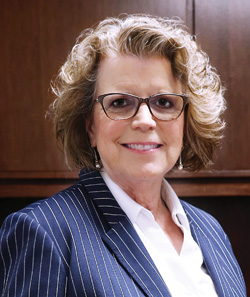
Barrios CEO Sandy Johnson

NASA’s Johnson Space Center has awarded the Human Space Flight Technical Integration Contract to Barrios Technology Ltd. of Houston signaling a continued partnership between the space agency and the aerospace technology company.

The cost-plus-award-fee, incentive-fee contract, starting Oct. 1, has a potential value of $364 million. The base period of the contract is two-years followed by three additional one-year options that may be exercised at NASA’s discretion. A Program Planning and Control option includes a one-year base period followed by four one-year options.

“We are thrilled to build on our four-decade legacy of supporting NASA’s Human Spaceflight Programs through the award of contract.  This award is a reflection of the great work of all our employees. It allows us to continue to support NASA’s ISS Program, as well as grow our support to the Artemis Program to explore beyond low earth orbit,” Barrios Technology CEO Sandy Johnson said.

The contract provides products and services to support mission and program technical integration activities and the necessary infrastructure functions for the International Space Station, Orion, and Gateway programs, with the potential for supporting additional human spaceflight programs or projects by issuing task orders. Barrios will utilize the existing incumbent workforce to support the contract objectives at Johnson with ARES Technical Services Corp., Booz Allen Hamilton, Intuitive Machines, and Summit Technologies & Solutions as subcontractors.

Headquartered in Houston’s Clear Lake area, Barrios Technology is a woman-owned AS9100 certified engineering services company specializing in aerospace engineering and science, program planning and control, mission integration and operations, and software engineering and integration. Since 1980, Barrios has demonstrated its corporate mission to be the foremost small aerospace engineering services company providing extraordinary value to its customers, employees and communities. For more information, visit www.barrios.com

Retired JSC Director Ellen Ochoa to receive 2020 National Space Trophy

February 1st, 2020

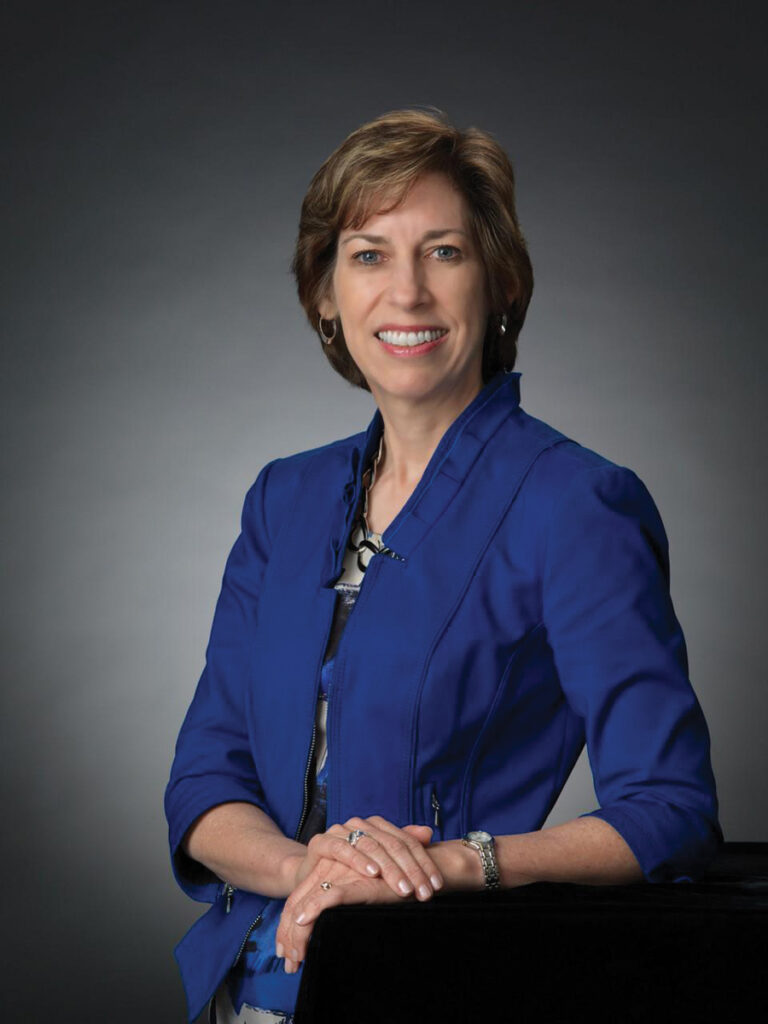
Retired Johnson Space Center Director Dr. Ellen Ochoa has been selected by the Rotary National Award for Space Achievement (RNASA) Foundation as recipient of the 2020 National Space Trophy. The banquet honoring Dr. Ochoa will be held on Friday, April 17 at the Houston Hyatt Regency.

“The RNASA Foundation is excited to recognize Dr. Ochoa as the guest of honor at the 2020 RNASA Space Award Gala,” Foundation President Rodolfo Gonzalez said, going on to invite both the public and the aerospace community to attend the black-tie event.

Dr. Ochoa was nominated for the award by Johnson Space Center Director Mark Geyer, Kennedy Space Center Director Bob Cabana and former JSC Director Michael Coats (2005-2012). In recommending Ochoa, Geyer and Cabana said “Dr. Ellen Ochoa has distinguished herself as a champion for space exploration and scientific discovery through her dedicated service to NASA and to our nation.” Coats remarked “Dr. Ochoa’s technical expertise, extensive management experience, and superb communication skills were a perfect fit for her job as JSC director. She is an exceptional leader and a role model for young women everywhere.”

Ochoa said she feels “…beyond astonishment, I mainly feel an overwhelming sense of gratitude and affection for all of the amazing human space flight team members that I had the honor of working with for 30 years.  I’m looking forward to seeing my colleagues and friends – and honoring the Stellar award winners – at the RNASA event!”

Ochoa began her three-decade long career as a research engineer at Sandia National Laboratories and NASA Ames Research Center. She has three patents in the area of optical information processing and numerous publications in technical journals. Selected to join the Astronaut Corps in 1990, she subsequently flew on four space shuttle missions. She served as mission specialist during her first flight aboard STS-56 in 1993 and payload commander for STS-66 in 1994. Both missions focused on the effects of solar activity on Earth’s environment. She went on to serve as mission specialist and flight engineer for STS-96, the first mission to dock with the ISS, and STS-110, which was the first mission to use the International Space Station’s robotic arm. All told, she logged nearly 1,000 hours in space.

Ochoa was appointed JSC’s deputy director of flight crew operations in 2002 before being promoted to director in 2006. In 2007, she was named deputy director of JSC where she stayed until her appointment as JSC’s 11th director in 2013.

For five and a half years, Dr. Ochoa expertly managed a workforce of over 10,000 civil servants and an annual budget in excess of $4.5 billion. She championed ISS research opportunities for worldwide customers, oversaw the first successful test flight of the Orion spacecraft, and worked tirelessly to develop the Commercial Crew Program, an effort to build commercial partnerships which has created lasting impacts for NASA’s future endeavors.

As the first female Hispanic astronaut and JSC’s first Hispanic director, Dr. Ochoa takes great pride in inspiring young audiences about the importance of science, technology, engineering, and math curriculum (STEM). She has given hundreds of presentations across the country and has served as a role model for thousands of students. She has six schools named after her, several books written about her, and has been profiled in textbooks and on websites geared toward encouraging females and minorities to pursue technical fields.

Dr. Ochoa earned her Bachelor of Science degree in Physics from San Diego State University in 1980 and a Master of Science degree and Doctorate in Electrical Engineering from Stanford University in 1981 and 1985. She has earned numerous accolades during her 30-year career including NASA’s Distinguished Service Medal and four Space Flight Medals. She is a Fellow of the American Association for the Advancement of Science, the American Institute for Aeronautics and Astronautics, the National Academy of Inventors and the Optical Society of America and she has been inducted into the Astronaut Hall of Fame, the California Hall of Fame and the International Air & Space Hall of Fame.

Dr. Ochoa retired from the federal government in 2018 and now serves as vice chair for the National Science Board, among other activities.

For tickets to RNASA’s 34th annual Space Awards Gala, visit www.rnasa.org/tables.html to reserve your table for the RNASA Banquet and find information about sponsorships and tickets. To reserve a room at the Houston Hyatt Regency, visit www.rnasa.org/houston.html or call 713-654-1234 and request the RNASA group rate.

About RNASA: The Rotary National Award for Space Achievement (RNASA) Foundation was founded by the Space Center Rotary Club of Houston, Texas, in 1985 to organize and coordinate an annual event to recognize outstanding achievements in space and create greater public awareness of the benefits of space exploration. The nonprofit Foundation presents the National Space Trophy and Stellar Awards each year. The RNASA website is www.rnasa.org/.

JSC director Geyer speaks of America’s space leadership role today, in the future

October 1st, 2018

By Mary Alys Cherry and Kathryn Paradis

Knowing the human tendency to overlook the value of many outstanding things in our daily lives – things that become “old hat” – Johnson Space Center Director Mark Geyer reminded Bay Area Houston Economic Partnership members of the great value of the International Space Station, which has been circling the Earth for the past 18 years.

“Station is an incredible international achievement,” he said as he opened his address, “and I want to talk about the different pieces that make ISS so special. People may not be aware of the details surrounding the amount of utilization that is happening every day on Space Station.

“There are payload experiments – things we are pushing the envelope on – on how to live and work in space, which is really going to be important when we go to the moon and on to Mars. A Mars journey could take three years or longer. We’re learning about how the human body behaves and how it changes. We’re learning how to mitigate those things through exercise and nutrition. There’s an incredible amount of work that goes on every day; plus, we get some cool pictures!”

It also has helped the United States and Russia become space buddies, he explained.

Their space friendship began back at the turn of the century when the first international crew, commanded by American astronaut William M. Shepherd, arrived on a Russian Soyuz that launched on Oct. 31, 2000. Since that day, he said there has always been an American onboard Station.
“Station brings a symbol of national leadership in the world. We lead the rest of the world in space. I had a chance to meet with the U.S. ambassador in Russia when I was over there for a launch. He told me that as difficult as relationships are with the Russians, Space Station is the one thing, the one positive thing that we are doing together. That’s important.”

Then he cautioned, “Another thing to remember is that if the United States doesn’t lead in space, there’s another county that cannot wait to lead in space, and that’s China. We know that they are making efforts to do that.”

After briefly talking about the commercialization of space, he took the crowd into the future — the commercial opportunities the ISS offers and plans to build the Lunar Orbital Platform-Gateway in the 2020s to launch the Orion spacecraft on 21-day missions past the moon and back. And, how JSC will continue to be a key part of the integration of that program.

And, what about new NASA Administrator Jim Bridenstine? “He is extremely personable and very open, Geyer says. “He really likes to meet with teams and talking with the interns. He’s trying very hard, listening to people. I love working for him; he’s a great guy.”

Geyer, who was introduced by BAHEP Chairman and San Jacinto College Chancellor Dr. Brenda Hellyer, began his NASA career in 1990 at JSC and has been here ever since. He has witnessed much during the ensuing years – both triumph and tragedy. His presentation left many with the feeling, however, that the best is yet to come both for NASA and for Johnson Space Center.

NASA assigns first crews to fly commercial spacecraft

September 1st, 2018

Kennedy Space Center Director Robert Cabana addresses the standing room only crowd at JSC’s Teague Auditorium as NASA Administrator Jim Bridenstine and Johnson Space Center Director Mark Geyer look on.

By Mary Alys Cherry

“We’re back,” NASA Administrator Jim Bridenstine told a rousing audience in the Johnson Space Center’s Teague Auditorium.

“This is a big deal for our country, and we want America to know that we’re back – that we’re flying American astronauts on American rockets from American soil,” he said as the crowd’s roar reached heights probably not heard around JSC in years.

Sweet words to everyone’s ears, especially the nine astronauts who were introduced as America’s first commercial crew astronauts – those who will help increase commercial companies’ involvement in low Earth orbit and possibly take over operation of the space station some day in the future and allow NASA to focus on deep space exploration.

A NEW ERA
“Today,” Bridenstine continued, “our country’s dreams of greater achievements in space are within our grasp. This accomplished group of American astronauts, flying on new spacecraft developed by our commercial partners, Boeing and SpaceX, will launch a new era of human spaceflight. Today’s announcement advances our great American vision and strengthens the nation’s leadership in space.”

Joining him on stage for the presentation were Johnson Space Center Director Mark Geyer, Kennedy Space Center Director Bob Cabana, Boeing Defense, Space and Security CEO Leanne Caret and SpaceX CEO Gwynne Shotwell, who each spoke briefly of their hopes for the future before the new NASA chief introduced the astronauts – five who will fly on Boeing’s Starliner and four who will man SpaceX’s Dragon.

NASA introduced the first U.S. astronauts who will fly on American-made, commercial spacecraft to and from the International Space Station – an endeavor that will return astronaut launches to U.S. soil for the first time since the space shuttle’s retirement in 2011. The nine astronauts introduced to crew Boeing’s CST-100 Starliner and SpaceX’s Crew Dragon are, from left, Sunita Williams, Josh Cassada, Eric Boe, Nicole Mann, Christopher Ferguson, Douglas Hurley, Robert Behnken, Michael Hopkins and Victor Glover.

NASA intern and University of Texas student Stephanie Zeller shares a light moment with Sen.Ted Cruz, one of a number of elected officials at the ceremony at JSC’s Teague Auditorium.

“All of us are here today because we stand for something new and profound, built upon an amazing legacy, and it is personal for all of us,” Boeing executive Leanne Caret said. “Today we start a new chapter, and we’re so thrilled to be on this journey.” Both companies bring unique approaches and ideas to the development and testing of their systems, which is why NASA selected both companies in September 2014.

“The 7,000 women and men of SpaceX understand what a sacred honor this was for us to be part of this program, and for us to fly [NASA astronauts],” said SpaceX executive Gwynne Shotwell. “So thank you very much, we take it seriously, we won’t let you down.”

SEVERAL APPEARANCES
The stage presentation was one of several appearances by Bridenstine during a three-day visit to JSC. On his first morning, the 43-year-old Michigan native got a up-close look at the Orion mockup that is being readied for its major safety test in April to verify that its launch abort system can steer the capsule and astronauts inside it to safety in the event of an issue with the Space Launch System rocket when the spacecraft is under the highest aerodynamic loads it will experience during ascent for deep-space missions.

Next, he met with a select group of local reporters, answering a variety of questions about the future of the space station, the Gateway moon orbiting project that involves returning to the moon and is seen as a stepping stone to Mars, and the delays on the James Webb Telescope.

“NASA is doing things it has not done before, using government resources never done before,” he told reporters in a sit-down roundtable session, “and we want to be sure we do not have another gap.”

NASA Administrator Jim Bridenstine, left, looks over the work being done in Building 9S at Johnson Space Center for the launch of the Orion mockup.

Bridenstine started his visit here at a reception at Space Center Houston where he addressed aerospace executives, local business people and elected officials, discussing a change in national space policy providing for an American-led integrated program with private sector partners for a return to the moon, followed by missions to Mars and beyond.

The new policy, he said, calls for the NASA administrator to “lead an innovative and sustainable program of exploration with commercial and international partners to enable human expansion across the solar system and to bring back to Earth new knowledge and opportunities.”

Bridenstine emphasized the importance of the word “sustainable” in the policy. He said, “When we talk about going to the moon, this time to stay, we want the entire architecture between Earth and the moon to be sustainable — in other words ‘reusable.’ We want tugs that are going back and forth from low Earth orbit to lunar orbit to be reusable. We want the lunar landers to be reusable so that they can go back to the surface of the moon over and over again.

“That entire architecture is going to be built on an American backbone. We will have critical infrastructure developed by NASA, by those in this room and at Johnson Space Center, that will give us a sustainable infrastructure on the moon… When we go to the moon this time, we’re going to stay.”

NASA names six new JSC flight directors

September 1st, 2018

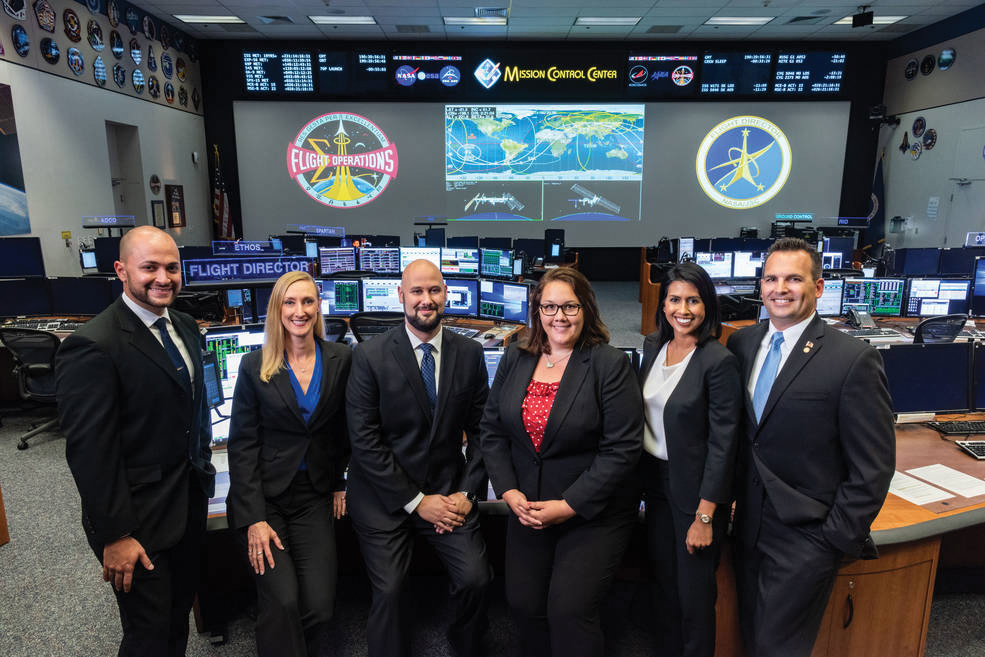
2018 Class of Flight Directors: Allison Bolinger, Pooja Jesrani, Adi Boulos, Paul Konyha, Rebecca Wingfield, Marcos Flores. Photo Date: July 9, 2018. Location: Building 30s, WFCR. Photographer: Robert Markowitz

NASA has selected six women and men to join the elite corps of flight directors who will lead mission control for a variety of new operations at the agency’s Johnson Space Center here.

Already the new flight directors are beginning extensive training on flight control and vehicle systems, as well as operational leadership and risk management, before they will be ready to sit behind the flight director console in mission control supporting NASA’s astronauts. When they do, they will become part of a group that numbers fewer than 100. This class will bring the total number of flight directors the agency has had to 97 since Christopher C. Kraft became the first flight director in 1958.

“This is an outstanding group of future tactical leaders for the Flight Operations Directorate,” said Brian Kelly, director of Flight Operations at Johnson. “We are excited to have them come on board.”

Joining the 26 active flight directors currently guiding mission control, this group will have the opportunity to oversee a variety of human spaceflight missions involving the International Space Station, including integrating American-made commercial crew spacecraft into the fleet of vehicles servicing the orbiting laboratory, as well as Orion spacecraft missions to the Moon and beyond.

“The job of flight director is not an easy one, and we make these selections very carefully,” said Holly Ridings, acting chief of the Flight Director Office at Johnson. “We had a great group of applicants, so we were able to choose six individuals who have worked in many areas of human spaceflight. They’ll bring a lot of good experience to the role that will serve NASA well as we undertake new and exciting missions.”

As flight directors, they will head teams of flight controllers, research and engineering experts, and support personnel around the world and make the real-time decisions critical to keeping NASA astronauts safe in space. The new flight directors are:

Allison Bolinger
Bolinger, from Lancaster, Ohio, began her career at NASA as an intern in 2001, before earning her bachelor’s degree in aerospace engineering from Purdue University in 2004. Upon becoming a full-time NASA employee after graduation, she supported spacewalks in a variety of functions, including as a lead spacewalk flight controller for space shuttle Endeavor’s final mission, and several spacewalks since. Most recently, she has served as the deputy chief of the Neutral Buoyancy Laboratory, managing the facility’s daily operations.

Adi Boulos
Boulos grew up in Palos Hills, Ill., and Fair Lawn, N.J., and holds a bachelor’s degree in aerospace engineering from the University of Illinois at Urbana Champaign. He began his career at NASA in 2008 and was one of the first flight controllers managing the space station’s core system computer networks in a position, known as Communications RF Onboard Networks Utilization Specialist. In addition to serving as a CRONUS specialist flight controller and as a CRONUS instructor, Boulos also worked with the Orion Program on spacecraft system recovery processes after major malfunctions.

Jose Marcos Flores
Flores, who considers Caguas, Puerto Rico, to be his hometown, interned at multiple NASA centers while working on his bachelor’s degree in mechanical engineering at the University of Puerto Rico – Mayaguez. He came to Johnson Space Center full time in 2010 as a systems engineer, helping to develop a new space station simulator. He went on to become a flight controller managing the station’s power and external thermal control in a position known as Station Power, ARticulation, Thermal, and Analysis (SPARTAN). He also earned a master’s degree in aerospace engineering from Purdue University.

Pooja Joshi Jesrani
Jesrani was born in England but immigrated to Houston during childhood. Jesrani began interning with United Space Alliance before graduating from The University of Texas at Austin with a bachelor’s degree in aerospace engineering in 2007. In her work with USA and later NASA, she has supported the space station flight control team in many positions, including managing the life support and motion control systems, and then as a capsule communicator (CAPCOM), speaking directly with the astronauts in space. Recently, Jesrani has been working to integrate mission operations for upcoming commercial crew flights.

Paul Konyha III
Konyha, was born in Manhasset, N.Y., and finished high school in Mandeville, La. He served in the U.S. Air Force from 1996 until 2016, when he retired as a lieutenant colonel after holding a number of operations, engineering and leadership positions for numerous space systems. Since then, he has led the design, test, operations and disposal of all Department of Defense payloads on crewed spacecraft for the DOD’s Space Test Program office at Johnson Space Center. Konyha holds a bachelor’s degree in mechanical engineering from Louisiana Tech University and master’s degrees in military operational art and science, and science and astronautical engineering from Air University and the University of Southern California, respectively.

Rebecca J. Wingfield
Wingfield, from Princeton, Ky., interned at NASA’s Kennedy Space Center before graduating with a bachelor’s degree in mechanical engineering from the University of Kentucky in 2007. She joined the flight control team at Johnson Space Center in 2007 as a contractor with United Space Alliance, overseeing maintenance tasks that the astronauts perform in space. She went on to become a CAPCOM, speaking to the crew on behalf of the control team, and a chief training officer, preparing space station crews for their missions. She also holds a master’s degree in systems engineering from the University of Houston – Clear Lake.

Learn more about careers at NASA at: www.nasa.gov/careers

NASA Announces new deputy director of Johnson Space Center

August 12th, 2018

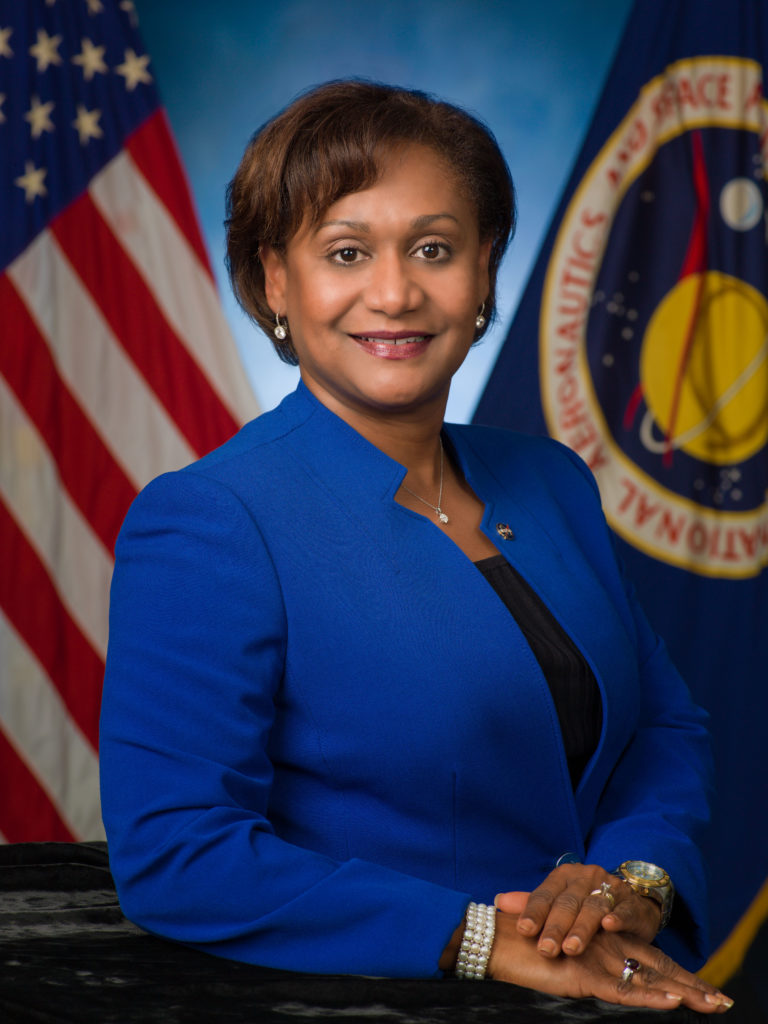
Vanessa Wyche has been named deputy director of the Johnson Space Center, becoming the first African American to hold the post.


In her new job, she will assist JSC Director Mark Geyer in leading one of NASA’s largest installations, which has nearly 10,000 civil service and contractor employees – including those at White Sands Test Facility in Las Cruces, New Mexico – and a broad range of human spaceflight activities.

“Vanessa has a deep background at JSC with significant program experience in almost all of the human spaceflight programs that have been hosted here,” Geyer said in making the announcement. “She is respected at NASA, has built agency wide relationships, throughout her nearly three-decade career and will serve JSC well as we continue to lead human space exploration in Houston.”

Wyche recently served as director of the Exploration Integration and Science Directorate (EISD) and completed a detail as the JSC deputy director in February 2018.

“I am incredibly humbled to take on this role at JSC, and also excited to assist Mark with leading the home of human spaceflight”; Wyche said. “I look forward to working with the talented employees at JSC as we work toward our mission of taking humans farther into the solar
system.”

The South Carolina native is a graduate of Clemson University, where she earned both her B.S. in Materials Engineering and a Master of Science in Bioengineering. Wyche is the recipient of two NASA Exceptional Achievement Medals and two NASA Outstanding Leadership Medals.

Before joining JSC in 1989, Wyche worked for the Food and Drug Administration in Washington, D.C. She began her career with NASA in the Space Life Sciences Directorate as a project engineer. She has held several key center leadership positions including assistant center director, associate director of EISD and acting director of Human Exploration Development Support.

She also served in the Constellation Program as director of operations and test integration and in the Space Shuttle Program as a flight manager for several space shuttle missions. She was manager of the Mission Integration Office, and she completed a detail in the Office of the NASA Administrator.

For more information about Wyche, visit:


Bay Area Houston Magazine