Robert Lightfoot honored at RNASA Foundation Space Gala

May 9th, 2018

Johnson Space Center Director Ellen Ochoa presents the National Space Trophy to Robert Lightfoot, recently retired acting NASA administrator. RNASA photo

The Rotary National Award for Space Achievement (RNASA) Foundation presented the 2018 National Space Trophy to Robert Lightfoot, NASA’s former acting administrator at its 32nd annual black-tie Space Awards Gala on April 27, 2018 at the Houston Hyatt Regency.

RNASA Foundation Chairman Rodolfo González welcomed the guests to gala, saying that RNASA’s mission is to encourage, recognize, honor and celebrate U.S. space achievements from across the entire country and across all sectors.” The Clear Brook High School JROTC Color Guard presented the colors, followed by Thomas Glass, first year baritone from Houston Grand Opera, who sang the National Anthem a cappella.

Reverend Michael Stone, St. Thomas the Apostle Episcopal Church, gave the invocation.

After dinner, the program kicked off with a year-in-review film by Space City Films. John Zarrella, former CNN correspondent served as the emcee. “We are here tonight” he said, “in no small part to acknowledge the accomplishments of men and women behind the scenes. Tonight, we will honor many individuals who have made outstanding contributions to our space program.

Cindy Steele, NASA Public and Stakeholder Engagement Division chief, presented the 2018 Space Communicator Award to actor William Shatner, best known for his role as Capt. James Kirk of Star Trek’s USS Enterprise, saying that “as a lifelong advocate of science and exploration, Mr. Shatner has inspired generations of young explorers.” Shatner accepted the honor via video, saying “the concept of space travel and exploration is one of great mysteries we humans can ponder. Space is the greatest mystery story of all.

Stellar Awards were presented to 29 individuals and 8 teams. The Stellar Award winners were announced by NASA astronauts Shane Kimbrough and Peggy Whitson, who then presented them with engraved marble trophies donated by Orbital ATK. The Stellar Awards were presented in Early Career, Mid-Career, Late Career and Team categories.

NASA astronauts Scott Tingle, Drew Feustel, and Ricky Arnold sent a congratulatory message down from the International Space Station to Lightfoot on receiving the National Space Trophy, telling him “we wouldn’t be on this amazing laboratory in space today if it hadn’t been for your complete dedication to our mission and for your effectiveness in the many roles you held over your career. Our community thrives because of your commitment to safety and mission success. Robert, congratulations on this prestigious and well-deserved honor.

Ellen Ochoa, director of the Johnson Space Center, presented the prestigious 2018 National Space Trophy to Robert Lightfoot. In her introductory comments, Dr. Ochoa said “The many leadership roles that Robert Lightfoot has held and excelled at over his entire aerospace career made him the ideal person to lead NASA during the last 15 months.” While accepting the NST, Lightfoot said “…I really feel like I’ve been honored with the pinnacle of recognition in our business. This is the biggest award you could bestow on me, but really it is for this entire team and what we do. What we do every day makes a difference.

Lt. Gen Thomas P. Stafford, USAF (Ret.), Gemini and Apollo astronaut, and the 1993 National Space Trophy winner, presented an Omega speedmaster watch to Lightfoot, saying “The National Space Trophy is very well deserved. I followed you your whole career; it has been superb.”
Engility donated the portrait of Lightfoot by Pat Rawlings, which was on display at the gala and used as the cover of the souvenir program. The portrait will become part of the National Space Trophy display at Space Center Houston for one year.

Talks point to local control of U.S. long-term recovery aid

March 22nd, 2018

After a recent meeting among representatives of the City of Houston, Harris County and the Texas General Land Office in Washington, D.C., Mayor Sylvester Turner and Harris County Judge Ed Emmett announced that local governments and the state agency have established a framework for moving forward on distribution of long-term recovery funds for Hurricane Harvey.

“I had asked for fairness in how the City of Houston would be treated – that the City be properly consulted by the General Land Office, per the requirements for these funds set forth by the U.S. Department of Housing and Urban Development,” Mayor Turner said. “This meeting marks the beginning of that consultation. We are now on the right path to a fair distribution of much-needed disaster relief dollars.”

“I’d like to thank Land Commissioner George P. Bush for his collaborative efforts, as well as our partners at Harris County,” Mayor Turner continued. “Working together, we can put these funds to work for the kinds of long-term investments in housing and community development that will make our city stronger for the future.”

“It’s crucial that local governments have significant input into how these funds are distributed,” said Judge Emmett. “As the first line of response to those devastated by Hurricane Harvey, we are most familiar with what is needed and where. I genuinely thank our state and federal officials for recognizing our need for flexibility.”

HUD convened the meeting, which included representatives from Gov. Greg Abbott’s office. Abbott had selected the Texas General Land Office to distribute $5 billion in Community Development Block Grant funds appropriated to the State by Congress for Harvey relief last year. This is the second round of long-term recovery funding for Hurricane Harvey and is primarily intended to meet housing needs. Congress appropriated additional funds in January for infrastructure and mitigation.

The meeting was convened to begin consultations among the City, County, and State about how funds will be distributed and used. The framework gives Houston and Harris County local control over their recoveries and uses HUD’s unmet housing needs data as a basis for distributing funds.

The GLO will use the framework to draft an action plan, which is required by HUD before the agency will distribute funds to the state.  The public can comment on the draft action plan for 14 days before it is submitted to HUD for approval.

“This is a good first step, and the City of Houston plans to remain heavily involved in the process until we cross the finish line with HUD approval of the GLO’s action plan,” Mayor Turner said. “The sooner we have funds in our hands, the sooner we can implement a world-class community engagement plan and put these dollars to work for recovery.”

Armed with a clearer picture of how the funds will be distributed, the city immediately  will begin consulting with communities in Houston about how to use these resources to build a more resilient and equitable city.

First-of-its-kind agreement brings millions in flood relief for Houstonians

January 24th, 2017

With last week’s flooding still fresh in the minds of Houstonians, Mayor Sylvester Turner announced that the City of Houston is stepping in to provide the funds needed to help expedite long-awaited flood relief projects along Brays, Hunting and White Oak Bayous.

The move, which relies on unprecedented cooperation by numerous governmental agencies, will end the delays that have prevented the Harris County Flood Control District from proceeding with planned improvements in these watersheds.

Because it has already received federal approval, Project Brays is the first in line for the improvements.  The White Oak and Hunting Bayou projects will follow, pending Congressional authorization. Upon receipt of that authorization, the City and Flood Control District will pursue separate agreements similar to the Brays Bayou project.  The total estimated cost of all three projects is $130 million. In a separate and unrelated move, the City is also studying potential improvements to Keegans Bayou, a Brays Bayou tributary, which exceeded its banks during last week’s heavy rain.  The analysis will look at options for creating additional detention and improving channel flow.

“These projects will greatly reduce the flood threat for residents along these bayous and remove hundreds of properties out of the 100 year flood plain.  I want to thank the multiple governmental entities that have come to the table to make this happen.  The level of cooperation is unprecedented and a sign of just how committed everyone is to solving our flooding issues,” said Mayor Turner.

“While flooding will always be a part of life in southeast Texas, common sense demands that all levels of government work together as closely as possible in an effort to control it as much as we can,” said Harris County Judge Ed Emmett. “This project is another example of cooperation and coordination that directly benefits residents throughout the area.”

On Wednesday, Jan. 25, City Council will consider a loan application to the Texas Water Development Board for the Brays Bayou improvements. Upon approval of the loan by the state, the city will in turn advance $43 million to the flood control district to help pay for bridge replacements and extensions and channel widening in the Brays watershed.  The $43 million is equivalent to the amount the flood control district expects to receive from the federal government once the projects are completed.  The city will be paid back as projects are completed and the flood control district is reimbursed by the federal government.

The announcement comes just two weeks after Mayor Turner unveiled a Storm Water Action Team, or SWAT, to reduce drainage problems that are not directly attributed to overflow from the bayous that are under the control of the Harris County Flood Control District.

Approximately 100 deferred maintenance projects spread throughout the city have been initially identified for inclusion in the SWAT program.  An initial round of funding of $10 million has been approved so that work can begin on 22 of these projects, two in each City Council district.  The work encompasses everything from replacing sewer inlets and grates to regrading ditches and resizing culverts to minor erosion repairs and regular mowing.

Quotes from Governmental Partners

Congressman John Culberson
“I’m pleased to see local officials working together to improve Houston’s flood infrastructure. Houstonians have experienced two major flood events in the last two years, and this collaborative plan gives hope to residents that completion of major flood mitigation projects will minimize future damage. I look forward to continuing to work with State and local officials to develop creative solutions for Houston’s flooding problem.”

Congressman Al Green
“I would like to thank Mayor Sylvester Turner, the Houston City Council, the Harris County Flood Control District, and the Texas Water Development Board (TWDB) for their important work on this agreement to advance the completion of Project Brays,” Congressman Al Green said. “In addition to local efforts, securing the necessary federal funding for these flood control projects is a major priority of mine as well as many of my colleagues in Congress. I will continue working with my colleagues to pass H.R. 121, the Emergency Flood Control Supplemental Funding Act of 2017, formerly known as H.R. 5025 during the 114th Congress, which attracted over 100 bipartisan co-sponsors last year. H.R. 121 would deliver hundreds of millions of dollars to fully fund our flood control construction projects such that their completion can be expedited.”

Congressman Gene Green
“I applaud the important step taken by City officials to address Houston’s recurring flood problem. The completion of Brays Bayou and others like it are examples of proactive solutions that reduce the risk of flooding and make increased safety the norm.

“At the federal level, we have an obligation to do all that we can to match local efforts and reduce delays on reimbursements. To that end, I was pleased late last year with the passage of S. 612, the Water Infrastructure Improvements for the Nation Act (WIIN).  The legislation prioritizes federal reimbursement and cost-sharing on flood mitigation projects like Brays and our entire bayou system. In the 114th Congress we introduced H.R. 5025, which would increase access to federal funds for flood control projects and deliver $311 million for the completion of our local bayou projects. The bill achieved more than 100 co-sponsors and we are working to reintroduce the bill in the new Congress.

State Sen. Borris Miles
“I applaud Mayor Turner and the Houston City Council for approving this $46 million dollar zero interest loan from the Texas Water Development Board. I am encouraged that changes in the process will enable this funding to reach our community faster and will expedite the completion of Project Brays to give the surrounding neighborhoods the relief they so desperately need. I look forward to working with the City of Houston in the Texas Legislature to fund future flood control initiatives.”

State Rep. Gene Wu
“While we can’t eliminate flooding altogether, we can work to limit it and its damaging effects.”

Commissioners Court preserves Astrodome

September 27th, 2016

Court Members Unanimously Approve $105 Million Plan To Raise Floor, Add Parking and Save Iconic Structure

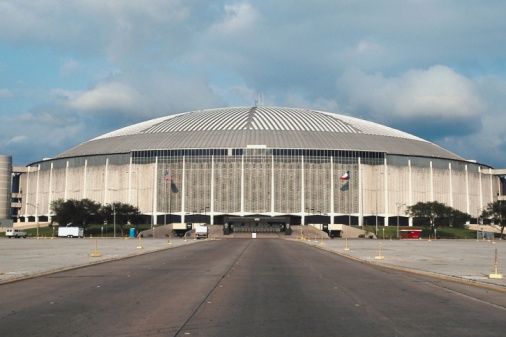
Harris County Commissioners Court voted unanimously Monday to preserve and revitalize one of the most famous buildings in the United States, agreeing on a $105 million plan to raise the Astrodome floor, provide two levels of underground parking and convert the building’s 550,000 square feet into useable public space.

Court members unanimously authorized the Office of the County Engineer to spend $10.5 million on the plan’s initial engineering and architectural phase.

The vote was a landmark step in preserving the Astrodome, the first ever indoor baseball stadium and home to some of the nation’s most memorable sports and entertainment events. The next step will be to present the plan to the Texas Historical Commission, which must approve any substantive alterations to the 51-year-old county-owned structure.

Under the plan approved, the county will spend $105 million to raise the Astrodome floor 30 feet to ground level and install 1,400 underground parking spaces. Numerous studies and recommendations have shown that elevating the floor to ground level vastly improves accessibility and the ability to redevelop and use the Dome’s interior, and the increased parking will generate more revenue for that redevelopment.

The county will spend a maximum of $35 million from the general fund on the development. The remaining $70 million will come from hotel occupancy tax and parking revenue. The taxpayers’ share may be lowered even further through tax increment reinvestment zone (TIRZ) and lease revenue, as well as historical tax credits – meaning their cost to save the Astrodome would be even less than the $35 million estimated demolition cost.

“The Astrodome’s days of sitting idle and abandoned are over,” said County Judge Ed Emmett. “Instead, Harris County’s most recognized building will again be proud and useful – as host to thousands of area residents attending a variety of business and community events. Hundreds of people worked very hard to see that happen, and I’m proud that this day has finally arrived.

Bay Area Houston Magazine