Boeing Starliner completes crucial abort system test

December 1st, 2019

Boeing’s CST-100 Starliner spacecraft completed a critical safety milestone on Nov. 11 in an end-to-end test of its abort system. The Pad Abort Test took place at Launch Complex 32 at the U.S. Army’s White Sands Missile Range in New Mexico.

The test was designed to verify each of Starliner’s systems will function not only separately, but in concert, to protect astronauts by carrying them safely away from the launch pad in the unlikely event of an emergency prior to liftoff. This was Boeing’s first flight test with Starliner as part of NASA’s Commercial Crew Program to return human spaceflight launches to the International Space Station from American soil.

“Tests like this one are crucial to help us make sure the systems are as safe as possible,” said Kathy Lueders, NASA’s Commercial Crew Program manager. “We are thrilled with the preliminary results, and now we have the job of really digging into the data and analyzing whether everything worked as we expected.”

During the test, Starliner’s four launch abort engines, and several orbital maneuvering and attitude control thrusters simultaneously ignited to rapidly push the spacecraft away from the test stand. Five seconds into flight, the abort engines shut off as planned, transferring steering to the control thrusters for the next five seconds.

A pitcharound maneuver rotated the spacecraft into position for landing as it neared its peak altitude of approximately 4,500 feet. Two of three Starliner’s main parachutes deployed just under half a minute into the test, and the service module separated from the crew module a few seconds later. Although designed with three parachutes, two opening successfully is acceptable for the test perimeters and crew safety. After one minute, the heat shield was released and airbags inflated, and the Starliner eased to the ground beneath its parachutes.

The demonstration took only about 95 seconds from the moment the simulated abort was initiated until the Starliner crew module touched down on the desert ground.

“Emergency scenario testing is very complex, and today our team validated that the spacecraft will keep our crew safe in the unlikely event of an abort,” said John Mulholland, vice president and program manager of Boeing’s Commercial Crew Program. “Our teams across the program have made remarkable progress to get us to this point, and we are fully focused on the next challenge—Starliner’s uncrewed flight to demonstrate Boeing’s capability to safely fly crew to and from the space station.”

Boeing’s next mission, called Orbital Flight Test, will launch an uncrewed Starliner spacecraft to the station on a United Launch Alliance Atlas V rocket from Cape Canaveral Air Force Station’s Space Launch Complex 41. The launch is targeted for Dec. 17.

Movers & Shakers: Jordan P. Davlin

November 1st, 2019

Name: Jordan P. Davlin

Occupation: Professional MotoSurf Racer and owner of JetSurf Academy Houston

Hometown: Clear Lake City

Current home: Seabrook

Family: Lives in the Clear Lake area and North Houston

Someone I’d like to meet: Travis Pastrana or Joe Rogan

If I could switch places with someone for just one day, I’d choose: Dan Bilzerian

My favorite performers are: Nitro Circus

I like to spend my leisure time: JetSurf Racing and traveling

If I could travel any place, I’d go to: Italy

My favorite meal is: Bone-In Filet

As a youngster, I wanted to grow up to be: Lawyer

You’ll never catch me: On the MotoSurf World Cup track

Space City Pain Specialists

November 1st, 2019

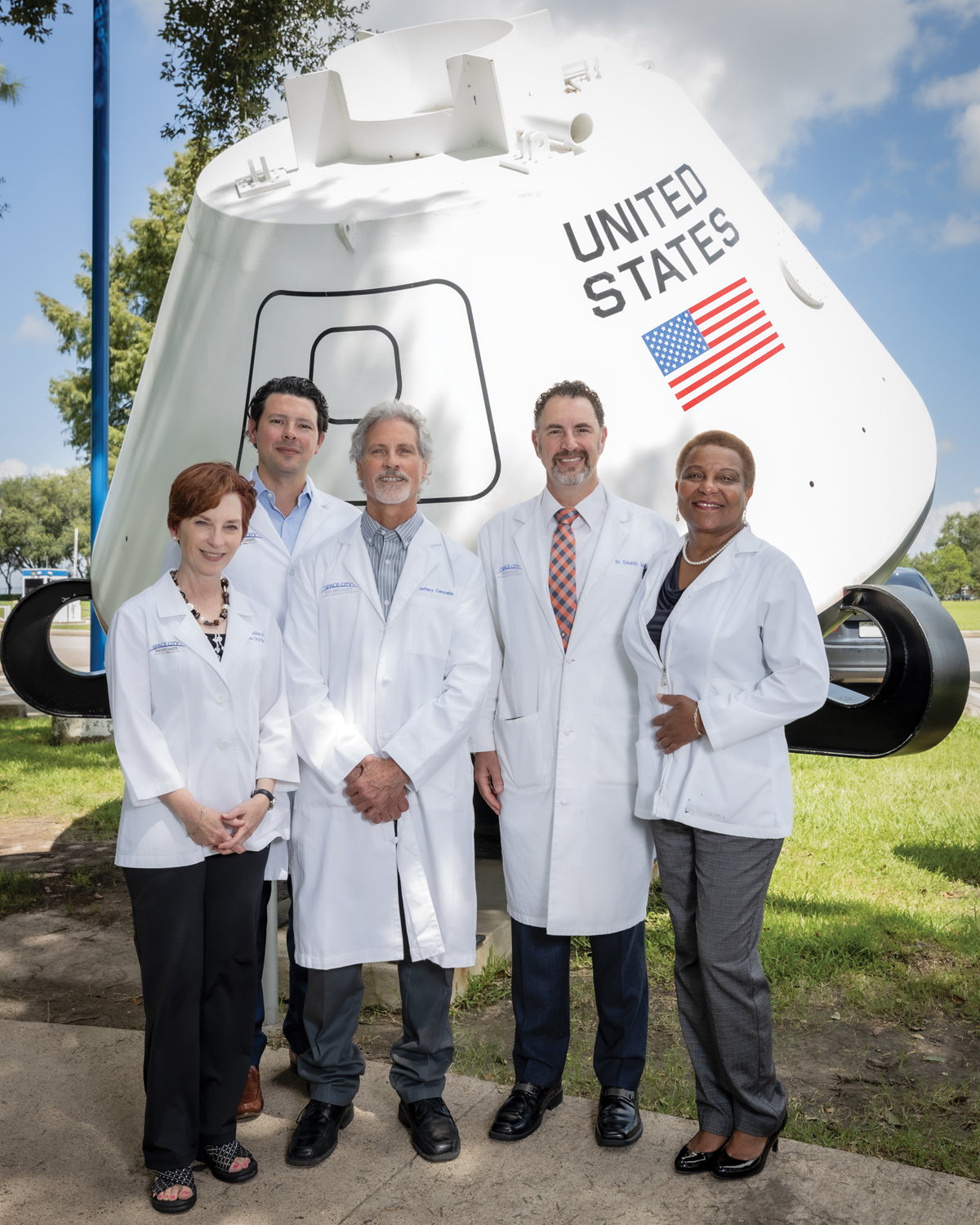
Locations in Webster, League City, Baytown and Lake Jackson. Make your appointment at spacecitypain.com Photo: Moonbridge Media

What is the specialty of pain medicine?

Pain MEDICINE has undergone both an evolution and a revolution during the past twenty years. The trend today is no longer to “manage” pain by suppressing it with large doses of narcotics in a simplistic effort. A driving force in the field’s development was a growing public demand for a compassionate, diagnostic, therapeutic, but safe approach to treat severe pain. The practice of pain medicine draws its base of knowledge from a variety of medical and surgical specialties. Today, the gold standard of the high quality, pain medicine practitioner, is the ability to offer a great variety of innovative, cutting-edge, and advanced treatment alternatives. Not just more pain pills, which only serve to cover up and complicate your misery. Each option has one goal at hand; to understand, target, and eliminate the specific cause of a patient’s pain.

This is what we do at Space City Pain Specialist through our group of exceptionally well trained and credentialled medical staff. Collectively, we have a fund of over twenty years of experience in the field. When you come to us, you will receive a comprehensive, humane, and logical assessment of your painful condition. You will be offered more than unimaginative, band-aid therapy for your health.

We have been in the war against the opioid epidemic for a long time. Years before it was recognized as a disastrous approach to treating chronic pain. What follows is a brief introduction to some of the “state-of-the-art” treatment choices available at Space City Pain Specialists.

TREATMENTS FOR LUMBAR SPINAL STENOSIS
Spinal stenosis happens when the spinal canal becomes too narrow because of a variety of reasons related to the normal aging process. Your spinal canal contains and protects your spinal cord and nerves. Sometimes the channel can become so tight that it causes “pinched nerves,” which in turn is painful. In fact, spinal stenosis can cause so much sciatic type pain, a patient can only walk for short distances before needing to sit down to relieve the discomfort. A person with this condition may experience weakness in their legs, which causes the legs to “give out” from underneath them, sometimes causing injury. It is a disabling problem, to say the least.

Currently, there are minimally invasive surgical treatments available such as the MILD or Vertiflex procedures, which resolve many forms of spinal stenosis. These techniques are both outpatient operations, and they are available at Space City Pain Specialists. Most patients are up and walking, without pain, within hours.

OPIOID SAFETY
Opioids are sometimes used, in conjunction with other modalities, to treat pain. While opioids can be a valuable tool to treat some types of pain, they can be dangerous and deadly when misused.

At Space City Pain Specialists, we know that opioids must be used at times to help our patients in the short-term, and rarely, in the long-term. We are trained in assisting them in navigating through these dangers to minimize the impact on them, their families, and society. Before prescribing an opioid for pain, your provider will have a serious conversation about the risks and benefits of use. The most significant hazards occur when these pain relievers are first started. There is a significant increase in risks if medication is prescribed without appropriate medical supervision. These include nausea, sedation, clouded thinking, worsening of sleep apnea, itching, and constipation. In some instances, constipation from opioids may become so bad that bowel obstruction can happen. The use of opioids for extended periods can reduce the normal production of sex hormones in both women and men, leading to weight gain and depression. It is common knowledge that using opiates for even short periods can cause both physical and psychological addiction to the medication. A little-known fact is the unchecked escalation of an opioid dose may make patients more sensitive to pain and consequently hurt more!

We are vigilant of these pain medication pitfalls at Space City Pain Specialists and know how to help our patients avoid them.

S. Jeffery Cannella, M.D., Clear Lake

NEUROMODULATION
Neuromodulation therapy or spinal cord stimulation (SCS) is an advanced treatment modality for the management of chronic, difficult to control nerve pain. Many patients have a history of multiple spine surgeries or damage to the nervous system. The physicians at Space City Pain Specialists are experts with this therapy. They use the latest, most technologically forward-looking systems available today. Spinal cord stimulations deliver electrical impulses that are administered to the spinal cord to disrupt pain signals from reaching the brain. The electrical stimulus is either not perceptible or feels like a gentle tingling sensation in the painful areas depending on the type of therapy. Good candidates for this type of treatment often experience dramatic, positive changes in their quality of life.

INTRATHECAL INFUSION SYSTEMS (PAIN PUMP) AND MICRODOSING
The opiate crisis has taught us a lot in the recent past since it has gripped the nation in an epidemic of untimely death and widespread suffering. An old English proverb once stated: “The road to perdition is paved with good intentions.” For several years now, doctors have been compelled to relieve pain, which often translated into prescribing more narcotic medication. On the surface, a simple, well-meaning effort, but a plan with unintended, often disastrous outcomes. The fact of the matter was, doctors were making their patients worse instead of better.

There are a few exceptions, for which taking oral opiates long term will improve the patient’s condition. When such a course is medically indicated, it will require the close supervision of a pain medicine specialist every month to monitor patient use and compliance with the doctor’s recommendations. The specter of opiate tolerance is always a concern. There is not much current medical research supporting the use of oral opiates long term for chronic pain.

One such therapy is an intrathecal infusion system, more commonly known as a “pain pump.” This is a highly sophisticated, computerized, twenty-first-century device capable of delivering precisely measured doses of pain-relieving medications directly into the nervous system. It is safe, with negligible risks, and has far fewer hazards than taking oral narcotics. At Space City Pain Specialists, we adhere to a pain pump management protocol known as “micro-dosing.” We expose the patient to the smallest dose of opiates to achieve the most significant reduction of chronic pain. Patients are unshackled from taking oral medications every day and coming to office visits once a month. Our “pain pump” patients visit with us four times a year to have their devices refilled, and thereby, they get on with the more essential things in their lives.

MUSCULOSKELETAL MEDICINE
Musculoskeletal (MSK) medicine involves the evaluation and treatment of muscles, bones, joints, tendons, and ligaments. These are common causes of pain, often arising from both sudden and repetitive injuries, autoimmune diseases, and general wear and tear. If not adequately addressed, these injuries can lead to chronic conditions, increased nerve sensitivity, and secondary injuries. Understanding the pain pattern and finding the root of the problem is essential to successful treatment.

Many procedures are effective in controlling these conditions, including joint and tendon steroid injections, intra-muscular trigger point injections, and advanced treatments like radiofrequency nerve ablation.

We provide all the above, as well as the newer “regenerative medicine” therapies. These focus on helping the damaged structures heal faster with biologics, which are derived from living organisms. This approach maximizes the body’s own healing powers. Some examples are platelet-rich plasma (PRP), hyaluronic acid for joint lubrication, and amniotic fluid stem cells to help grow new healthy tissues.

Eduardo A. Garcia, M.D., Clear Lake

EXERCISE AND PAIN
Medical research has consistently shown that regular exercise reduces pain and depression. How so? When you increase your level of activity for short periods, your nervous system responds by producing a neurochemical known as “endorphins.” Endorphins are potent pain relievers and antidepressants, which are naturally produced by your body. By exercising regularly, any patient can take an active role in controlling their pain. We have a full staff of rehabilitation and exercise experts on staff at Space City Pain Specialists to help you do this.

THE PSYCHOLOGY OF PAIN
There is no doubt that constant, relentless pain either causes depression or worsens it. Once “the blues” set in, patients will hurt more. Their ability to tolerate even the routine aches and pains that we all experience from time to time is lowered. That is why a healthy mind is as essential as a healthy body. If there is a need, we have a psychologist on staff dedicated to helping our patients sail through the perils related to the psychology of pain.

THE ROLE OF CANNABIDIOL (CBD) IN PAIN MEDICINE
Recently, Cannabidiol (CBD) an active, non-hallucinogenic ingredient in cannabis (the hemp plant), has emerged as an alternative to opiates in the treatment of chronic pain. Some researchers advanced the theory that CBD activates the endocannabinoid receptors in your brain and immune system, to reduce pain for multiple conditions. The use of CBD products is not prohibited in our practice. It is legal in Texas. Tetrahydrocannabinol (THC) is the active hallucinogenic component of the hemp plant, which is illegal in most states.
We do caution our patients about the source of their CBD. Most CBD producers do not adhere to stringent production requirements and sell an inferior grade. Moreover, some brands contain a percentage of THC higher than is legal. The legal limit is 0.3%. Patients using sub-standard CBD oils are at risk of having a urine drug test positive for THC. Presently, there is no way of distinguishing a positive test from marijuana use from the use of CBD. Patients should also keep in mind that as of today, there are no FDA approved CBD products. There is no conclusive data to support CBD as a method of pain management here in the United States. There is ample data in the medical literature from foreign countries like Israel. Therefore, we do have a pharmaceutical-grade CBD product available in our practice for our patients. It has 0% THC and will not produce a positive test result. Clearly, there are a lot of potentials, but more research is needed. Our practice will be involved in this research. Stay tuned!

SPACE CITY PAIN SPECIALISTS IS:
Joseph T. Alvarez, M.D., Clear Lake
S. Jeffery Cannella, M.D., Clear Lake
Eduardo A. Garcia, M.D., Clear Lake
Alan Swearingen, M.D., Bay Town
Sunil Thomas, M.D., League City and Lake Jackson
Denise Jarbath, Certified Physician’s Assistant, Clear Lake
Peggy Phillips, Advanced Practitioner Registered Nurse, Certified, Clear Lake

Enhancing Your Life

November 1st, 2019

Dr. Phi P Nguyen, M.D.

By Blaine Ochoa

Throughout life, there are pivotal moments that happen that change the course of our future. Moments can impact us in different ways and transform our lives. For example, reaching a new level in our career, attaining a dream goal, creating a family, or moving to a different country. Life is made up partly of what inevitably happens to us, and more importantly, the decisions we make – this is what changes and shapes our lives.

You have great power over the direction and outcome of your life. Your choices don’t define you, but they will always have an impact. Your mindset and the way you view yourself are beyond powerful. Having a strong mind and self confidence is healthy, and it is the foundation that guides one into making decisions. Perfection doesn’t exist, but loving yourself and striving to be the best version of you on the inside and outside is imperative to living a full life.

In the aesthetic and beauty world, getting plastic surgery has usually been a controversial topic and life choice. I believe it’s important to break the stereotypical mindset that plastic surgery is a negative, frowned upon decision. With today’s technology, medical advancements, and highly trained doctors, plastic surgery is safer and can be more beneficial than ever. I support the idea that there is nothing wrong with enhancing your outer appearance in such a way that makes you feel more confident and enhances your life.

Each day, “start by creating a better you and always look forward – never look back” says, Dr. Phi Nguyen, Owner of MIA Plastic Surgery. Dr. Phi Nuygyn was born in Vietnam and immigrated to the United States at the age of 10. Dr. Phi came to Houston for college and medical training where he attended Rice University, as well as University of Texas Medical School where he received his medical degree. He trained in general surgery and plastic surgery at St. Joseph Hospital. Dr. Phi then started his own private practice in 1997. He later sold his first practice and founded MIA Plastic Surgery in 2008, located in Houston, Texas. Aside from being a sought after and esteemed plastic surgeon, Dr. Phi loves spending time with his family and enjoys photography, surfing, boating, and playing tennis.

Dr. Phi says he didn’t always start out wanting to be a plastic surgeon. He originally wanted to be an artist, and has a huge passion for art and creativity. He however chose the field of medicine, and realized that plastic surgery was “the only field that allowed the doctor to use all of his creativity to help the patient not only get back to whole or normal but to also improve the patient.” In aesthetics and plastic surgery, “you are helping the patient be a better version of themselves. Everything else in medicine you’re normally treating an illness or disease.”

Aesthetic treatments can help boost ones self confidence and enhance a person’s lifestyle. “Surgery can be apart of a life transformation for someone. Most of the time it creates a lifestyle change, an inner and outer transformation. We love watching that transformation, it is the biggest satisfaction.”

In today’s society, some people still share the common misconception that plastic surgery can end up looking fake with the appearance that the patient clearly had work done. Social media has even been a platform for exposing poorly performed plastic surgery procedures. This is not accurate when the surgery is performed by the right medical professional with the best approach.

“At MIA we believe in that philosophy of minimally invasive aesthetics. We use the latest technology and advancements to achieve the best results and desired outcome.

The recovery period is much faster, there is less scaring, less down time, and the result is a more natural look. The MIA team prides itself on highlighting the patient’s natural beauty, staying conservative, and creating a youthful look with the proper aesthetic surgery. Without knowing you’ve had any work done.”

Dr. Phi also believes in the importance of giving back as well as educating minds. Dr. Phi is highly involved in charity work and sits on a few different foundation boards in the United States, as well as being philanthropically involved in Vietnam. “While still helping our patients, we would also like to become an institution and training school that educates doctors and surgeons on non invasive aesthetics and technology.”

“The success of MIA depends on our whole teamwork approach to help our patients the best possible way.” MIA offers everything from non invasive, minimally invasive, to full surgical procedures. MIA also offers facials, injections, non invansive body sculpting, and even mommy makeovers. “We are fortunate that we can offer such a variety of treatments under one roof, even doing actual full surgical procedures at our facility. We pride ourself on our quality service, and make sure our patients are taken care of months and years after procedures.” Dr. Phi also loves interacting with his patients and forming a relationship and bond.

Take control and responsibility over your mind, your decisions, and your life. Do what makes your soul happy and enhances your overall well being and self confidence. Aesthetics and medicine is an art and science that can transform a person’s life for the better. From improving ones health, self confidence boosting, to outer body aesthetics, plastic surgery can enhance a person’s life. Plastic surgery can even bring more opportunity, happiness, and better well being for someone. If you would like to contact the incredible MIA Plastic Surgery team call (832) 804-8992 or visit www.allaboutmia.com You can also follow MIA on social media on Instagram @miaplasticsurgery and on Facebook.

NASA’S FIRST ALL-WOMAN SPACEWALK

November 1st, 2019

NASA astronauts Jessica Meir (left) and Christina Koch are inside the Quest airlock preparing the U.S. spacesuits and tools they used on their first spacewalk together. The Expedition 61 flight engineers are holding the pistol grip tools they used to swap out a failed power controller, also known as a battery charge-discharge unit, that regulates the charge to batteries that collect and distribute power to the International Space Station. Photo: NASA

Astronauts Koch, Meir make first all-woman spacewalk

Astronauts Christina Koch and Jessica Meir completed NASA’s first all-woman spacewalk on Friday, Oct. 18.

During the 7-hour, 17-minute spacewalk, the pair replaced a failed power controller and completed several other tasks in preparation for future spacewalks.

It was the first spaceflight for both women, who were selected as astronaut candidates in 2013 as part of the first class, of which 50% were women.

Meir was the 15th woman to spacewalk, and the 14th U.S. woman. It will be the 43rd spacewalk to include a woman. Women have been performing spacewalks since 1984, when Russian cosmonaut Svetlana Savitskaya spacewalked in July and NASA astronaut Kathryn Sullivan conducted a spacewalk in October.

Smallish Trucking

November 1st, 2019

By Don Armstrong

The names are from the past, but the 2019 Ford Ranger and 2020 Jeep Gladiator are completely new trucks that can be found in the mid-size category. We recently had a chance to drive both and found them nothing like their old namesakes, thank goodness.

Jeep Gladiator
Based on a lengthened Jeep Wrangler chassis, this mid-size truck combines all the off-road capability of the Wrangler with the added convenience of a pickup bed. Yes, the doors and top come off and the windshield folds down, just like the Wrangler. We like to think of it as the “Swiss Army Knife” of trucking since it is capable of off-roading like no others with its standard 4-wheel drive system.

Under the hood is a 3.6-liter V-6 that produces 285-horsepower and 260 lb.-ft of torque. A 6-speed manual transmission is standard while the 8-speed automatic is optional. This smooth and reliable power combo can tow up to 7,650 pounds, when equipped with the Max Tow Package, and haul up to 1,600 pounds.

Jeep’s Uconnect infotainment system is simply the best and, as you can imagine, options abound. The base Sport model starts at $33,545. The all-out Rubicon model adds an extra $10-grand.

The “look at me” factor is huge with the Gladiator so get your “thumbs-up” ready when you meet another Jeeper coming down the road.

FORD RANGER
Compared to the old Ranger, the all-new version is considerably larger, and to most, a notable improvement. Adding to its likability is a modern, albeit smaller, design interpretation of its big brother, the F-150.

Although the 2019 Ranger is “new” to the U.S. market, its bones originate in the 2015 Australian version, modernized and legalized for America. It has all the latest tech including Ford’s Sync 3 infotainment system.

Two different cabs and a 5 or 6-foot bed are offered, along with 3 trim levels – XL, XLT and Lariat. We tested the SuperCrew Lariat with the FX4 off-road package, and a dealer installed tonneau cover. This is a great combination, but the $45,750 sticker can be a bit of a shock.

Powering this “mini 150” is a peppy, no-lag, 2.3-liter turbocharged 4-cylinder EcoBoost engine that delivers 270-HP and 310 lb-ft of torque through a 10-speed automatic transmission. Towing is rated at 7,500 pounds, payload maximum is 1,860 lbs.

Pricing for the entry-level Ranger starts at $24,300.

Reason Versus Imagination

November 1st, 2019

By Michael W. Gos

Nassau Bay, Texas

There is an iconic phrase from the movie Apollo 13 that we all know, and many of us often use: “Houston, we have a problem.” And of course we all know the first word spoken from the surface of the moon was “Houston.” The problem is, if we are being truthful, neither phrase is correct. They should have said “Nassau Bay.” That is the location of the Johnson Space Center.

Several years ago, I was at Space Center Houston for a Purdue Alumni party and fundraiser. Our host was the last man to set foot on the moon and fellow Purdue alumnus, Gene Cernan. The facility was closed except for our group and we were given access to a lot of things others don’t get to see. And each of them amazed me. The sheer size of the full scale copy of the space station, for instance, was awe-inspiring. Seeing the old Mercury program control room and the various rockets seemed almost like a fantasy.

I suppose learning about our space program’s early days would overwhelm most people. Just think of the minute technical details that all had to be just right to make the whole lunar project work. The engineers did it without computers—generally depending solely on slide rules. I think most people would marvel at the attention to detail and the rational, logical abilities of the people who made this all happen.

Not me. I was totally blown away by something entirely different—the creativity of it all. I was in awe of the imagination that made this all possible.

In 1961, in spite of the fact that we had yet to successfully put a man in space at all, President John Kennedy announced we would put a man on the moon by the end of the decade.
NASA got word of the impending announcement only about four weeks before the speech. The problem was, there was nothing even close to a plan for this enormous project, and there had to be a plan ready before the announcement. NASA engineer Bill Fleming (another fellow Purdue alum) was given four weeks to come up with a plan detailing “all facets” of the program to get us to the moon. The plan had to be ready in time for Kennedy’s announcement in September—an enormous assignment with a ridiculous deadline! Four weeks later, Fleming and his team submitted a report over 500 pages long detailing the overall plan, phases of the project, more than 1,200 tasks and a full budget for the program.

I think it is safe to say most people would begin a project like this by designing a rocket to go the moon, and their work would have been concentrated along those lines. But Fleming wasn’t thinking like most people. Instead of getting down to the rational, logical details of getting to the moon, he was much more imaginative. He saw the problem differently. He chose instead to divide the huge project into three separate phases, or missions: orbit the earth, circle the moon, and finally, the actual landings. Today we look back at this radical decision and we understand the beauty of it. First, it makes perfect sense given what had to be learned and what skills needed to be developed, and second, it is incredibly time-efficient because we can have people working on missions two and three even as we are just starting mission one. Time was the thing in shortest supply.

Then there was John Houbolt, who came up with the wild idea that a moon landing should involve three vehicles, not one. At the time, the idea most commonly endorsed was a science-fiction-like rocket that would launch from earth, land on the moon, then launch from the moon and travel back to earth. A vehicle that would escape earth’s gravity, travel all the way to the moon, launch a second time and then travel all the way back to earth would have taken both enormous amounts of hardware and fuel. It would have taken a rocket much more powerful than the available Saturn V to launch the payload necessary to do it in this more “popular” way.

Concerned first and foremost with weight, Houbolt asked the unusual question, “Why not leave the fuel for the return trip to earth up in the moon’s orbit?” Houbolt’s idea was called the lunar orbit rendezvous (LOR) concept. It meant a moon landing would require three vehicles: a Saturn 5 (three stage) rocket, a command module, and a lunar landing module.
His idea was considered so radical that one NASA engineer said “Houbolt has a scheme that has a 50 percent chance of getting a man to the moon and a 1 percent of getting him back.” Another said “His figures lie, he doesn’t know what he’s talking about” (thespacereview.com).

Looking back, both Fleming and Houbolt had ideas that we now can see make perfect sense. They are completely logical and we understand why they worked. But someone had to think of them, and logic clearly was less important in that process than imagination. Remember the comments of some of the more “logical” engineers about Houbolt’s plan.
The fact is, if we want a “complete” world we can’t have the “higher” trait (logic and reason) without first establishing its foundation—imagination. We often stereotype engineers as logic-based number nerds, and perhaps many of them are. But the fact is, details and numbers are useless until we have the “Big Idea.”

Were these two men any less rational/logical/technical just because they were imaginative? Clearly not. To truly be effective, to be someone like Fleming and Houbolt, we really need to excel at both.

Many of us tend to classify people into one of two groups, either as creative types, or detail people. But is there really such a clear distinction? While it may be true that some people seem to be better at the big picture, at finding creative solutions to problems, do these identifications have to hold true? We hear that people have an “orientation.” They are detail-oriented, or they are creative. They are rational and logical or they are imaginative. They are “left-brained” or “right-brained.”

Science has achieved so much in the decades since Apollo and yet still today, imagination is often overlooked in favor of the rational. We never could have gotten to the moon or achieved any of the other technological advances since then with reason alone? We must first conceive, then build.

Neither creativity nor logic are genetic gifts. They are developed skills. And both can be cultivated in the individual if we try. Obviously, it is best if we begin that work in childhood. But it is never too late to develop these skills in ourselves—if we really want to.

Left brain/right brain. Do we really want to go through life with half a brain?

Lakewood releases results of ’19 Harvest Moon Regatta

November 1st, 2019

Photo: Kelly Groce

Lakewood Yacht Club in Seabrook has released the big winner in the 2019 Harvest Moon Regatta it hosted Oct. 10-13.

A total of 119 sailboats crossed the starting line in Galveston to begin the 33rd Annual Harvest Moon Regatta. Hundreds of sailors, from novice to expert, look forward to this event each October.

HMR is a fun offshore race that ends with a fabulous party in the Port Aransas Pavillion, including an excellent BBQ dinner and live entertainment. And, Founding Sponsor Bacardi Rum supplied plenty of rum for all racers, volunteers, and party guests at the Welcome Sailor Rum Party.

Some of this year’s big winners are:

  • Bacardi Cup / Bear / Forbes Durdin
  • Cameron Cannon / Song of the South / Michael Glass
  • John Broderick Memorial / La Isla / Kevin Somers
  • Founders’ Award / Try Me / Greg Way
  • Bill Hall Memorial Trophy /Bear / Forbes Durdin
  • Luna Trophy / Astarte / Cheryl Morvillo

    A complete list of race results can be found at harvestmoonregatta.com.

This annual race is organized by Bay Access, a charitable organization supporting amateur racing, and hosted by Lakewood Yacht Club.

Aside from title sponsor, Bacardi Rum, other major sponsors include City of Seabrook, Bay Area Houston Magazine, Gulf Coast Mariner Magazine, Insurance Navigators, Davis Marine Electronics, Upstream Brokers, Texas Coast Yachts, Faron Daigle Realtor, Little Yacht Sales, Pelican Insurance Agency, Y.E.S., True North Marine, Sea Lake Yachts, Thomas Bates Accessories, Hayes Rigging, Coast Guard Foundation, Marine Max, TMCA, Boatpix.com, Mantus Anchors, Optima Marine, Ocean Navigator, Pleasure Pier, Boaters’ Retail Shop of Texas, Life is Good Magazine, and West Marine.

Judges Deliver Dynamic State of the County Addresses

October 31st, 2019

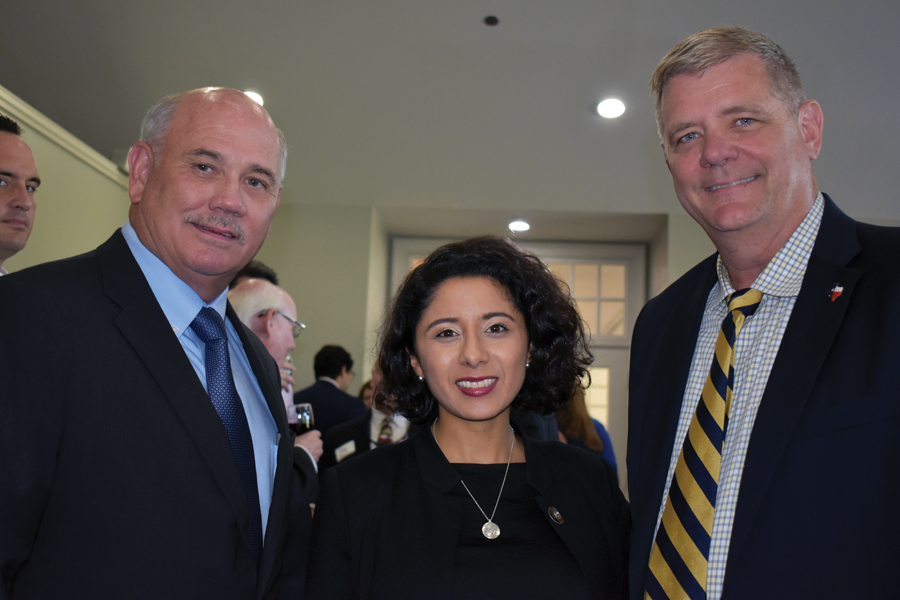
Bay Area Houston Economic Partnership President Bob Mitchell, left, welcomes Harris County Judge Lina Hidalgo and Galveston County Judge Mark Henry, keynote speakers for the annual State of the Counties Address at Bay Oaks Country Club in Clear Lake.

By Kathryn Paradis

The Bay Area Houston Economic Partnership hosted its annual State of the Counties meeting at Bay Oaks Country Club, where both Galveston County Judge Mark Henry and Harris County Judge Lina Hidalgo impressed their audience with their affable presentations that spoke of the opportunities and challenges of these rapidly growing counties.
Judge Hidalgo was quick to point out that “we can’t avoid the topic of flooding and flood control coming out of Imelda. I want you to know that that is the No. 1 priority for us in Harris County. For the first time, we’re truly putting science and people first. There are tough decisions that we have to make.

“We’ve hired an independent, outside group to come in and help us figure out how we can do things faster. We’re moving forward as quickly as we can. What was going to take 10-15 years is firmly at 10, but limitations such as environmental permitting and right-of-way acquisitions take time.”

She added, “We’re moving the drainage project in unincorporated Harris County forward to 3½ years instead of 5, which means two hurricane seasons faster. Our Flood Control District is very focused on innovation. If we don’t change the way we do things pretty dramatically pretty soon, it will affect the competitiveness of our region and everyone’s ability to thrive.”

Judge Hidalgo also discussed the coastal barrier and thanked BAHEP for its advocacy work. “It is such an important project. We can’t just hope that we don’t get a direct hit (from a hurricane).”

She also stressed the importance of being good stewards of the county’s $5 billion budget for this fiscal year, closing her remarks by saying, “Our ability to work together is going to continue lifting all of us. Count on me as a partner in the work that you all have done and continue to do.”

GALVESTON COUNTY
Judge Henry opened his remarks declaring, “The economy in Galveston County is doing great. The population is expected to grow seven percent over the next 10 years. Employment is expected to grow over eight percent. We are growing at such a pace that it is difficult to keep up.

“The county has been very successful in its conservative budgeting. The tax rate is where it was in the late 1990s. This gives the county a AAA bond rating making the county government very stable,” he said, going on to note that a county-wide drainage study is underway. Updated flood information was received from NOAA and the county is trying to get FEMA to adopt NOAA’s information to get a better idea of what flooding may look like in the future.

Transportation is going to be a big issue, Henry said, expressing his concern about viable hurricane evacuation routes out of Galveston County. He spoke of the Texas Department of Transportation’s decision to keep the southern sections of the Grand Parkway in its Unified Transportation Program. Henry said, “The Grand Parkway will be a major economic driver in the region, but it’s also another evacuation route. This was my No. 1 point in talking with TxDOT.”

Henry said he is constantly working with companies interested in relocating to Galveston County, “where thousands upon thousands” of acres are available at less than $1 per square foot with deep water, rail, and interstate access. Meanwhile, he expects 1.9 million cruise passengers will pass through Galveston Island, which expects 7.2 million visitors during 2019.

Businesses know they can count on Galveston County to be predictable, fair, and consistent, he said in closing, adding, “We are open for business.”

Clear Creek ISD unveils school start time options

October 30th, 2019

The Clear Creek School District School Start Committee is in the process of receiving public feedback regarding start time options for the 2020-2021 school year for elementary, intermediate and high school.

The committee of parents, students, medical professionals and CCISD staff have met on a weekly basis since Sept. 24, and examined available research on sleep patterns of youth of all ages, state instructional time requirements, current transportation operations and challenges, schedules of extracurricular and co-curricular programs, and survey results from students.

“The group was provided a great deal of information to process through,” Superintendent of Schools Dr. Greg Smith said. “They were committed to the guidelines and charges to ensure student safety K-12, maximize student opportunities to participate in special programs from WAVE and Science Magnet to the arts and athletics, and consider public feedback all the while making efficient use of taxpayer resources. I am thankful for their attention to the task at hand.”

The committee reviewed several model schedules and used a nominal group exercise to narrow the recommendation from the five potential schedules below. The group operated on the board approved consensus model. “As we started to draft recommendations, we followed these requirements. There must be a minimum of 45 minutes between school start times by level.  The school year must be 75,600 minutes by state law.  Finally, intermediate schools need to remain the last start time due to magnet transportation to six of the ten magnet schools,” said Rene Falls, committee chairman and parent.

ElementaryIntermediateHigh School
Current7:55 a.m. – 3:15 p.m.8:40 a.m. – 4:00 p.m.7:10 a.m. – 2:30 p.m.
Model 18:15 a.m. – 3:35 p.m.9:00 a.m. – 4:20 p.m.7:30 a.m. – 2:50 p.m.
Model 27:30 a.m. – 2:50 p.m.9:00 a.m. – 4:20 p.m.8:15 a.m. – 3:35 p.m.
Model 38:30 a.m. – 3:45 p.m.9:15 a.m. – 4:30 p.m.7:45 a.m. – 3:00 p.m.
Model 47:45 a.m. – 3:00 p.m.9:15 a.m. – 4:30 p.m.8:30 a.m. – 3:45 p.m.


The group narrowed its options to three models, the current schedule, Model 1 and Model 4. Through another nominal group exercise, the current schedule and Model 1 emerged as the majority options to bring forward for public input. “After much discussion, the committee was unable to reach consensus on a single recommendation.  A large portion of the committee wanted to keep the current schedule and slightly smaller portion of the committee wanted to adjust the current schedule by 20 minutes,” said Falls.

ElementaryIntermediateHigh School
Current7:55 a.m. – 3:15 p.m.8:40 a.m. – 4:00 p.m.7:10 a.m. – 2:30 p.m.
Model 18:15 a.m. – 3:35 p.m.9:00 a.m. – 4:20 p.m.7:30 a.m. – 2:50 p.m.


These two options are open for public feedback. A public hearing was held on Tuesday, Oct. 22, 2019 and can be viewed online. The public can still provide their feedback electronically through the district’s website. The committee will make a final recommendation to present to the Clear Creek ISD School Board on Nov. 11, 2019. The Clear Creek ISD School Board will make the final decision on Monday, Nov. 18, 2019 during its regular school board meeting.

Visit the committee’s website for more information.

Bay Area Houston Magazine