Car Show Luxury Performers

December 31st, 2019

By Don Armstrong

Each January, we make the annual pilgrimage to the Houston Auto Show at NRG Center, and each year we’re amazed at what lies before us. In this issue of Bay Area Houston Magazine, we focus on a couple of high performing luxury models that must be on your look-see list at the 2020 show.

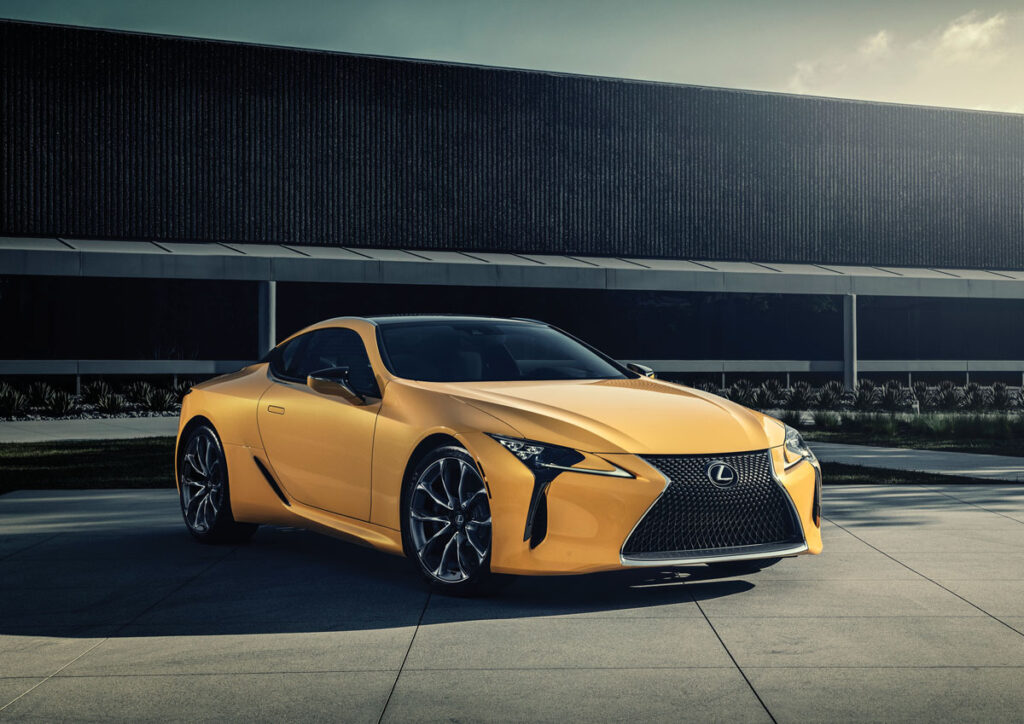
Lexus LC 500h
The Lexus LC is one of the most gorgeous coupes to grace our shores in recent memory. Its shape is art in-motion, a sleek arrow with oversized rear haunches that enhance its already aerodynamic styling. Even the Lexus signature, oversized “spindle” grille somehow seems to work with this car.

The interior is simply beautiful, with attention to detail befitting its $100,000 price tag. Front seats hug you like a premium pair of leather driving gloves, the rears, however, are uninhabitable. The LC 500’s infotainment screen is controlled by a center console touch pad that adds a layer of control for the sake of screen placement.

With a 471-horsepower V-8, the only thing it lacks is fuel mileage. Now comes the LC 500 “h,” or hybrid, that combines a V-6 gasoline engine with dual electric motors, delivering 30-MPG and 354-horsepower to the rear wheels.

A visit to the 2020 Houston Auto Show won’t be complete without a stop at the Lexus display to see the LC 500h.

M-B GLC 63 AMG
Mercedes calls the GLC a “coupe,” we call it an SUV, and it competes in the most competitive class of all, small to midsize. But this do-all becomes a head-of-class contender through its under-hood muscle.

The AMG wing of Mercedes turbocharged its V-8 to the tune of 469-horsepower and 479-lb. ft. torque. This Benz can be as tame as you want but can also blast its way to superhighway speeds in the blink of an eye.

If it weren’t for the GLC’s increased ground clearance, it could easily be a sexy, fastback sedan with its big, new Mercedes grille and in-your-face emblem. Huge wheels, big, trim-enhanced wheel well openings and faux front and rear skid plate embellishments proclaim, “here I am.”

The interior reflects all of this German company’s finest; high quality trim with impeccable fit and finish, including an updated infotainment system called MBUX.

The GLC starts at a reasonable $50,000, add the AMC 63 package and the price jumps to $100,000.

Movers & Shakers: Todd Caliva

December 31st, 2019

Name:  Todd Caliva

Occupation: CEO of HCA Houston Healthcare Clear Lake

Hometown: Houston

Current home: Pearland

Family: Two daughters

Someone I’d like to meet: President George W. Bush

If I could switch places with someone for just one day, I’d choose: Ronald Reagan when he was President

My favorite performer is: Kenny Chesney

I like to spend my leisure time: Golfing

If I could travel to any place, I’d choose: Italy

My favorite meal is:  Italian Food
As a youngster, I wanted to grow up to be:  Influential

You’ll never catch me: Sitting still

The thing that bugs me the most is: People who take short cuts

My favorite movie is: Rocky and also The Godfather

Few people know: I am working very hard to be a better listener

BIOLOGICS. BIG MOLECULES. BIG CURE.

December 31st, 2019

Mayor Donna Rogers welcomes MaSTherCell’s CEO Darren Head to Webster. MaSTherCell’s magnificent facility, located at 253 Medical Center Boulevard, represents the global company’s US headquarters for cell and gene therapies. Capital letters in the company’s name stand for “Manufacturing Synergies for Therapeutic Cells.”

MaSTherCell’s Innovative Cell Soldiers Infiltrate Webster

New advances in cell and gene therapies are transforming and revolutionizing medicines for treating and curing critical diseases, like leukemia, diabetes, and blood cancers. Since 2011, MaSTherCell, a renowned, global cell and gene therapy Contract Development Manufacturing Organization (CDMO), based in Belgium, has been pioneering and advancing sustainable and affordable therapies for intractable diseases by extracting cells from patients or donors, altering those specimens in highly controlled laboratories that are many times cleaner than a surgical lab, and re-injecting the new cells into patients to combat diseased or compromised cells. Cell and gene therapy works. “Soldier” cells and “soldier” genes are developed, manufactured, and tested by MaSTherCell to attack cancer and other maladies.

MaSTherCell opened its United States headquarters in Webster at 253 Medical Center Boulevard in August 2019 to expand its world presence and provide direct, fast, and comprehensive interaction, consulting, and collaboration with key American-based cell and gene therapy companies—many of which conduct clinical trials in the nearby Texas Medical Center—the largest medical complex on the globe. Webster’s central location within the United States enables time-sensitive cell therapy products to reach any mainland destination quite rapidly—ensuring excellent logistics for live cells. Too, Webster’s proximity to growing life science and biotechnology industries is highly beneficial for ensuring access to a highly skilled workforce and top-notch support services.

MaSTherCell represents the “D” (development) in “R & D” (research and development). When therapy discovery companies seek to develop their process for manufacturing, in accordance with the FDA’s Good Manufacturing Practice standards—and, ultimately, launch their products more rapidly and effectively, they contract with MaSTherCell, as the steps from research to development or concept to manufacturing are fraught with rigorous, regulatory, and complex processes. MaSTherCell’s team of industrial, scientific, and operational experts with credentials in industrial biotechnology, biochemistry, molecular biology, and biomedical science provide technology transfer, process and analytical development, clinical manufacturing, regulatory support, and quality oversight to customers.

A tour of MaSTherCell’s magnificent, state of the art Webster facility illuminates some of the extraordinary processes that the company undergoes to manufacture its customers’ cell and gene therapies. Inside the 32,000 square foot facility, the entire second floor features a suite of labs, including the process development/technology transfer laboratories, quality control, microbiology and cell culture laboratories, and multiple manufacturing suites. All of these labs and cleanrooms, designed under the most exacting and precise standards to support both autologous (utilizing the patient’s own cells) and allogenic cells (utilizing cell sources unrelated to the patient) are continually controlled and monitored, as part of MaSTherCell’s robust Quality Management System, in conjunction with approximately 1,000 pieces of equipment. The eight manufacturing cleanrooms, clustered with their expansive glass exteriors, are surrounded by a spacious walkway that allows clients and visitors the opportunity to view activity—activity that leads to saving lives.

Success stories for cell therapy include toddlers diagnosed with pediatric acute lymphoblastic leukemia, middle-aged men with chronic lymphocytic leukemia or young women with acute lymphoblastic leukemia.

Patients who have blood cancer provide T-cells (workhorses of the immune system) that MaSTherCell isolates in the manufacturing site and inserts chimeric antigen receptor (CAR) and grows the cells—“soldier” cells or new CAR-T cells—to combat the disease. Those new cells, known as chimeric immunoreceptors, have been engineered to give T-cells the ability to target a specific protein and act as a “living drug” against cancer cells when they are infused back into the patient following a four-to-twelve week process that includes the most rigorous testing and validations. With CAR-T-cell therapy, cells can be derived from a patient’s own blood (autologous) or derived from the T-cells of another healthy donor (allogeneic). CAR-T cells are genetically engineered to target and destroy cancer cells.

MaSTherCell is part of an explosive, fast growing industry focused on biologic treatment derived from living cells, DNA, and “natural” sources, in contrast to pharmaceuticals derived from chemical synthesis. Too, the potential applications for cell and gene therapy—immunotherapy—continue to unfold. While CAR-T therapy has proven to be life-changing for patients with blood cancers, inroads are being made for solid tumors, like breast, colorectal, and lung cancer. Currently, two CAR-T-cell therapies have been approved by the FDA, while there are 1,000 potential therapies in labs, right now.

MaSTherCell Webster is positioned for this growth with its focus on agility, transparency, engagement, team spirit, and innovation, amid a culture that is directly tied to the company’s mission, “Saving Lives.” Inside the Webster facility, patients’ photographs, with their diagnoses and successful cell therapy, are in the spotlight with MaSTherCell’s slogan, “Every Second Counts!”

Steak au Poivre with Sauteed Asparagus

December 31st, 2019

 By Alisa Star

Classic steak au Poivre is a simple dish of seared peppercorn-crusted steaks with a creamy butter pan sauce. The secret is to start by encrusting  the steak on only one side. Pre-salting the steaks will allow the surface of the meat to dry out allowing the peppercorns to stick.

Pairing this easy elegant meal with a rich full bodied red is a given. Silver Oak Alexander Valley Cabernet 2015. It has an exciting nose of maraschino cherries, blackberry bramble and brisket with notes of clove and star anise. This wine has a fruity mid-palate of current with toasted vanilla and roasted brown sugar from American oak barrels. (Bonanza Cabernet is a great substitute. It mirrors Caymus).

  • 4 (6-8 oz) boneless steak medallions, such as filet mignon
  • Kosher salt
  • 3 tablespoons vegetable oil
  • 1 tablespoon unsalted butter
  • 2 thyme sprigs
  • 1 medium clove garlic
  • 1 shallot minced
  • 2 tablespoons brandy or cognac
  • ¾ cup chicken stock
  • ¾ cup heavy whipping cream
  • 1 teaspoon dijon mustard

Salt steaks first, let dry for 15 minutes. Meanwhile crack peppercorns into rough halves with a pepper grinder, or a mortar and pestle. Spread peppercorns evenly over only one side  top of each steak.press firmly so the peppercorn imbeds the medallion.In a large cast iron skillet, heat oil over medium-high heat until shimmering. Add steaks, peppercorn side down, and cook until peppercorns are well toasted, about 3 minutes. Carefully turn steaks, trying not to break the crust. Add butter thyme and garlic and cook, coating the steaks with a spoon as they cook in the sauce, about 1-2 minutes. Remove from heat, and check the internal temperature of the steaks. Medium rare will be 125F; if you want your steak medium you can continue to cook to 145F. Pour off all but 1 tablespoon of fat from the skillet, discard the thyme and garlic, add shallots and more crushed peppercorn, continue cooking over medium heat, until shallots are tender. Add brandy, cook until the smell of the alcohol goes away, add chicken stock and simmer, about 2 minutes. Whisk in heavy cream until sauce has reduced enough to glaze a spoon. Add mustard, and season with salt. Pour sauce over the tops of the steaks.  Coat asparagus with olive oil, lemon, salt and crushed garlic. Saute in pan for 8 minutes.

Hospital holds groundbreaking for new 6-story office building

December 31st, 2019

Those taking part in the Nassau Bay groundbreaking were, from left, Houston Methodist Clear Lake Chief Nursing Officer Katherine Walsh, Board of Trustees members Levi Benton and Elaine Renola, HOAR Construction Project Leader Brian Cook, Houston Methodist Clear Lake CEO Dan Newman, Greg Johnson of PhiloWilke Partnership Architects, Nassau Bay Mayor Mark Denman, Trustees John Kennedy, Dr. Franz Schneider and Jerry Neff, and Houston Methodist Regional Senior Vice President Chris Siebenaler.

By Mary Alys Cherry

Houston Methodist Clear Lake Hospital will begin construction soon on a six-story, 150,000-square-foot medical office building on land adjacent to its campus – the first phase in a multi-year expansion plan. Groundbreaking ceremonies were held Dec. 17 near the construction site with Nassau Bay Mayor Mark Denman and a host of dignitaries there for the turning of the first dirt.

The $40 million medical office building will be home to Houston Methodist Orthopedics & Sports Medicine at Clear Lake as well as the hospital’s physical therapy facilities. The building’s upper floors will contain office and clinic space for physicians from a broad range of specialties.

The building will be constructed on land that previously was part of the Nassau Bay Shopping Village in the 1800 block of Upper Bay Road. The hospital purchased that center in 2015. Construction is expected to begin in August and the building will open in 2021.

“Buildings like this don’t just happen,” Houston Methodist Clear Lake CEO Dan Newman said as he explained how hospital officials have been working with Hoar Construction, which won the main contract for the structure, the architect and many others, adding that with the new building, “we will be able to serve the community for a long time.”

He also introduced Brian Cook, the project’s managing director, noting that this will be his sixth project for Hoar Construction, which has done a number of projects for the hospital.
Mayor Denman also addressed the crowd, explaining how the community was looking forward to the proposed new building while also asking for a moment of silence in memory of the late Nassau Bay Police Sgt. Kaila Sullivan, who died so tragically earlier in the month when a suspect’s car ran over her as he tried to escape.

Joining Newman and Mayor Denman in turning the first dirt were Regional Houston Methodist Vice President Chris Siebenaler, Chief Nurse Officer Katherine Walsh, Hoar Construction Project Director Brian Cook, Architect Greg Johnson and Board of Trustee members Levi Benton, Elaine Renola, John Kennedy, Dr. Franz Schneider and Jerry Neff.

Technology and Morality

December 31st, 2019

Photo by Michael Gos

By Michael W. Gos

Canyon Lake Dam, Texas

One drive that every Texan should experience is going north out of Gruene along River Road. It is a narrow strip of pavement in the trees and in most sections, it runs right up next to the Guadalupe River. In fact, as you move north, you cross the river several times. About 16 miles above Hueco Falls and what is called the “First Crossing” (the crossings are numbered from north to south), you come out of the valley and then everything opens up. At the top of the hill, there is a large dam. Behind it—Canyon Lake.

I know Canyon Lake is loved by most Texans, but I can’t help thinking that anyone coming up the River Road after such a beautiful drive can only find it an eyesore. And the dam itself…well, that is even uglier. After that drive along the river, the sight of the lake is way beyond disappointing.

But then, I tend to have a problem with dams in general. I understand that without them, Texas would have very few lakes. But for every dam we see, a part of a river is lost. John Graves wrote a masterpiece about this loss in Goodbye to a River, a story about a long canoe journey down what used to be the Brazos River in the final days before it was wiped out by a series of flood control dams.

Some would argue that dams are as good as, and maybe even superior to, open rivers for a number of reasons, many of them valid. They do indeed create lakes. Lakes are playgrounds for people in multiple ways: fishing, power boating, swimming. . . . We usually see them as fun. I get that; I grew up on the shores of Lake Michigan and spent thousands of hours at the beach. But power boats are noisy and smell bad. Artificial beaches usually have less than ideal sand and tend to be small. And is the fishing really any better than it was in the river that was sacrificed? Driving the River Road and seeing all the people on tubes and the fishermen on the banks and in canoes, I have to think, if you can’t have fun on the river, you’re just not doing it right.

Of course, proponents claim there are other benefits to dams. In the western United States, the lakes they create serve as reservoirs that provide water for cities. But is that really a good idea? Most of the evils in America today are centered in the cities. Call me a whack job, but anything that lets them survive, let alone grow, is problematic.

Finally, there is the flood control issue. That’s a big one here in Texas. Yes, the new lakes hold lots of water, but in really heavy rain events, the lakes fill up. The powers that be are then forced to let some of the water out . . . quickly. Open the gates after heavy rains to protect the dams and you get Houston after hurricane Harvey.

But we’re not really talking about dams here at all. In reality, we are looking at the issue of acting before considering all the ramifications of our actions. Politicians specialize in this kind of behavior which results in what we today call “the law of unintended consequences.” We act before we think. And then we pay the price.

This can be scary. Consider for a moment the topic of genetic modification. Yes, by playing with genes, we can create better plants. We know that much. But what are the effects of eating “altered food?” We are guessing, and hoping, that there are no negative consequences. But only time will tell.

And then there is the issue of designer babies. Today we have the technology to choose such traits as sex, eye and hair color. Thankfully, we don’t do that much . . . yet. But what will we “select for” next? Athletic ability? Intelligence? Social skills?

Do we eliminate all genetic disorders? That would increase our lifespans. A good thing, right? Will the longer lifespan cause an even greater population explosion? Will those genetic alterations introduce new issues, new diseases? Are we creating super-humans? Is that okay?

Technology is power; that is undeniable. Our power over nature tempts us to make decisions and take actions without thinking through, or maybe even having the ability to know and fully understand, the consequences of those acts. We do it because we can.

As early as 1954, Martin Heidegger warned us of another problem that technology posed. He claimed it carries a serious, potential danger in that it exerts control over us through its mediating effects. That is, the technology controls what we can and can’t do. Look at the invention of the pocket calculator, for example. One unforeseen effect is that today, many students lack a mastery of the simple math “facts,” such as times tables. They can’t do long division, fractions or decimals. Take away the calculator and they are helpless. Even more obvious, the invention of digital clocks has left us with a generation of students, many of whom cannot tell time on a traditional analog timepiece. Does that surprise you? If so, you haven’t been around a lot of young people lately.

Heidegger says that as a result, technology can limit authenticity of our experience in, and of, the world—the experience that defines life and gives it meaning. The most prominent example of this is, of course, the cell phone.

On the surface, the cell phone (and other social media) appear to be bringing us together—making us more connected to friends and family. We can talk or text from anywhere, at any time. But as Heidegger predicted, the device has exerted a control over our lives and governs how we interact with people. In essence, it is separating us. Look around any restaurant. People are not talking to each other as family and friends but rather have their noses buried in their phones. We are the most disconnected society ever.

One of the most important decisions we as a society will have to make in the near future is about cloning. Dolly, the first cloned sheep, was created in 1996. Just last month we heard of the first pig-monkey created in China. How long before we can do this kind of thing with humans? Will there be unintended consequences? We know about the problem of replicative fading (the degeneration of DNA that accompanies repetitive cloning). What other surprises await us?

Certainly, we need to be concerned about the problems we create when we make and use technology without thinking through the consequences. But I think there is still a more serious aspect we need to consider; that is the issue of morality. The question we need to be asking ourselves regarding technological advances is, “should we?” Is it the “right” thing to do?

When it comes to our use of the new technologies, we are like children. We get excited about the possibilities, overlook potential problems, but most of all, we don’t bother to ask if this is the moral thing to do.

Our power over nature has exceeded our ethical maturity. That is a dangerous place to be.

Houston Methodist offers tips on how to make healthy holiday choices

December 16th, 2019

The holiday season is here, which means you’re probably already making plans to eat, drink and be merry. But, in a season that lasts for more than a month, it’s easy to go overboard.

Try these tips to make healthy choices this holiday season — without feeling like you’re missing out on the festivities.

Avoid the urge to overeat

The holidays tend to disrupt our routines, which can set us up for unhealthy eating habits. Dr. Donald D. Brown Jr., DO, primary care physician at Houston Methodist Primary Care Group in League City, recommends using these tips to keep your diet on track during the holidays.

  • Indulge, but don’t overindulge. Keep portions in check by limiting starches to a quarter of your plate and eating your protein and vegetables first since they can help you feel full longer. And, don’t forget to eat at a relaxed pace — so you have a better chance of stopping when you’re full.
  • Prioritize fellowship over food. Remember, conversation doesn’t have calories! Try to make the holidays a time to focus on family and friends, rather than just eating and drinking.
  • Get some rest. Getting enough sleep helps improve your impulse control with food choices and decreases cravings. Even though you may be busier, try to get at least seven hours of sleep a night.

The holiday season spans two months, so there’s plenty of time to slide off the exercise bandwagon — especially as your schedule fills up with holiday shopping and parties.

“Working out during the holidays can be challenging. However, it might not seem as daunting if you break it down to just 30 minutes a day and focus on making sure it’s effective,” says Kristin Salinas, athletic trainer at Houston Methodist.

Salinas says an effective workout is one where you spend time in your target heart rate zone, which is 50 to 85% of your maximum heart rate. Calculate your maximum heart rate by subtracting your age from 220. For instance, a 40-year-old’s target heart rate zone is 90 to 153 beats per minute.

“There are plenty of ways to fit in the types of moderate or vigorous activity that can elevate your heart rate,” explains Salinas. “Moderate activity can be anything from walking, swimming or cycling, while vigorous activity includes running or strength training.”

Don’t let your mental health shift to the back burner

Staying merry during throughout the holiday season isn’t always as easy as it sounds.

“There are many aspects of the holiday season that can add to people’s stress levels” says Brown. “Extra tasks and responsibilities, family conflict and comparison to past holidays are a few reasons people will feel overloaded or burdened.”

Keep your holidays as stress-free as possible by following this advice:

  • Be flexible. Expecting perfection during the holiday season is unrealistic — and can lead to unnecessary stress and disappointment. Make sure you give yourself some flexibility to deal with issues that might arise.
  • Don’t be afraid to say ‘no.’ If holiday festivities start to feel like obligations, don’t be afraid to decline invitations or requests for help. Also, it’s okay to change your ‘yes’ to a ‘no.’
  • Take care of yourself, too. It’s easy to put others’ needs above your own during the holidays. But be sure you’re also practicing self-care. Check in with yourself frequently and consider asking: Am I too stressed? If the answer is yes, make time to take a break and rest


About Houston Methodist Clear Lake Hospital

Houston Methodist Clear Lake brings the expertise and compassionate care of Houston Methodist Hospital in The Texas Medical Center to Clear Lake communities. The hospital provides a broad spectrum of adult medical and surgical care, is an accredited chest pain center, and is also a Primary Stroke Center designated through DNV. Houston Methodist Clear Lake offers many inpatient and outpatient services including a Breast Care Center with 3-D mammography, state-of-the-art imaging, labor and delivery with a level II neonatal ICU, Cancer Center, weight loss surgery and advanced laparoscopic surgery, comprehensive orthopedics and sports medicine, cardiovascular services, neurology, urology and otolaryngology. Visit houstonmethodist.org/clearlake to learn more and to find a doctor near you.

Clean your hands after application, unless your hands are the area being dealt uromexil forte gyógyszertár with.

Elemental SUVs

December 1st, 2019

By Don Armstrong

SUVs now outsell cars and it’s no wonder, the versatility and size availability run the gamut. Could one of these make the perfect Christmas surprise? Pricing sure seems right.

2020 Soul GT-Line

Kia Soul
Kia has a new Soul, but, unfortunately, it doesn’t include the popular hamster commercials.

Larger and more refined, this 3rd generation Soul is all new from the ground up. Fitting for a tiny SUV that changed the way we look at small do-all’s.

The Soul’s new front facia could easily fit on a sports car, but Kia didn’t lose track of what made the hamster-mobile so popular; it’s boxy shape with a sloping roof. Taillights hug the rear hatch glass and make a 90-degree turn toward the license plate box.

The interior is attractive and comfortable with an easy-to-use infotainment system. Control functions are straight forward, and with the second row seats folded, you’d be surprised at the hauling capacity.

Under the hood is a 2.0-liter, 147 horsepower engine. A 6-speed manual transmission is standard, but we prefer the CVT automatic that accomplishes an average of 31.9 MPG.
Since the first Soul came to U.S. shores 10-years ago, we’ve always liked its sporty handling, and the 2020 model continues that fuzzy feeling. The all-new Kia Soul starts at $17,490.

VW Tiguan
Since its debut in 2007 the VW Tiguan has undergone only one makeover. That happened two years ago, and since then sales continue to grow. Size, options and VW dependability play a big part in its popularity but being in the right place at the right time certainly has its benefits too.

Like almost all makeovers, the Tiguan has grown, allowing for an optional third row of seating, even though it’s mostly a “kids-only zone.”

VW’s conservative styling plays well on the Tiguan and translates nicely to the interior with form and function throughout the dash. Seating is comfortable with plenty of adjustability and materials seem to be of the long-term type.

Under the hood is a 2.0-liter turbocharged 4-cylinder engine connected to an 8-speed automatic transmission. This combination plays well together and drives the front wheels with ease. 4-wheel drive is optional. Mileage is a respectable 21 MPG-city and 29-highway.

Even in small SUV form, the Tiguan retains that German feel no matter what the terrain, including pot-holed city streets, undulating toll roads and hill country climbs .
The Volkswagen Tiguan starts at $24,295.

CCEF Honors 12 at Its Annual Gala

December 1st, 2019

Honorees Ron Masters, Debbie Kropp, Melissa Wiginton, Ann Hammond, Tim Kropp, Logan Reed, Jana Reed, Alexis Reed, Darren Ellisor, Jackie Mitchell, Daniel Okorodudu, Dale Okorodudu, Matthew Paulson (who was filling in for Lyzette Ruiz), and Alaina Garza, from left, get together for a photo at the gala.

By Mary Alys Cherry

EXCITEMENT filled theair when the Clear Creek Education Foundation hosted its always popular gala at South Shore Harbour Resort Nov. 2, honoring some of the area’s outstanding folks, while raising $85,000 for innovative educational programs – a new record for this event.

“Once again our community generously showed their support of our mission to provide innovative learning materials to our students,” CCEF Chairman Jonathan Cottrell said. “It was heartwarming to see our community come together to recognize these outstanding individuals and support education in CCISD.”

Each year CCEF honors an outstanding citizen with the Citizen of the Year Award. This year the award went to the late Chris Reed, a Clear Creek ISD trustee and Kemah police chief who was killed in a boating accident back in June, after spending much of his life helping improve the quality of life for children. His wife, Jana, accepted the award on his behalf.
Another former CCISD trustee honored was Ann Hammond, who was presented the George B. Carlisle Distinguished Service Award for her consistent demonstration of commitment to CCISD over time.

Other honorees at the 19th annual gala were:

  • Distinguished Alumni Award winners were CCISD alumni and are now accomplished professionals who support their community: Jacqueline Mitchell (Clear Creek High, 1983), Dr. Daniel Okorodudu (Clear Creek, 2000), Dr. Dale Okorodudu (Clear Creek, 2002),  and Melissa Wiginton (Clear Lake, 1976)
  • 
Valor Award in honor of a public servant (military, police, fire, etc.) who has gone above and beyond the call of duty: Darren Ellisor, (Clear Lake, 1992)
  • 
CCISD Superstar Award bestowed on a select group of individuals who support and enhance CCISD whether CCISD alumni or not: Ron Masters; Alaina Garza, CCISD Secondary Teacher of the Year; and Lyzette Ruiz, CCISD Elementary Teacher of the Year
  • Dennis Johnson Memorial Small Business Award is presented to a small business owner within CCISD who demonstrates an unwavering commitment to the district through active participation in multiple activities: Tim and Debbie Kropp – MRI Technologies

Gala Co-Chairmen Joyce Abbey and Suzanne Fair joined CCEF Executive Director Deborah Laine and her husband, David, and Matt and Kelsey McNeil in welcoming the arriving crowd, including Greg and Pam Ploss, Richard and Traci Dvorak, Rebecca Lilly, Lisa Holbrook, Laura and Jamieson Mackey, Carrie and Jay Cunningham, Carl and Colene Joiner, Beth and T.J. Aulds, Nina and Chris Premont, Mike Pierce, Sarah and Dr. Glenn Freedman, Amy and Brent Cockerham and Tim and Debbie Kropp. 

Dan and Jill Reason were also in the crowd of nearly 350, as were CCISD Superintendent Dr. Greg Smith and his wife Kathy, Pat and Wendell Wilson, Katy and Bill Bastedo, Mike and Karen Engle, Scott Rainey and Martha Bowles, Ed and Elaina Polsen, Kippy Caraway, Mary Ann Shallberg, Dee Scott, Chris and Dr. Laura DuPont, Roy Green, Daniel and Win Weber, Jason Alcorn and Wendy Shaw, Joe and Kellie Byrd and Jennifer and Dr. Steven Ebell.

Elected officials you might have passed included Mayors Pat Hallisey of League City, Julie Masters of Dickinson, Mark Denman of Nassau Bay and Thom Kolupski of Seabrook and State Rep. Dr. Greg Bonnen. Others you might have spotted as CCEF Chairman Jonathan Cottrell welcomed the black-tie crowd were Gary and Sandy Mossman, Joan McKinney Mitchell, Jeanette and Joe Barlow, Elaine and Gary Renola, Ann and Jim O’Malley, Jayme and Arturo Sanchez, Janet and Randy Brown, Donna and Roy Montalbano, Gene Hollier and Emmeline Dodd, Bob and Macy Osoria, Stacy and Michael Houston, Scottie and Ron McLeod, Christie and Jason Reynolds and Carol and Jim Saxe. 

Chris Reed Foundation formed to provide help for area students

December 1st, 2019

Jana Reed, center, and her daughters, Logan, left, and Aleis arrive at the Chris Reed Foundation founding party at the Carl Joiner home in Kemah.

By Mary Alys Cherry

Nearly a hundred family and friends of the late Chris Reed gathered Oct. 24 to celebrate the formation of the Chris Reed Foundation, established to provide financial assistance for Bay Area high school students, by helping them prepare for college or vocational school.

Reed, the Kemah police chief at the time of his death, died after falling off a boat this past June when it was hit by a gigantic wave as he and his wife were enjoying a weekend sail on Galveston Bay.

The celebration, held at the Kemah home of Carl and Colene Joiner, began with a toast by the board of directors to kick-off the not-for-profit organization, while also paying tribute to Chris Reed.

“The Chris Reed Foundation was established as a means to bolster teen success through monetary assistance and mentorship,” said Joiner, a board member. “We seek to support juniors and seniors as they prepare for graduation, college or vocational programs.”

Reed’s death left the Bay Area community in shock as he had touched many lives along the way. He was a Clear Creek ISD trustee, a dad, a wrestling coach, a former city manager of both League City and Nassau Bay, and a former assistance police chief in League City. Many of those lives were young kids in need of direction that he helped.

Clear Creek ISD Deputy Superintendent Dr. Steven Ebell, right, swaps memories of Chris Reed with, from left, Realtor Jonathan Cottrell, South Shore Harbour Resort General Manager Roy Green and Vinyl Draught Radio President Doug Meisinger.

His wife Jana met with a number of community members on July 30 – the Reeds’ 29th wedding anniversary — to plan the foundation.

“This is about helping someone who maybe doesn›t have the best home life, who couldn›t necessarily afford their cap and gown or their senior pictures. That’s what we want to do. Help those who need a little push,” she said.

Jana Reed serves as chairman of the Chris Reed Foundation and her oldest daughter, Logan, is vice chairman. The scholarship program aims to provide financial assistance for high school students in the Bay Area. Donations could go toward graduation expenses, application fees, school supplies, tutoring, among other needs.

The Foundation’s slogan, “From Adversity to Achievement” focuses on high school students, particularly those with lower socioeconomic status, and provides resources to enhance future scholastic and professional success, Kimberly Campbell pointed out.

While the Founding Members event was the first formal fundraising activity for the foundation, students from CCISD’s Bauerschlag Elementary previously collected nearly $1,500 through a coin drive, Campbell said. These funds, as well as the $25,000 raised at the kick-off event, will soon be made available through application submittal on school district systems such as Naviance.

“My father would have been proud to see so many join forces in support of a cause near and dear to his heart,” Logan said. A golf tournament and bike rally are next on the fundraising schedule. For those wanting to make a personal contribution in support of the region’s youth or to learn more about the organization, go to the website, www.ChrisReedFoundation.com

Bay Area Houston Magazine