Grant allows Art School for Children to offer free classes to elementary students

January 29th, 2020

Local elementary students have a chance to attend after school art classes offered by University of Houston-Clear Lake’s Art School for Children and Young Adults at a free or greatly reduced rate, thanks to a grant from the Kinder Morgan Foundation.

The main goal for the grant funds is to host Art School programs at more area elementary school campuses with a high concentration of low-income students.

“Because we must charge a fee for our classes, the best use of these funds is to subsidize the cost or be able to offer it to children in Title I schools for free,” said Art School Director David Moya.

Schools designated as Title I receive financial assistance from the state because a certain percentage of the students have been identified as low-income and require supplemental funds to reach their educational goals, while the Kinder Morgan Foundation funds programs that promote the academic and artistic interests of young people.

The $5,000 grant has already enabled the funding for an art class at Bay Elementary in the Clear Creek School District.

“We are trying to reach the population of students who can’t afford the cost of the class. These funds pay for the materials and for the teacher’s time.”

The funds have a secondary purpose, Moya said. “With these funds, we can create more paid teaching opportunities for our undergraduate art education students,” he said. “Teaching these classes is a great opportunity to get more experience. When our students are in a class, they’re the teacher. They come up with the plans and they prepare the materials. In addition to the methods classes and the internships, this is one more option we can offer our students to help make them more competitive when they graduate.”

For more information about the Art School for Children and Young Adults, visit www.uhcl.edu/childrens-art-school.

TOTAL CLOSURE OF I-610 WEST LOOP MAINLANES AT I-69 SOUTHWEST FREEWAY IN BOTH DIRECTIONS NEEDED FOR SEVERAL WEEKENDS

January 29th, 2020

The closures are part of the I-610 West Loop/ I-69 Southwest Freeway Interchange Project

The Texas Department of Transportation (TxDOT) will close all mainlanes of the I-610 West Loop at I-69 Southwest Freeway in both directions for multiple weekends starting the weekend of Jan. 31 to hang bridge beams and other related work for a new connector ramp.

Starting Friday, Jan. 31 at 9 p.m. until Monday, Feb. 3 at 5 a.m. crews will close all I-610 West Loop northbound and southbound mainlanes at I-69 Southwest Freeway. Crews will again close the I-610 West Loop mainlanes at I-69 Southwest Freeway in both directions on the weekends of Feb. 7 through Feb. 10Feb. 14 through Feb. 17, Feb. 21 through and Feb. 24.

Crews will continue work on the I-610 West Loop northbound connector ramp to I-69 Southwest Freeway southbound as part of the I-610/I-69 interchange project. Motorists traveling northbound on I-610 West Loop northbound will detour to I-610 frontage road to re-enter the mainlanes of I-610 northbound. Motorists traveling southbound on I-610 West Loop will detour to I-69 southbound, exit at Chimney Rock, U-turn at Chimney Rock to reach the I-69 northbound mainlanes, and take the direct connector from I-69 northbound to I-610 southbound.

It is recommended that motorists seek an alternate route during the time of these closures.

The I-610/ I-69 interchange is a major connection point of two of the most congested highways in the state of Texas. The $259 million project will significantly enhance safety and improve mobility by widening the connector ramps to two lanes, increasing sight distances, and providing remedies to eliminate weaving.

The project has incentives and disincentives to encourage the contractor to complete various phases sooner than anticipated.

For additional scheduled lane closures related to this project go to www.HOU610at69.com. All closures are subject to change due to inclement weather. Follow TxDOT on Twitter @TxDOTHouston and @HOU610at69 and Facebook atwww.facebook.com/txdothouston.

Memorial Hermann Pearland Hospital Awarded Advanced Certification for Primary Stroke Centers

January 28th, 2020

Memorial Hermann Pearland Hospital has earned The Joint Commission’s Gold Seal of Approval and the American Heart Association/American Stroke Association’s Heart-Check mark for Advanced Certification for Primary Stroke Centers.

“This certification recognizes our commitment to providing outstanding care to our patients in the Pearland and Brazoria County community,” said Kyle Price, senior vice president and CEO of Memorial Hermann Pearland Hospital and Memorial Hermann Southeast Hospital.  “We are proud to achieve this great distinction of becoming a Primary Stroke Center.”

The hospital earned this distinction after the Joint Commission conducted an on-site review in November.  Joint Commission experts evaluated compliance with stroke-related standards and requirements, including program management, the delivery of clinical care and performance improvement.

“Achieving this distinction was a team effort and represents to our community the quality of care we are able to provide to meet the unique and specialized needs of stroke patients in order to foster the best outcomes,” said Faraz Javed, performance improvement coordinator for stroke and chest pain at Memorial Hermann Pearland.

According to the Centers for Disease Control and Prevention, each year more than 795,000 people experience a new or recurrent stroke, which is the nation’s fourth leading cause of death. On average, someone suffers a stroke every 40 seconds and someone dies of a stroke every 4 minutes. Stroke is a leading cause of serious, long-term disability in the United States, with about 4.7 million stroke survivors alive today.

The Joint Commission’s Primary Stroke Center Certification is based on the recommendations for primary stroke centers published by the Brain Attack Coalition and the American Stroke Association’s statements/guidelines for stroke care. The Joint Commission launched the program — the nation’s first — in 2003. A list of programs certified by the Joint Commission is available atwww.jointcommission.org.

For more information on Memorial Hermann Pearland, visit www.memorialhermann.org.

NASA Selects First Commercial Destination Module for International Space Station

January 28th, 2020

A SpaceX Falcon 9 rocket lifts off from Space Launch Complex 40 at Cape Canaveral Air Force Station in Florida at 12:29 p.m. EST on Dec. 5, 2019, carrying the Dragon spacecraft on the company’s 19th Commercial Resupply Services mission to the International Space Station. Credits: NASA/Tony Gray, Tim Terry and Kevin O’Connell

NASA has selected Axiom Space of Houston to provide at least one habitable commercial module to be attached to the International Space Station as the agency continues to open the station for commercial use.

“NASA has once again recognized the hard work, talent, and experience of Houstonians as we expand the International Space Station and promote commercial opportunities in space,” said Sen. John Cornyn of Texas. “I’m proud Axiom will continue to build upon Texas’ legacy of leading the nation in human space exploration.”

This selection is a significant step toward enabling the development of independent commercial destinations that meet NASA’s long-terms needs in low-Earth orbit, beyond the life of the space station, and continue to foster the growth of a robust low-Earth orbit economy.

Today’s announcement is an exciting and welcome step forward in the efforts to commercialize low-Earth orbit,” said Sen. Ted Cruz of Texas. “This partnership between NASA and Axiom Space – a Houston, Texas original – illustrates how critically important the International Space Station is, and will continue to be, for developing new technologies for low-Earth orbit and beyond, and for continuing America’s leadership in space. Congratulations to Axiom Space on this exciting award – Houston is known as Space City for a reason, and I look forward to this great Space City company and NASA turning this announcement into reality.”

The element will attach to the space station’s Node 2 forward port to demonstrate its ability to provide products and services and begin the transition to a sustainable economy in which NASA is one of many customers. NASA and Axiom next will begin negotiations on the terms and price of a firm-fixed-price contract with a five-year base performance period and a two-year option.

“Congratulations to Axiom Space! This is not only a win for Texas, Johnson Space Center, and the International Space Station, it is also a great step forward for NASA as we move towards an increased commercial presence in low-Earth orbit,” said Rep. Brian Babin of Texas. “I am proud to see this work coming to Space City – Houston, Texas – as the Lone Star State continues to lead in space exploration well into the future.”

Developing commercial destinations in low-Earth orbit is one of five elements of NASA’s plan to open the International Space Station to new commercial and marketing opportunities. The other elements of the five-point plan include efforts to make station and crew resources available for commercial use through a new commercial use and pricing policy; enable private astronaut missions to the station; seek out and pursue opportunities to stimulate long-term, sustainable demand for these services; and quantify NASA’s long-term demand for activities in low-Earth orbit.

“Axiom’s work to develop a commercial destination in space is a critical step for NASA to meet its long-term needs for astronaut training, scientific research, and technology demonstrations in low-Earth orbit,” said NASA Administrator Jim Bridenstine. “We are transforming the way NASA works with industry to benefit the global economy and advance space exploration. It is a similar partnership that this year will return the capability of American astronauts to launch to the space station on American rockets from American soil.”

NASA selected Axiom from proposals submitted in response to a solicitation through Appendix I of NASA’s Next Space Technologies for Exploration Partnerships (NextSTEP) 2 Broad Agency Announcement, which offered private industry use of the station utilities and a port to attach one or more commercial elements to the orbiting laboratory.

Because commercial destinations are considered a key element of a robust economy in low-Earth orbit, NASA also plans to issue a final opportunity to partner with the agency in the development of a free-flying, independent commercial destination. Through these combined efforts to develop commercial destinations, NASA is set to meet its long-term needs in low-Earth orbit well beyond the life of the station.

The agency will continue to need low-Earth orbit microgravity research and testing to enable future missions to the Moon and Mars, including the arrival of the first woman and next man on the Moon with the Artemis III mission as part of the agency’s Artemis lunar exploration plans.

Learn more about NASA’s efforts to develop a robust low-Earth orbit economy at: https://www.nasa.gov/leo-economy

Follow station activities on the station blog at space station blog, or on social media at @space_station, @ISS_Research, ISS Facebook and ISS Instagram.


Software engineering minor offers skills that can be game changer in employers’ eyes

January 9th, 2020

In a job market filled with applicants with plenty of high-level technical skills, employers are looking for resumes that demonstrate “differentiators.” University of Houston-Clear Lake’s minor in software engineering can make the difference on a job application, says Adjunct Professor of Software Engineering Daniel Drew, who teaches many of the courses that encompass the minor.

“Computing science majors have already taken three of the six necessary courses for the minor,” Drew said. “But that program’s focus is primarily on building code. The software engineering minor is a great complement to a computing science major because it encompasses the entire process for building software systems. Students gain the full spectrum of skills.”

Drew said that whereas computing science specializes in using program languages, the minor covers what else goes into the system besides just writing the code. “The courses in the minor offer an introduction to the total discipline of building complex systems,” he said. “Students can learn how to bring concepts and ideas for complex software systems from the formation of initial requirements all the way through deployment.”

Business majors also stand to benefit from minoring in software engineering. “Part of software engineering is learning how to manage software projects,” he said. “For a business major who seeks a career in information technology, this affords them the opportunity to understand the business space better. When you become a project manager, you must understand the business domain to be effective. These courses offer a better understanding of information systems and data structures and how to utilize them in a business environment.”

One of the classes included in the minor, said Drew, is Project Management. “We teach students how to actually manage software projects,” he said. “We’ll offer hands-on experience building project plans with the class as it would be in the work environment.” This is why, he explained, business majors and computing science majors should strongly consider the software engineering minor. “Even for those working in the medical industry, this is useful,” he said. “There are a lot of people who transfer from the clinical side to the IT side. If you’re in an IT industry, you’ll be primed to understand it better than if you just had the business degree.”

The coursework includes two programming courses in C and Java, a course in data structures, an introduction to software engineering, an introduction to software process and project management, and software testing. “The project management and software testing courses are being developed for online as well as face-to-face,” he said. “I’m developing a new software testing course over this summer in which I will use examples of code that is ‘buggy’ to demonstrate various techniques to find the problems and fix the code.”

“The software engineering minor at UHCL is a rare offering among universities,” said Associate Professor and Chair of Software Engineering Sharon White.  “It allows students from many majors to expand job horizons to include positions that integrate software management, process and testing skills into the many IT and project management jobs surrounding most of today’s industries.” She added that the minor also offers students a pathway to continuing their studies in the Master of Software Engineering program. “This is a unique opportunity for students at UHCL.”

Soma Datta, assistant professor of software engineering and pre-engineering program chair, said computer science students with this minor would be able to better organize and apply their programming skills in developing software applications, and business students would be better able to communicate with their clients and technical personnel. “Students whose career plans are to become a project manager or an entrepreneur, the minor in software engineering will give you a leading edge,” she said.

“This is about learning teamwork,” Drew said. “Not everyone can be a project manager, but if you want to work in IT for a company like Apple or IBM, you need this. Very few universities in Texas offer this minor. People interested in this field have to search for this kind of education, but we have it here at UH-Clear Lake. For computing science or business students, this minor can make a big difference.” For more information about UHCL’s minor in software engineering, visit www.uhcl.edu/academics/degrees/software-engineering-minor

Texas Aviation Hall of Fame to induct 4 at May 8 ceremony

January 9th, 2020

The Lone Star Flight Museum has announced the selection of four new inductees into the Texas Aviation Hall of Fame. A distinguished panel of aviation historians, authors, publishers, archivists and aviation experts selected George W.S. Abbey, Col. (Ret.) Eileen M. Collins, Usto Schulz and Tyson Weihs from a field of more than 100 candidates.

This prestigious group will be officially inducted on Friday, May 8, the 75th anniversary of VE Day, at the 2020 Texas Aviation Hall of Fame Induction Ceremony and Luncheon at the Lone Star Flight Museum at Ellington Airport.

The Texas Aviation Hall of Fame was established in 1995 to honor and recognize Texans and Texas companies or organizations that have made significant and lasting contributions to the advancement of aviation. There are currently 76 individuals and groups in the Texas Aviation Hall of Fame, in four categories which include: trailblazers and explorers, wartime aviators, leaders, entrepreneurs and innovators.

The 2020 Texas Aviation Hall of Fame inductees join an impressive list of past inductees representing trailblazers and explorers such as Bessie Coleman and Wiley Post; leaders such as Presidents Dwight D. Eisenhower, George H.W. Bush and George W. Bush; World War II aviators Tex Hill, the Doolittle Raiders, Tuskegee Airmen and Women Airforce Service Pilots; astronauts Alan Bean, John Young and Gene Cernan; and entrepreneurs Howard Hughes, Gordon Bethune and Herb Kelleher.

To be selected as a member of the Texas Aviation Hall of Fame, the individual or group must have a significant connection to Texas and have left an indelible mark on the history of aviation or be an aviator who made an extraordinary contribution to the world in another field.

2020 INDUCTEES

George W.S. Abbey

With a Bachelor’s degree in General Science from the U.S. Naval Academy and a Master’s degree in Electrical Engineering from the U.S. Air Force Institute of Technology, George W.S. Abbey flew both helicopters and fixed-wing aircraft, logging more than 5,000 hours in the air.  Serving as the USAF technical liaison at Boeing on the Dyna-Soar, SST and Lunar Orbiter projects, he was later detailed to NASA in 1964.  In 1967, Abbey left the Air Force and was named technical assistant to the JSC Center Director during the Apollo, Skylab and the Apollo-Soyuz programs.

In 1976, Abbey was named NASA’s director of flight operations, and was responsible for overall direction and management of flight crew and flight control activities for all human space missions. In 1988, he was appointed deputy associate administrator for space flight at NASA Headquarters, and later appointed senior director for civil space policy for the National Space Council in the Executive Office of the President.  In 1992 Abbey was named special assistant to the NASA administrator before being named deputy director of Johnson Space Center in 1994 and then JSC center director from 1996 to 2001.  After retirement from NASA in 2003, he became Senior Fellow in Space Policy at Rice University’s Baker Institute for Public Policy.

Eileen M. Collins

Raised in Elmira, N.Y., Col. (Ret.) Eileen Collins earned her B.S. from Syracuse University. She was commissioned in the US Air Force and graduated from Undergraduate Pilot Training at Vance AFB in 1979. After T-38 instructor duties at Vance, she transitioned to the C-141 Starlifter. During her service, Collins pursued a Master’s degree in Operations Research from Stanford and a Master’s in Space Systems Management from Webster. She was assistant professor of mathematics and a T-41 instructor at the US Air Force Academy from 1986-1989, and in 1990 graduated from the Air Force Test Pilot School and was selected as an astronaut in 1991. She flew as the pilot on Mission STS-63 in 1995, becoming the first female Space Shuttle pilot.

She also served as pilot for STS-84 before becoming the first female commander of a U.S. spacecraft on STS-93 in 1999. In 2005, she was the commander of STS-114, the first “return to flight” mission after the loss of Space Shuttle Columbia.  She also was the first astronaut to fly the Space Shuttle through a complete 360-degree pitch maneuver. Collins retired from NASA in 2006 and works as an aerospace consultant and professional speaker.

Usto Schulz

A Texas-native, Schulz enlisted in the Army in 1943 and after earning his wings in 1944 was stationed at Hondo Air Base, Texas as a pilot and engineering officer. Later stationed at Ladd Field, Alaska, he became a cold weather pilot flying C-45s, C-46s, C-47s, C-54s, B-17s and B-25s and R-4 helicopters.  From 1947 to 1957 he was a commercial pilot with Arctic Pacific Air and Wien Alaska Airlines, before joining the CAA (forerunner to the FAA) in 1957.  Beginning as an air carrier inspector and an instructor for pilot certification he later transferred to FAA Headquarters. Schulz earned his DC-9 type rating and became the Executive Officer of In-Flight Standards Service.

As an independent consultant from 1975 to 2005, Schultz assisted airlines with management practices and ensuring FAR compliance.  After industry deregulation, he assisted airlines with FAA air carrier certification. Beginning in 1992, he worked with Morris Airlines to bring operations into compliance with FAA certification and assisted with certification as the first airline to use the Heads-Up displays and transition to fully digital electronic operations. In 1998, Schulz was asked to join a team creating a new airline and to run the certification process. Becoming involved with the selection and purchase of aircraft, Schulz guided JetBlue Airways through its certification process before retiring in 2005.

Tyson Weihs

Born in South Carolina, Tyson Weihs received a B.S. in Computer Science from Trinity University and his MBA from Rice University. Weihs is the CEO of ForeFlight, a Texas-based software company that employs over 200 people in Houston and Austin.  Weihs’ software has revolutionized flight planning, in-flight weather and was the first to bring the concept of an electronic flight bag to the iPad. In addition to the hundreds of thousands of private and corporate pilots who rely on ForeFlight for planning and in-flight decision making, the Department of Defense depends on the ForeFlight Military Flight Bag version of the application.

ForeFlight is also the provider of Jeppesen’s FlightDeck Pro EFB used by airline pilots around the world. Beyond the convenience of flight planning and in-flight weather on a mobile device, the biggest impact that Weihs and ForeFlight have had on aviation is safety. With Weihs’ ingenuity, passion and leadership, ForeFlight’s software and hardware solutions provide pilots with in-flight weather, traffic awareness, safety alerts, synthetic vision and other decision-making tools. These features have saved countless lives and represent one of the biggest technological innovations since GPS was certified for airplanes. He currently lives in Houston.

To become a 2020 Texas Aviation Hall of Fame event sponsor, visit LoneStarFlight.org/TAHOF2020 or call 346-352-7678. Tickets for the induction ceremony and luncheon will be available for purchase March 13.

May 8 also commemorates the 75th anniversary of the World War II Victory in Europe. Along with celebrating the 2020 Hall of Fame inductees, the Lone Star Flight Museum will also kick-off the 75th anniversary of the end of World War II. The summer long program, aptly named Fight To The Finish, is an invitation for Houstonians to take part in recognizing this significant anniversary and honor those that served and supported the U.S. to victory during WWII.  This four-month celebration will include special events, presentations, screenings, exhibits and more.

About the Lone Star Flight Museum

The Lone Star Flight Museum (LSFM) is a 501c3 aviation museum and STEM learning center with a mission to celebrate flight and achievements in Texas aviation as well as educate and engage our youth through science, technology, engineering and math. In addition to the Texas Aviation Hall of Fame, the 130,000 square foot museum is home to a flying collection of rare and historic commercial, general aviation and military aircraft. Guests can experience the wonder of flight in a warbird ride and get hands-on in the high-tech Aviation Learning Center and Flight Academy. Multiple public and STEM-focused education programs create an unforgettable museum experience for visitors of all ages. Located at Ellington Airport, just 20 minutes from downtown Houston, LSFM is open Tuesday-Sunday. Tickets start at $9.95 with senior and military discounts. Memberships are also available. For details, visit lonestarflight.org or call 346-708-2517. Follow on Facebook, Instagram.

Sail Away To Sisterhood with Author Deborah Olson

January 6th, 2020

A Once in a Lifetime Opportunity to Connect, Reflect, and Rejoice in the Healing Power of Girlfriends!

Small-Group Sessions with Author and Women’s Health Specialist, Deborah Olson

Author Deborah Olson has created a fantastic itinerary of mixers, talks and group meet-ups. Each activity is designed to help strengthen the bond with your girlfriends both on the boat and back home, as well as rediscover your own power, and how to harness it for good!

Grab your Girlfriends and Come Sail Away:

  • Learn how to deal with toxic friends and drama queen friends, while learning how to find the real and true friendships we all crave and need
  • Understand the different levels and commitment in our female friendships as we explore the OLSON FRIENDSHIP FRAMEWORK
  • Share ideas on how to make new friends at any stage and age
  • Focus on the building blocks in our friendships and how each sets the groundwork for the pinnacle level of INTIMACY
  • Start 2020 with a restored mission and purpose
  • Bond with your bestie with exciting excursions in Mexico, Jamaica and Grand Cayman
  • Celebrate the amazing female friendships that we have in our lives and how much richer our world is because of them!

UHCL Year in Review highlights university community accomplishments

January 6th, 2020

The University of Houston-Clear Lake has published online the 2018-19 Year in Review, which showcases accomplishments by students, faculty, staff and alumni.

“As we enter our 45th year as a university – founded for the purpose of training generations of scientists, engineers, managers and astronauts for NASA – we celebrate the partnerships and community friends who made us successful,” President Ira K. Blake says in introducing the report. “While we look back at the year with pride, the anniversary of our inception serves to remind us to always look forward with clarity and purpose.”

The online review accompanies a printed version that is being mailed to university partners and donors. In a new tradition, the annual report covers from fall 2018 to fall 2019, rather than the university’s fiscal year, which begins Sept.1.

The web version expands upon the printed report with video, interactive graphics and enhanced content. To view, visitstories.uhcl.edu/review.

NASA Named Best Place to Work in Federal Government for 8th Straight Year NASA employees

January 4th, 2020

For the eighth consecutive year, NASA has been selected by the Partnership for Public Service as the Best Place to Work in Government. The rankings, announced Tuesday, reflect NASA’s unified focus and dedication to sending humans farther into space than ever before, and the agency’s highest employee satisfaction results since this index was developed.

“NASA’s selection as the Best Place to Work in Government for the eighth year in a row is a testament to the excellence of our workforce and their determination to maintain America’s leadership in space exploration,” said NASA Administrator Jim Bridenstine. “Throughout this year as I have visited each of our centers, I have personally witnessed their unparalleled commitment to accomplishing our mission. The daily devotion of our employees makes them well deserving of this award. I am honored to lead such a dedicated team. They are what makes NASA the Best Place to Work in Government.”

The Best Places to Work rankings are based on responses from almost 883,000 at 490 federal agencies and subcomponents to the Office of Personnel Management’s annual Federal Employee Viewpoint Survey. This is the 16th edition of the Best Places to Work rankings since the first in 2003.

NASA has led the charge in space exploration for more than six decades. Through its Artemis program, the agency is charting America’s return to the Moon and human exploration of Mars. As the agency strives toward sending the first woman and next man to the Moon by 2024, the employees at NASA are a crucial component to the mission’s success.

Roberts Wealth Management

January 1st, 2020

7 Reasons Why You Should Consider Using an Independent Financial Advisor
Making long-term decisions about money can be difficult and even a little scary. You may have already realized that you need financial help that goes beyond reading blogs and books or getting suggestions from your neighbor or office co-workers. During your lifetime, you’re more than likely going to encounter periods of both good and bad market performance. For those reasons and more, when planning for your retirement, it’s increasingly important to seek guidance from a fiduciary-based financial advisor who can help you structure an income strategy that reflects your risk tolerance and investment objectives.

A financial advisor can help provide you with a range of financial planning services, from investment management to budgeting guidance to legacy planning. With so much at stake, it’s important that you feel you can trust your financial advisor to consider a wide variety of possible solutions for your specific situation. You don’t want just any financial advice, you need objective, personalized financial advice. You also want to have confidence that the advice being provided to you by your financial advisor is in your best interests – not theirs.

As the demand for objective, personalized advice grows, it seems that more and more people are choosing to work with independent financial professionals who provide more comprehensive advice including legacy, retirement, investing, taxes, education funding and insurance planning. If you want a solid working relationship that helps you make smart financial decisions, it helps to know what you’re getting into.

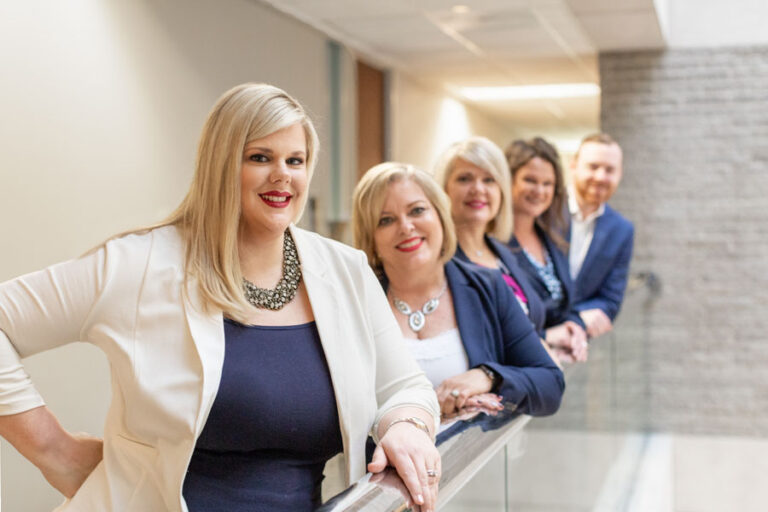
We sat down with League City’s Roberts Wealth Management CEO, Summer A. Roberts, and her dynamic team to help break down why considering an independent financial advisor can be important. We narrowed it down to what we feel are the top seven benefits:

1. Independent Advisors are Just That, Independent
These advisors are not bound to any one company, family of funds, investment products or services. According to Summer Roberts, “This allows us to keep many tools in our tool bag and pull out the ones that could be most beneficial and effective for each individual, unique client. If the goal is to change a light bulb, we don’t only have hammers to choose from. We look at all available options and choose the tools that are most appropriate and best suited for that particular family and their specific needs.” It is for this reason that independent advisors are able to help provide you with customized guidance based on your entire financial picture.

2. The Fiduciary Duty of Care
Investment Adviser Representatives are held to a fiduciary duty of care, which means they are legally required to put the best interest of their clients first when providing investment advice. When insurance recommendations are made, the regulatory standard that applies is the suitability standard which means that the recommendations meet your needs and objectives. Coby Culpepper, Associate Financial Advisor with Roberts Wealth Management states, “This means we are legally obligated to offer investment guidance that will best serve our clients’ interests. It gives me great pride to provide our clients with the highest level of knowledge, recommendations and analysis, because my loyalty is always to them first, our clients!”

3. Accountability
In order to offer advice that is objective and closely aligns with your retirement goals, an independent financial advisor must build a strong understanding of your current financial situation. As a result, they must focus on building a deep relationship with you – a relationship that is responsive, attentive and personal. In addition, since independent financial advisors are also typically successful entrepreneurs, they hold themselves personally accountable to you directly.

4. Variety
Independent financial professionals, like Roberts and her team, are not limited, meaning they are able to work with many financial institutions providing the freedom to choose from a wide range of investment and insurance options in order to tailor their advice based on what is best for you. This increases the likelihood of being able to provide the best options for their client’s needs. In contrast, a captive advisor works with one company or financial institution, thus is only able to offer their proprietary products.

5. Client Experience
As small-business owners, independent financial advisors are likely to have fewer clients than larger companies. If a quality, high-touch client experience is important to you, then you may have better luck finding it with an independent advisor. “At Roberts Wealth Management, you have access to the entire RWM Team in which each member plays a vital role in providing you with a quality client experience. We have worked diligently to put together a detailed process to deliver high-quality and high-value services to our clients,” expresses Colleen Duncan, VP of Client Relations at Roberts Wealth Management. “Most importantly, we don’t believe in treating our clients like numbers – they become part of our family.”

6. Transparency
Typically, independent financial professionals are fee-based advisors. This fee-based compensation model allows for transparency in the guidance that is given to clients with no hidden advisory fees and no bias due to conflicts of interest to sell a certain product line or company offering. This method encourages growing the clients’ securities assets – when the client makes money, so does the advisory firm. Paul Roberts, Founder of Roberts Wealth Management, said it best; “Being a fee-based firm puts us on the same team as our clients. When the client wins, we win and when they lose, we lose.”

7. Planning, Not Selling Products
Because of benefits 1-6 listed above, independent financial advisors are able to offer detailed financial goal planning and tracking. When it comes to your financial future, it’s not only about investing. Independent advisors are better able to focus on a comprehensive approach to financial planning, which could include investment management, risk management, institutional allocation, diversification, income planning, estate and legacy planning as well as advanced tax efficient planning and optimization.
Planning for retirement today can be challenging. For this reason, you may want to consider securing objective financial advice from an independent, family-owned & operated comprehensive wealth management firm like Roberts Wealth Management to help guide you on the path toward your retirement success.

Investment advisory services offered only by duly registered individuals through AE Wealth Management, LLC (AEWM). AEWM and Roberts Wealth Management are not affiliated companies. Investing involves risk, including the potential loss of principal. Insurance products are sold based on the suitability standard at both the state and insurance carrier level; this means that product recommendations must meet the stated financial needs and objectives of the client. Investment advisory services are required to be provided in accordance with a fiduciary standard- this means that the advice must be in the best interest of the client with any conflicts of interest fully disclosed to the client. Neither the firm nor its agents or representatives may give tax or legal advice. Individuals should consult with a qualified professional for guidance before making any purchasing decisions. 00426033

Schedule your visit today and enjoy our New Year’s Gift to you!

• Your personalized Social Security maximization report
• Income analysis report
• Risk and fee analysis report

Give us a call at 281-549-6515 to see if you qualify

Investment advisory services offered only by duly registered individuals through AE Wealth Management, LLC (AEWM). AEWM and Roberts Wealth Management are not affiliated companies. Investing involves risk, including the potential loss of principal. Neither the firm, nor its agents or representatives may give tax or legal advice. Individuals should consult with a qualified professional for guidance before making any purchasing decisions. The firm is not affiliated with the US government or any governmental agency. 00396709

Bay Area Houston Magazine