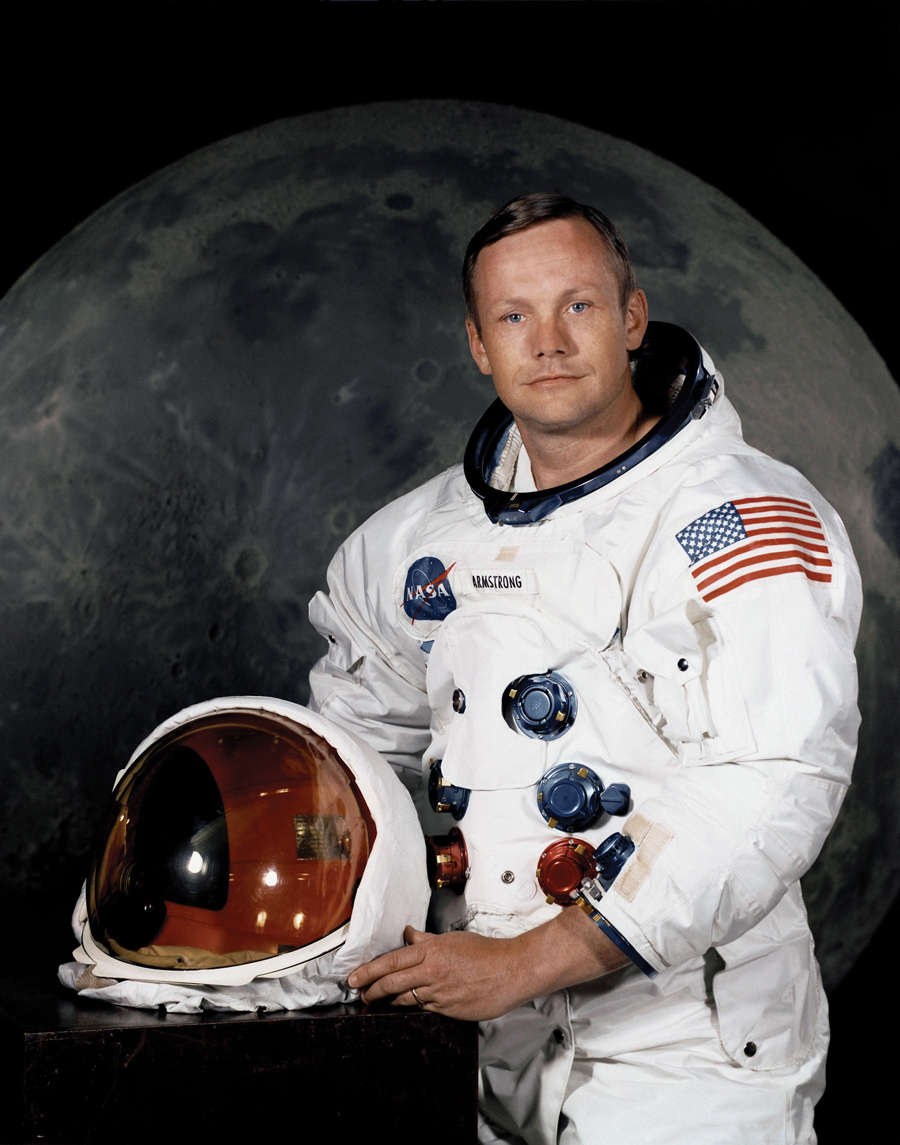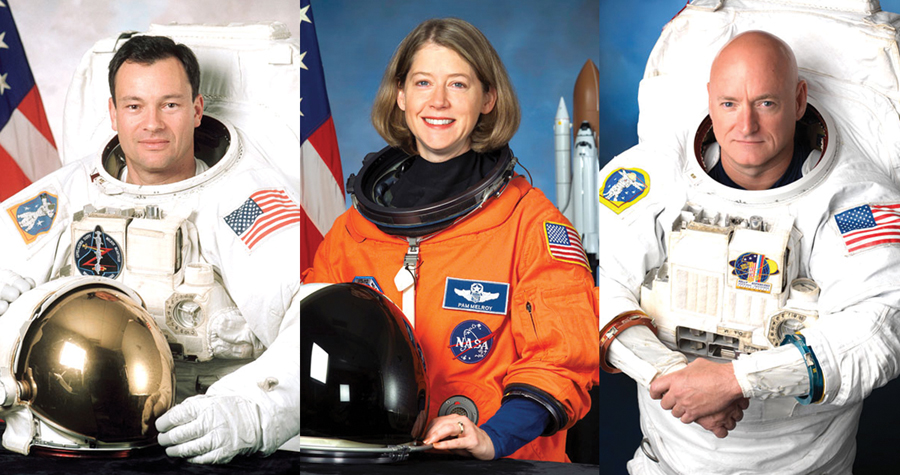
Three history-making space fliers to enter Astronaut Hall of Fame in May

February 27th, 2020

Photos: NASA

By Robert Z. Pearlman

A record-setting spacewalker, one of only two women who commanded the space shuttle and the American who logged the longest U.S. spaceflight to date will be inducted into the Astronaut Hall of Fame this spring.

Michael Lopez-Alegria, Pamela Melroy and Scott Kelly, who between them flew on 10 missions to the Hubble Space Telescope and International Space Station, will be honored for their careers as veteran NASA astronauts. Their enshrinement, at a public ceremony to be held at Kennedy Space Center Visitor Complex in Florida on May 16, will raise the Astronaut Hall of Fame’s ranks to 102 members out of the almost 350 men and women who have been part of NASA’s corps since 1959.

“As we enter the year 2020, we are particularly excited to welcome these accomplished astronauts into the United States Astronaut Hall of Fame,” Curt Brown, a 2013 inductee and the board chairman of the Astronaut Scholarship Foundation, which oversees the selection process, said in a statement. “They exemplify bravery, dedication and passion and their hard work has paved the way for what promises to be an unprecedented new decade of space exploration and interplanetary travel.”

Reacting to their selection, Lopez-Alegria, Melroy and Kelly each said they were honored in interviews conducted individually with collectSPACE.com. “I really had no idea what the odds were, but I am very, very proud of having been picked,” said Lopez-Alegria. “I am humbled that my peers and the distinguished people who made this decision were even considering me,” Melroy said. “I am also very excited, it is going to be a wonderful thing.” “It is an honor,” said Kelly. “It is a career that I put 20 years of my life into, so it is great to be recognized and appreciated.”

Chosen to be astronauts as members of consecutive NASA classes in 1992, 1994 and 1996 respectively, Lopez-Alegria, Melroy and Kelly had overlapping careers.

Michael Lopez-Alegria
Michael Lopez-Alegria flew four times to space, logging more than 257 days off the planet. A retired U.S. Navy captain, naval aviator and one-time aquanaut as a member of a NASA NEEMO mission aboard the Aquarius undersea laboratory in 2001, Lopez-Alegria helped to assemble the International Space Station on shuttle missions STS-73 in 1995, STS-92 in 2000 and STS-113 in 2002.

Lopez-Alegria then commanded Expedition 14, the space station’s 14th resident crew, from September 2006 through April 2007, during which he set records while working outside the orbiting laboratory. He retains the title as the American with the most cumulative time on spacewalks at 67 hours and 40 minutes, and is tied with former NASA astronaut Peggy Whitson for the most extravehicular activities (EVAs) by an American at ten.

Beyond his spacewalking feats, Lopez-Alegria said his personal history also sets his astronaut experience apart from many others.
“If you look at my 23andMe [DNA profile], I am not American in any way, shape or form,” he said with a laugh, referring to his being born in Spain. “That might be an inspiration for kids in a similar situation.”

“It doesn’t necessarily have to do with the human factors of space, but it is spaceflight done by someone who doesn’t look or feel like everyone else,” he said.

Since leaving NASA in 2012, Lopez-Alegria has served as the president of the Commercial Spaceflight Federation and as a consultant to traditional and commercial space companies. He also is the past president of the Association of Space Explorers, an international professional and educational organization of current and former astronauts, including Melroy and Kelly.

Pamela Melroy
Pamela Melroy flew the first of her three space shuttle missions with Lopez-Alegria as a crewmate.

“She was the only rookie on the crew and she was drinking from a fire hose the whole time but never spilled a drop,” said Lopez-Alegria of his fellow inductee. “It was so amazing to watch her transform from ‘the rookie’ throughout training and even on launch day to the time we were ready to deorbit to the seasoned veteran.”

“Her metamorphosis was brilliant to watch,” he said.

“Mike has always been a fantastic friend,” Melroy told collectSPACE. “And to carry on that relationship from flying together as crewmates to now being colleagues in a different place in our careers, as well as friends, is terrific.”

A retired U.S. Air Force pilot with over 5,000 hours of flight time in over 50 different aircraft, Melroy was only the second U.S. woman to pilot and then command a space mission. (The first, Eileen Collins, was inducted into the U.S. Astronaut Hall of Fame in 2013.) Melroy was pilot on STS-92 and STS-112 in 2002, before she led the STS-120 crew in 2007. All three of her flights contributed to the assembly of the International Space Station.

“When I talk about my career as an astronaut, you have to talk about building the station. For my generation of astronauts, that was our contribution,” Melroy said.

After retiring from the astronaut office in 2009, Melroy became the acting deputy associate administrator for commercial space transportation at the Federal Aviation Administration and held positions with the Defense Advanced Research Projects Agency. She is now CEO of Melroy & Hollett Technology Partners and the director of space technology and policy at Nova Systems in Australia, as well as serves on the User Advisory Group for the National Space Council and advisory group to the Australian Space Agency.

SCOTT KELLY
Scott Kelly holds the title for the longest single space mission by a U.S. astronaut, a record that was once held by Lopez-Alegria.

“The record represents a lot of hard work by a lot of people, not just me, but also my colleagues who have spent progressively, increasingly longer lengths of time in space,” said Kelly. “I look at it as a continuation of our spaceflight experience. I expect that within the next few years, an American will have stayed in space longer than I,” he said.

A retired U.S. Navy captain, test pilot and also a NEEMO aquanaut, Kelly shares the distinction with his brother, Mark, of being the first identical twins to both become astronauts. Kelly flew four times to space, including serving as pilot on the third mission to service the Hubble Space Telescope, STS-103 in 1999. His next flights were to the International Space Station, including a 12-day shuttle mission, STS-118 in 2007, and five-month stay, Expedition 25/26, in 2011.

Kelly’s fourth flight marked the first “one-year” mission on board the International Space Station, 340 days long, bringing his total time in space to over 520 days.

“I got to do some incredible things and I feel like I’ve been very privileged with the opportunities I had at NASA,” he said.

Since leaving the U.S. space agency in 2016, Kelly was appointed United Nations Champion for Space and has become a best-selling author.

Following their induction ceremony, which will take place under the display of the retired space shuttle Atlantis at the Kennedy Space Center Visitor Complex, Lopez-Alegria, Melroy and Kelly will be celebrated at a black-tie gala hosted by the Astronaut Scholarship Foundation.

Lopez-Alegria, Melroy and Kelly were selected for enshrinement by a panel of Astronaut Hall of Fame members, flight controllers, historians and journalists. To be eligible, astronauts need to be U.S. citizens trained by NASA who first orbited Earth at least 17 years prior to their induction.

Founded in 1990 on the suggestion of the then-surviving Mercury astronauts, the U.S. Astronaut Hall of Fame is a featured part of Heroes & Legends, an attraction at the Kennedy Space Center Visitor Complex.
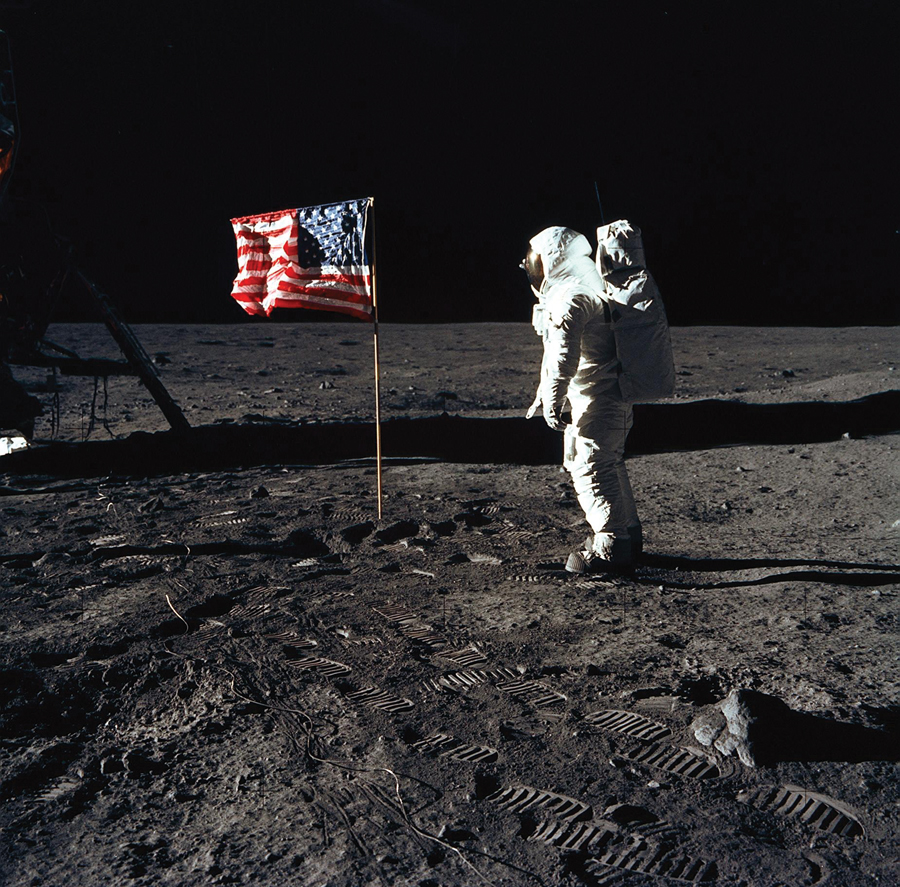
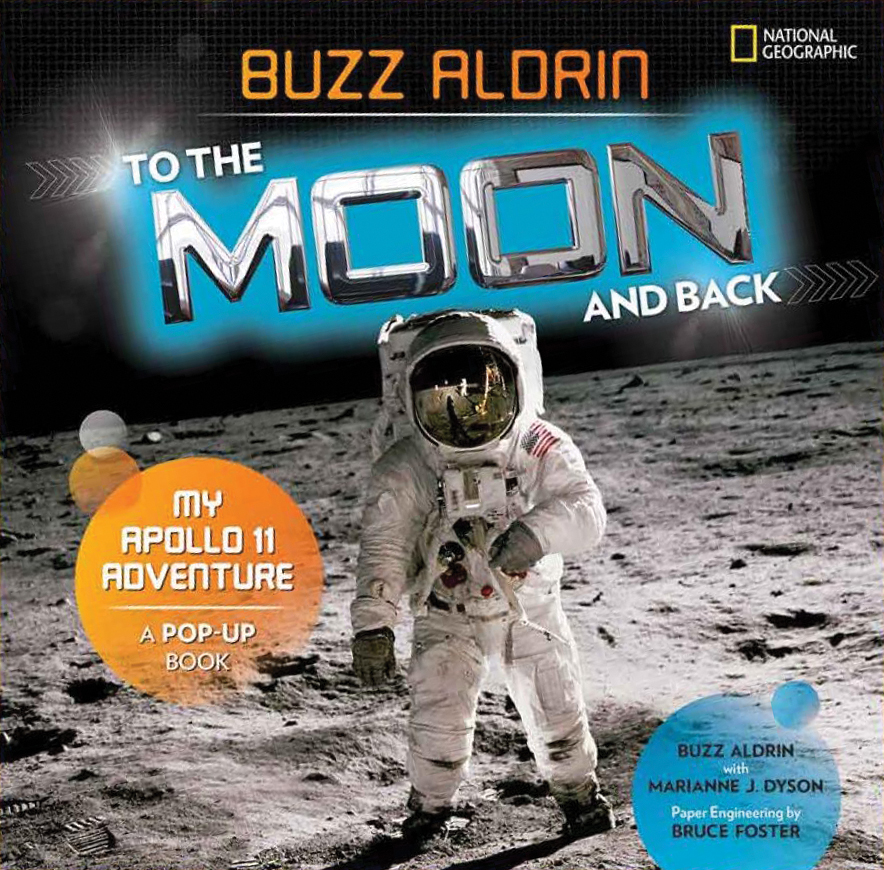
Buzz began turning out books after return from Moon surface

July 2nd, 2019

Lunar Module pilot Buzz Aldrin on the surface of the moon.

By Mary Alys Cherry

Buzz Aldrin was one of the first two men to step on the eerie surface of the Moon and probably the most brilliant. Yet, for a number of years he felt short changed because he wasn’t No. 1. He just didn’t like being No. 2 at anything. And besides, his mother’s name was Marion Moon.

He almost had the No. 1 slot until a higherup at Johnson Space Center reportedly decided Neil Armstrong would be the better choice for the role of commander, whose job was to safely land the lunar module between the many boulders on the surface of the moon. And, some years later, Buzz let it go and became content with his role.

Edwin Eugene Aldrin Jr., now 89, was born on Jan. 20, 1930, at Mountainside Hospital in Glen Ridge, N.Y. His parents lived in neighboring  Montclair, N.J.

His father served as an Army aviator during World War I and the assistant commandant of the Army’s test pilot school at McCook Field, Ohio, before becoming an executive at Standard Oil.[3]  His nickname, which became his legal first name in 1988, came about as a result of one of his two sisters mispronouncing “brother” as “buzzer,” which the family shortened to “Buzz.”

His sense of competitiveness started when he was a child. He did well in school, maintaining an A average.[9] He played football and was the starting center for Montclair High School’s undefeated 1946 state champion team before attending the U.S. Military Academy at West Point.

Aldrin entered West Point in 1947, finishing first in his plebe class. On June 5, 1951, he graduated third in the class of 1951 with a B.S.in Mechanical Engineering, after which he served in the Air Force, shooting down two MIG-15s while flying 66 combat missions during the Korean War and earning the Distinguished Flying Cross,

Soon afterwards he enrolled in Massachusetts Institute of Technology and earned his Doctorate of Science in Astronautics, writing his thesis on Manned Orbital Rendezvous.
When he was selected by NASA in 1963 in the third group of astronauts, Aldrin was the first with a doctorate and became known as “Dr. Rendezvous.” The docking and rendezvous techniques he devised for spacecraft in Earth and lunar orbit became critical to the success of the Gemini and Apollo programs, and are still used today. He pioneered underwater training techniques to simulate spacewalking. In 1966 on the Gemini 12 orbital mission, he set a new EVA record of 5 1⁄2 hours.

An elder at Webster Presbyterian Church, Aldrin privately took communion there in the Sea of Tranquility, becoming the first person to hold a religious ceremony on the Moon.
Upon leaving NASA in 1971, he became commandant of the U.S. Air Force Test Pilot School but soon retired from the Air Force in 1972, after 21 years of service.

Over the years he has written a number of books. His autobiographies Return to Earth, (1973) and Magnificent Desolation (2009), recount his struggles with clinical depression and alcoholism in the years after leaving NASA. He continued to advocate for space exploration, particularly a human mission to Mars, and developed the Aldrin cycler, a special spacecraft trajectory that makes travel to Mars possible using less time and propellant.

In his book, Men From Earth, he not only gives a vivid account of the dramatic descent into the Moon’s Sea of Tranquility, down to the last four seconds, he uses recently declassified documents to show just how close the Soviets were to beating us to the lunar surface while taking readers step by step on the long, arduous journey to get to the moon.
He has been accorded numerous honors, including the Presidential Medal of Freedom in 1969, and is listed in several Halls of Fame.

In 2018 Aldrin was involved in a legal dispute with two of his children, Andrew and Janice, and former business manager Christina Korp over their claims that he was mentally impaired through dementia and Alzheimer’s disease. The situation ended when his children withdrew their petition and he dropped the lawsuit in March 2019, just before the 50th anniversary of the Apollo 11 mission.

Following the 2012 death of his Apollo 11 colleague, Neil Armstrong, Aldrin said that he was “deeply saddened by the passing…I know I am joined by many millions of others from around the world in mourning the passing of a true American hero and the best pilot I ever knew…I had truly hoped that on July 20, 2019, Neil, Mike and I would be standing together to commemorate the 50th anniversary of our moon landing.”

After living for a number of years in the Los Angeles area, he sold his condominium and at last report was living in Satellite Beach, Fla.

Global icon Neil Armstrong lived and died a humble man

July 2nd, 2019

A young Neil Armstrong is photographed in the cockpit of the Ames Belt X-14 aircraft at NASA’s Ames Research Center.

By Mary Alys Cherry

As the first man to walk on the Moon in July 1969, Neil Armstrong quickly became the most famous man in the universe, which, being the humble man he was, was not to his liking.
This was brought out at his funeral in August 2012. “You’ll never get a hero, in my view, like Neil Armstrong,” Apollo 8 astronaut Bill Anders said after the service, praising Armstrong for both his wisdom and humility in the way he handled becoming a global icon.

“America has truly lost a legend,” astronaut Eugene Cernan, the last man to walk on the moon, said.

“He was the embodiment of everything this nation is about,” then NASA Administrator and former astronaut Charles Bolden said about the famously shy, almost taciturn man, adding that Armstrong was a man with a courageous drive to explore, yet “incredibly humble.”

Neil Alden Armstrong was born Aug. 5, 1930 on his grandparents’ farm in Wapakoneta, Ohio and developed a love for flying early in life while becoming an Eagle Scout.

FLYING LESSONS
When he was just six, he made his first flight with his father, who worked for the state government, and formed a passion for flying that would last all his life. His hero was Charles Lindbergh. He took flying lessons and received his flying license on his 16th birthday — before he earned his driver’s license.

His education was interrupted when he was called to active duty in 1949 but continued after pilot training in Pensacola, Fla., and 78 combat missions over Korea, including one when his Navy fighter was severely damaged and he was forced to eject. However, he landed near a South Korean base and was safely rescued.

After completing his service, Armstrong earned a Bachelor’s degree in Aeronautical Engineering at Purdue University in 1955. He would later add to his education with a Master’s degree in Aerospace Engineering at the University of Southern California in 1970.

TEST PILOT
After graduating from Purdue, he became a test pilot for NASA’s forerunner, the National Advisory Committee on Aeronautics, serving as one of an elite group selected to pit technology against nature’s limitations.

In 1962, he became an astronaut, and after serving as a backup for Gemini 5, he was chosen to command Gemini 8. But shortly after he and David Scott conducted the first successful docking in space, the joined spacecraft began spinning out of control when a thruster failed. Armstrong finally regained control by using thrusters intended for reentry, saving their lives.

Armstrong’s successful action, averting disaster on Gemini 8, and his flying skills led to his selection as commander of Apollo 11.

OFF TO THE MOON
By 1969, the team was ready to fulfill President Kennedy’s promise to put a man on the moon in that decade. In a spacecraft reported to have had control systems with less than a thousandth of the computing power of a modern laptop, Armstrong and his colleagues Buzz Aldrin and Michael Collins made for the Moon.

People across the world bought television sets for the first time to witness their endeavor, and more than 500 million watched every moment of Apollo 11’s arrival on the lunar surface on July 20.

After steering to avoid large rocks, Armstrong had only 20 seconds of fuel left when he finally landed the module safely between boulders. From inside the capsule, he reported back to an emotional Mission Control in Houston that “the Eagle has landed.”

ONE SMALL STEP
And as he disembarked, he uttered his carefully prepared phrase, that what he was making was “one small step for man, one giant leap for mankind.” Then, as an awe-struck world watched, the humble man from Ohio, with Aldrin by his side, planted an American flag on the Sea of Tranquility. A little later, he talked by phone and received congratulations from President Nixon.

Back on Earth, the crew received global adulation, and were treated like movie stars wherever they went. But, after the initial celebrations, Armstrong refused to cash in on his celebrity.

The man who was revered as a hero by the American public and awarded the Presidential Medal of Freedom by President Richard Nixon for his work, shunned the limelight and the prospective fortune that came with it.

Instead, he lived in the seclusion of his Ohio farmhouse, taught engineering at the University of Cincinnati and later went into business. He refused to give interviews or sign autographs and disappointed many fans with his requests for privacy and gave only occasional speeches. He reportedly once said, “I don’t want to be a living memorial,” and remained happy to “bask in obscurity.”

HERE FOR 20TH
Only reluctantly did he join his fellow astronauts for anniversary celebrations of the Moon landing. In 1989, he came back Clear Lake for the 20th anniversary of the lunar landing, joining some 10,000 Johnson Space center employees for a picnic at JSC. Then, that evening he and Collins and Aldrin and their wives were honored at a big party at the Hilton Hotel in Nassau Bay, across the street from the space center.

All three astronauts mingled with the crowd and smiled for pictures.

In 1999, 30 years after the moon landing, he stood with Aldrin and Collins to receive the Langley medal for aviation from then Vice President Al Gore before returning to his quiet life, hoping to be forgotten.

Then in April 2004, Armstrong returned to the Bay Area when the Rotary National Award for Space Achievement Foundation honored him with the National Space Trophy at the annual Space Gala – believed to be the last large function he attended.

But, the millions around the world who sat glued to their television sets in July 1969 saw their most fantastic dreams made real. For them, the shy man from Ohio opened a fresh frontier and there will be no forgetting Neil Armstrong and his awe-inspiring achievement.

NASA ready to accelerate man’s return to lunar surface

May 2nd, 2019

NASA Administrator Jim Bridenstine is ready to send astronauts back to the moon – and soon. Here’s what he said after the March 26 announcement by Vice President Mike Pence, at the fifth meeting of the National Space Council, about putting American astronauts back on the Moon in the next five years:

“Today, I joined leaders from across the country as Vice President Mike Pence chaired the fifth meeting of the National Space Council. Vice President Pence lauded President Donald J. Trump’s bold vision for space exploration and spoke to NASA’s progress on key elements to accomplish the President’s Space Policy Directives.

“Among the many topics discussed during our meeting at the U.S. Space and Rocket Center in Huntsville, Alabama, was to accelerate our return to the Moon:

NASA is charged to get American astronauts to the Moon in the next five years.

We are tasked with landing on the Moon’s South Pole by 2024.

Stay on schedule for flying Exploration Mission-1 with Orion on the Space Launch System (SLS) rocket next year, and for sending the first crewed mission to the lunar vicinity by 2022.

NASA will continue to ‘use all means necessary’ to ensure mission success in moving us forward to the Moon.

“It is the right time for this challenge, and I assured the vice president that we, the people of NASA, are up to the challenge.

“We will take action in the days and weeks ahead to accomplish these goals. We have laid out a clear plan for NASA’s exploration campaign that cuts across three strategic areas: low-Earth orbit, the Moon, and Mars and deeper into space.

“I have already directed a new alignment within NASA to ensure we effectively support this effort, which includes establishing a new mission directorate to focus on the formulation and execution of exploration development activities. We are calling it the Moon to Mars Mission Directorate.

“Earlier today I was also at Marshall Space Flight Center for an all-hands to reinforce our commitment to SLS with the workforce. We discussed my recent announcement that NASA would consider all options to fly Orion around the Moon on schedule. I shared the analysis we conducted to assess flying the Orion on different commercial options. While some of these alternative vehicles could work, none was capable of achieving our goals to orbit around the Moon for Exploration Mission-1 within our timeline and on budget. The results of this two-week study reaffirmed our commitment to the SLS. More details will be released in the future.

“There’s a lot of excitement about our plans and also a lot of hard work and challenges ahead, but I know the NASA workforce and our partners are up to it. We are now looking at creative approaches to advance SLS manufacturing and testing to ensure Exploration Mission-1 launches in 2020. We will work to ensure we have a safe and reliable launch system that keeps its promise to the American people.

“I know NASA is ready for the challenge of moving forward to the Moon, this time to stay.”

To learn more about NASA’s Moon to Mars plans, visit: www.nasa.gov/moon2mars

One Giant Leap For Mankind

November 1st, 2018

Apollo 11 Commander Neil Armstrong working at an equipment storage area on the lunar module.

Official crew photo of the Apollo 11 Prime Crew

July, 1969.

It’s a little over eight years since the flights of Yuri Gagarin and Alan Shepard, followed quickly by President Kennedy’s challenge to put a man on the moon before the decade is out.

It is only seven months since NASA’s made a bold decision to send Apollo 8 all the way to the moon on the first manned flight of the massive Saturn V rocket.

Now, on the morning of July 16, Apollo 11 astronauts Neil Armstrong, Buzz Aldrin and Michael Collins sit atop another Saturn V at Launch Complex 39A at the Kennedy Space Center. The three-stage 363-foot rocket will use its 7.5 million pounds of thrust to propel them into space and into history.

OFF TO THE MOON
At 9:32 a.m. EDT, the engines fire and Apollo 11 clears the tower. About 12 minutes later, the crew is in Earth orbit. After one and a half orbits, Apollo 11 gets a “go” for what mission controllers call “Translunar Injection” — in other words, it’s time to head for the moon. Three days later the crew is in lunar orbit. A day after that, Armstrong and Aldrin climb into the lunar module Eagle and begin the descent, while Collins orbits in the command module Columbia. Collins later writes that Eagle is “the weirdest looking contraption I have ever seen in the sky,” but it will prove its worth.

ALARMS SOUND
When it comes time to set Eagle down in the Sea of Tranquility, Armstrong improvises, manually piloting the ship past an area littered with boulders. During the final seconds of descent, Eagle’s computer is sounding alarms.

It turns out to be a simple case of the computer trying to do too many things at once, but as Aldrin will later point out, “unfortunately it came up when we did not want to be trying to solve these particular problems.”

When the lunar module lands at 4:18 p.m EDT, only 30 seconds of fuel remain. Armstrong radios “Houston, Tranquility Base here. The Eagle has landed.” Mission control erupts in celebration as the tension breaks, and a controller tells the crew “You got a bunch of guys about to turn blue, we’re breathing again.” Armstrong will later confirm that landing was his biggest concern, saying “the unknowns were rampant,” and “there were just a thousand things to worry about.”

FIRST STEP
At 10:56 p.m. EDT Armstrong is ready to plant the first human foot on another world. With more than half a billion people watching on television, he climbs down the ladder and proclaims: “That’s one small step for a man, one giant leap for mankind.” Aldrin joins him shortly, and offers a simple but powerful description of the lunar surface: “magnificent desolation.” They explore the surface for two and a half hours, collecting samples and taking photographs.

They leave behind an American flag, a patch honoring the fallen Apollo 1 crew, and a plaque on one of Eagle’s legs. It reads, “Here men from the planet Earth first set foot upon the moon. July 1969 A.D. We came in peace for all mankind.”

HEADING HOME
Armstrong and Aldrin blast off and dock with Collins in Columbia. Collins later says that “for the first time,” he “really felt that we were going to carry this thing off.”

The crew splashes down off Hawaii on July 24. Kennedy’s challenge has been met. Men from Earth have walked on the moon and returned safely home.

In an interview years later, Armstrong praises the “hundreds of thousands” of people behind the project. “Every guy that’s setting up the tests, cranking the torque wrench, and so on, is saying, man or woman, ‘If anything goes wrong here, it’s not going to be my fault.’”

In a post-flight press conference, Armstrong calls the flight “a beginning of a new age,” while Collins talks about future journeys to Mars.

Over the next three and a half years, 10 astronauts will follow in their footsteps. Gene Cernan, commander of the last Apollo mission leaves the lunar surface with these words: “We leave as we came and, God willing, as we shall return, with peace, and hope for all mankind.”

U.S. Astronaut Hall of Fame

November 1st, 2018

A statue of Alan Shepard, the first American in space, at the U.S. Astronaut Hall of Fame at the Kennedy Space Center Visitor Complex in Florida. Photo: NASA

As its inaugural class in 1990, the Hall of Fame, located at Kennedy Space Center, inducted the United States’ original group of astronauts: the Mercury Seven. In addition to being the first American astronauts, they set several firsts in American spaceflight, both auspicious and tragic.

Alan Shepard was the first American in space and later became one of the 12 people to walk on the Moon. John Glenn was the first American to orbit the Earth, and after his induction went on, in 1998, to become the oldest man to fly in space, aged 77. Gus Grissom was the first American to fly in space twice and was the commander of the ill-fated Apollo 1, which resulted in the first astronaut deaths directly related to spaceflight preparation.

Thirteen astronauts from the Gemini and Apollo programs were inducted in 1993. This class included the first and last humans to walk on the Moon – Neil Armstrong and Eugene Cernan; Ed White, the first American to walk in space (also killed in the Apollo 1 accident); Jim Lovell, commander of the famously near-tragic Apollo 13; and John Young, whose six flights included a moon walk and command of the first Space Shuttle mission.

More were to take their place in the Hall of Fame through the years with recently retired astronaut and former Johnson Space Center Director Dr. Ellen Ochoa joining Michael Foale in the Class of 2017.

May 11, 1990
Malcom Scott Carpenter
Leroy Gordon “Gordo” Cooper Jr.
John Herschel Glenn Jr.
Virgil Ivan “Gus” Grissom
Walter Marty “Wally” Schirra Jr.
Alan Bartlett “Al” Shepard Jr.
Donald Keat “Deke” Slayton

March 19, 1993
Edwin Eugene “Buzz” Aldrin Jr.
Neil Alden “Buzz” Armstrong
Frank Frederick Borman II
Eugene Andrew “Gene” Cernan
Michael “Mike” Collins
Charles Peter “Pete” Conrad Jr.
Henry Charles Gordon
James Arthur “Jim “ Lovell Jr.
James Alton “Jim” McDivitt
David Randolph “Dave” Scott
Thomas Patten “Tom” Stafford
Edward Higgins “Ed” White II
John Watts Young

October 4, 1997
William Alison “ Bill” Anders
Alan LaVerne “Al” Bean
Vance DeVoe Brand
Gerald Paul “Gerry” Carr
Roger Bruce Chaffee
Ronnie Walter “Walt” Cunningham
Charles Moss “Charlie” Duke Jr.
Donn Fulton Eisele
Ronald Ellwin “Ron” Evans
Owen Kay Garriott
Edward George Gibson
Fred Wallace Haise Jr.
James Benson Irwin
Joseph Peter Kerwin
Jack Robert Lousma
Thomas Kenneth “Ken” Mattingly II
Edgar Dean Mitchell
William Reid “Bill” Pogue
Stuart Allen “Stu” Roosa
Harrison Hagan “Jack” Schmitt
Russell Luis “Rusty” Schweickart
John Leonard “Jack” Swigert Jr.
Paul Joseph Weitz
Alfred Merrill Worden

November 10, 2001
Robert Laurel “Bob” Crippen
Joseph Henry “Joe” Engle
Frederick Hamilton “Rich” Hauck
Richard Harrison “Dick” Truly

June 21, 2003
Daniel Charles “Dan” Brandenstein
Robert Lee “Hoot” Gibson
Franklin Story Musgrave
Sally Kristen Ride

April 30, 2004
Richard Oswalt “Dick” Covey
Frederick Drew “Fred” Gregory
Francis Richard Scobee
Kathryn Dwyer “Kathy” Sullivan
Norman Earl “Norm” Thagard

April 26, 2005
Joseph Percival Allen
Charles Gordon Fullerton
Bruce McCandless II

May 6, 2006
Charles Frank “Charlie” Bolden Jr.
Henry Warren “Hank” Hartsfield Jr.
Brewster Hopkinson Shaw Jr.

May 5, 2007
Michael Lloyd “Mike” Coats
Steven Alan Hawley
Jeffrey Alan “Jeff” Hoffman

May 2-3, 2008
John Elmer Blaha
Robert Donald “Bob” Cabana
Bryan Daniel O’Connor
Loren James Shriver

May 1, 2009
George Driver “Pinky” Nelson
William McMichael “Bill” Shepherd
James Donald “Jim” Wetherbee

June 4-5, 2010
Guion Steward “Guy” Bluford Jr.
Kenneth Duane “Ken” Bowersox
Frank Lee Culbertson Jr.
Kathryn Ryan “Kathy” Thornton

May 7, 2011
Karol Joseph “Bo” Bobko
Susan Jane Helms

May 5, 2012
Franklin Ramon Chang-Diaz
Kevin Patrick “Chili” Chilton
Charles Joseph Precourt

April 20, 2013
Curtis Lee “Curt” Brown Jr.
Eileen Marie Collins
Bonnie Jeanne Dunbar

May 3, 2014
Shannon Matilda Lucid
Jerry Lynn Ross

May 30, 2015
John Mace Grunsfeld
Steven Wayne Lindsey
Kent Vernon Rominger
Margaret Rhea Seddon

May 13-14, 2016
Brian J. Duffy
Scott Edward Parazynski

May 19-20, 2017
Colin Michael “Mike” Foale
Ellen Lauri Ochoa

APRIL 21, 2018
Scott D. Altman
Thomas D. Jones

NASA assigns first crews to fly commercial spacecraft

September 1st, 2018

Kennedy Space Center Director Robert Cabana addresses the standing room only crowd at JSC’s Teague Auditorium as NASA Administrator Jim Bridenstine and Johnson Space Center Director Mark Geyer look on.

By Mary Alys Cherry

“We’re back,” NASA Administrator Jim Bridenstine told a rousing audience in the Johnson Space Center’s Teague Auditorium.

“This is a big deal for our country, and we want America to know that we’re back – that we’re flying American astronauts on American rockets from American soil,” he said as the crowd’s roar reached heights probably not heard around JSC in years.

Sweet words to everyone’s ears, especially the nine astronauts who were introduced as America’s first commercial crew astronauts – those who will help increase commercial companies’ involvement in low Earth orbit and possibly take over operation of the space station some day in the future and allow NASA to focus on deep space exploration.

A NEW ERA
“Today,” Bridenstine continued, “our country’s dreams of greater achievements in space are within our grasp. This accomplished group of American astronauts, flying on new spacecraft developed by our commercial partners, Boeing and SpaceX, will launch a new era of human spaceflight. Today’s announcement advances our great American vision and strengthens the nation’s leadership in space.”

Joining him on stage for the presentation were Johnson Space Center Director Mark Geyer, Kennedy Space Center Director Bob Cabana, Boeing Defense, Space and Security CEO Leanne Caret and SpaceX CEO Gwynne Shotwell, who each spoke briefly of their hopes for the future before the new NASA chief introduced the astronauts – five who will fly on Boeing’s Starliner and four who will man SpaceX’s Dragon.

NASA introduced the first U.S. astronauts who will fly on American-made, commercial spacecraft to and from the International Space Station – an endeavor that will return astronaut launches to U.S. soil for the first time since the space shuttle’s retirement in 2011. The nine astronauts introduced to crew Boeing’s CST-100 Starliner and SpaceX’s Crew Dragon are, from left, Sunita Williams, Josh Cassada, Eric Boe, Nicole Mann, Christopher Ferguson, Douglas Hurley, Robert Behnken, Michael Hopkins and Victor Glover.

NASA intern and University of Texas student Stephanie Zeller shares a light moment with Sen.Ted Cruz, one of a number of elected officials at the ceremony at JSC’s Teague Auditorium.

“All of us are here today because we stand for something new and profound, built upon an amazing legacy, and it is personal for all of us,” Boeing executive Leanne Caret said. “Today we start a new chapter, and we’re so thrilled to be on this journey.” Both companies bring unique approaches and ideas to the development and testing of their systems, which is why NASA selected both companies in September 2014.

“The 7,000 women and men of SpaceX understand what a sacred honor this was for us to be part of this program, and for us to fly [NASA astronauts],” said SpaceX executive Gwynne Shotwell. “So thank you very much, we take it seriously, we won’t let you down.”

SEVERAL APPEARANCES
The stage presentation was one of several appearances by Bridenstine during a three-day visit to JSC. On his first morning, the 43-year-old Michigan native got a up-close look at the Orion mockup that is being readied for its major safety test in April to verify that its launch abort system can steer the capsule and astronauts inside it to safety in the event of an issue with the Space Launch System rocket when the spacecraft is under the highest aerodynamic loads it will experience during ascent for deep-space missions.

Next, he met with a select group of local reporters, answering a variety of questions about the future of the space station, the Gateway moon orbiting project that involves returning to the moon and is seen as a stepping stone to Mars, and the delays on the James Webb Telescope.

“NASA is doing things it has not done before, using government resources never done before,” he told reporters in a sit-down roundtable session, “and we want to be sure we do not have another gap.”

NASA Administrator Jim Bridenstine, left, looks over the work being done in Building 9S at Johnson Space Center for the launch of the Orion mockup.

Bridenstine started his visit here at a reception at Space Center Houston where he addressed aerospace executives, local business people and elected officials, discussing a change in national space policy providing for an American-led integrated program with private sector partners for a return to the moon, followed by missions to Mars and beyond.

The new policy, he said, calls for the NASA administrator to “lead an innovative and sustainable program of exploration with commercial and international partners to enable human expansion across the solar system and to bring back to Earth new knowledge and opportunities.”

Bridenstine emphasized the importance of the word “sustainable” in the policy. He said, “When we talk about going to the moon, this time to stay, we want the entire architecture between Earth and the moon to be sustainable — in other words ‘reusable.’ We want tugs that are going back and forth from low Earth orbit to lunar orbit to be reusable. We want the lunar landers to be reusable so that they can go back to the surface of the moon over and over again.

“That entire architecture is going to be built on an American backbone. We will have critical infrastructure developed by NASA, by those in this room and at Johnson Space Center, that will give us a sustainable infrastructure on the moon… When we go to the moon this time, we’re going to stay.”

Pence has high praise for JSC

August 28th, 2018

“The Johnson Space Center is a national treasure, and all the men and women who work here are a national asset,” Vice President Mike Pence said as he addressed the standing room only crowd in JSC’s Teague Auditorium.

By Mary Alys Cherry

“America will lead mankind to the stars once again,” Vice President Mike Pence told a standing room only crowd in Johnson Space Center’s Teague Auditorium, “and,” he continued, “there are plans to send man back to the moon for the first time in nearly 50 years.

“We’re not content with leaving behind footprints or even to leave it all. This time has come, we believe, for the United States of America to take what we’ve learned over so many decades, put your ingenuity and creativity to work and establish a permanent presence around and on the moon.”

Welcome words for a group of hard-working engineers and space scientists, after a decade of nearly being ignored by government officials.

LAST STOP

“The vice president was at JSC after a stop in the hard-hit city of Rockport, where Hurricane Harvey made landfall Aug. 25, 2017 and where he and Gov. Greg Abbott made a helicopter tour to survey the recovery. Then it was on to Houston for several events before ending his Texas journey at the place he said “has been at the forefront of America’s journey to the stars,” bringing smiles to the faces of JSC Director Mark Geyer and Deputy Director Vanessa Wyche and the hundreds of other employees looking on.

It was his second visit to NASA’s lead space center. Earlier, he was here to introduce NASA’s newest astronauts. NASA Administrator Jim Bridenstine, who introduced Pence, also was back for his second visit in three weeks, much to the delight of the audience, most of whom couldn’t recall this much attention from Washington in years.

Pence, who serves as chairman of the National Space Council, admitted to being a space geek. In fact, he said he was like a kid in a candy store while touring JSC with Apollo 17 astronaut Jack Schmitt, one of the last two men to walk on the moon. Together, they visited NASA’s big swimming pool – also known as the Neutral Buoyancy Lab – and JSC’s eye-popping collection of moon rocks. Schmitt flew on the nation's last mission to the moon 46 years ago in 1972.

MANTLE OF GREATNESS

For more than 50 years, this storied center has been at the forefront of America's journey to the stars,” Pence continued. This is the ‘home of the Astronaut Corps.’ And, here, from the Mission Control Center, you have guided every American-crewed space expedition since 1965. The names and the voyages that you directed from this place adorn the mantle of American greatness. In Project Gemini, you steered some of our earliest astronauts high above what they called the “Blue Marble”, into low Earth orbit.

“In the Apollo Program, you navigated the first members of the human family to the moon and back.

“At this very hour, you walk with our astronauts through their duties as they walk 200 miles above us, orbiting the Earth every 90 minutes, on the International Space Station.

NATIONAL TREASURE

“The Johnson Space Center is a national treasure, and all the men and women who work here are a national asset,” he continued to great applause. “I have to tell you, I’m just speaking as a small-town guy from southern Indiana, but I know the American people admire — they admire the work done here — past, present — and they look for even greater things in the future here at Johnson Space Center. And let me to say to all of you, and all of those that might be looking on: The most important work and the best days for the Johnson Space Center are yet to come.  Count on it.”

He went on to talk about the work of the National Space Council and the proposed U.S Space Force and how it may be needed in the future, noting that “the need is real,” as the Pentagon has just released a report that China and Russia are weaponizing, “developing and testing new and dangerous weapons and technologies to counter America space capabilities.”

Then, looking to the future, he added, “Sadly, for more than seven years we’ve been forced to hitch a ride to space. Those days are over. Soon – and very soon – American astronauts will return to space on American rockets launched from American soil.”

NASA mourns the passing of astronaut John Young

January 9th, 2018

Legendary astronaut John Young, who walked on the lunar surface during one of two trips to the Moon and commanded the first space shuttle mission, died Friday, Jan. 5, 2018, at the age of 87 from complications of pneumonia. Young began his impressive career at NASA in 1962, when he was selected from among hundreds of young pilots to join NASA’s second astronaut class, known as the “New Nine.”

“Today, NASA and the world have lost a pioneer,” acting NASA Administrator Robert Lightfoot said in a statement. “Astronaut John Young’s storied career spanned three generations of spaceflight; we will stand on his shoulders as we look toward the next human frontier.

“John was one of that group of early space pioneers whose bravery and commitment sparked our nation’s first great achievements in space. But, not content with that, his hands-on contributions continued long after the last of his six spaceflights — a world record at the time of his retirement from the cockpit.”

“It would be hard to overstate the impact that John Young had on human space flight,” said Johnson Space Center Director Ellen Ochoa, a former astronaut herself. “Beyond his well-known and groundbreaking six missions through three programs, he worked tirelessly for decades to understand and mitigate the risks that NASA astronauts face. He had our backs.”

After hearing President Kennedy’s bold proposal in 1961 to land a man on the Moon and return him safely to Earth, Young said he knew what he had to do.

“I thought returning safely to Earth sounded like a good idea,” said Young, who stood on the Moon, drove 16 miles in a lunar rover and spent three nights on the lunar surface. He is the only person to go into space as part of the Gemini, Apollo and space shuttle programs and was the first to fly into space six times — or seven times, when counting his liftoff from the Moon during Apollo 16.

Young was born in San Francisco. His family moved to Georgia and then Florida, where he lived for most of his childhood, along with his younger brother.

As a boy, Young’s favorite pastimes were building model airplanes — the first hint of his passion for aeronautics — and reading.

“My grandpa taught me how to read,” said Young. “I read the encyclopedia when I was five.”

His father, a civil engineer, was Young’s role model. Young graduated from Orlando High School and then earned a degree in aeronautical engineering from Georgia Tech, where he graduated with highest honors in 1952.

Following graduation, he joined the Navy and, after a year’s service aboard a destroyer, was sent to flight training.

He flew fighter planes for four years, then completed test pilot training and served three years at the Navy’s Air Test Center, where he heeded the president’s call to go to the Moon.

In March 1965, Young made his first flight as an astronaut, joining Gus Grissom on Gemini 3, the first manned flight of that program. As Young prepared, a sense of obligation overruled excitement or any other emotion.

“We were just thinking about doing the job right,” Young said.

Young commanded the Gemini 10 mission in July 1966. He and pilot Mike Collins rendezvoused with two Agena target vehicles, and Collins did a spacewalk to retrieve a micrometeorite detector from one of them.


In May 1969, he served as command module pilot on Apollo 10 and flew all the way to the Moon with crewmates Tom Stafford and Gene Cernan. The crew scouted landing sites from lunar orbit and rendezvoused the lunar module and command module in a full dress rehearsal for the Apollo 11 landing two months later.

Young made a return trip to the Moon as commander of Apollo 16 in April 1972. With Ken Mattingly orbiting above in the command module, Young and lunar module pilot Charlie Duke landed in the Descartes highlands. “The moon is a very nice place,” Young said. “When we landed, we were 20 minutes behind. Because time on the Moon was so precious, what I remember most is trying to catch up.”

Young and Duke set up scientific equipment and explored lunar highlands in the rover. The mission returned more than 200 pounds of Moon rocks gathered from three geological outings.

Young’s career was full of firsts, none more notable than in April 1981, when he commanded Space Shuttle Columbia on its — and the Shuttle program’s — maiden flight, STS-1. It was the first time a piloted spacecraft was tested in space without previous unpiloted orbital flights. Young and pilot Robert Crippen accomplished more than 130 flight test objectives during their almost 55-hour mission.

In late 1983 Young commanded STS-9, the first Spacelab mission. During the 10-day flight, the six crewmembers worked around the clock in 12-hour shifts, involved in more than 70 experiments in a range of scientific disciplines. The mission returned more scientific and technical data than all the Apollo and Skylab missions combined.

In addition to his six spaceflights, Young was a member of five backup crews. He’s logged thousands of hours of training and flight time, including a total of 835 hours in space.

In early 1973, he became chief of the Space Shuttle Branch of the Astronaut Office at Johnson Space Center. The following year, Young, who retired from the Navy as a captain in 1976 after 25 years of military service, was named chief of the Astronaut Office, a post he held until May 1987.

Throughout this time, Young remained an active astronaut, eligible to command space shuttle missions.

Young’s numerous awards and special honors included the Congressional Space Medal of Honor, three NASA Distinguished Service Medals, the NASA Outstanding Leadership Medal, two Navy Distinguished Service Medals, three Navy Distinguished Flying Crosses, the Georgia Tech Distinguished Young Alumni Award, the Exceptional Engineering Achievement Award and the American Astronautical Society Space Flight Award.

Those are among more than 80 major honors and awards, including four honorary doctorate degrees, Young has received. He was inducted into the National Aviation Hall of Fame in 1988.

“I’ve been very lucky, I think,” Young said at his retirement from NASA in 2004. As to which moment was most memorable, he says simply, “I liked them all.”

New Space Policy Directive calls for return to the moon

December 12th, 2017

President Donald Trump signs the Presidential Space Directive – 1, directing NASA to return to the moon, alongside members of the Senate, Congress, NASA, and commercial space companies in the Roosevelt room of the White House in Washington, Monday, Dec. 11, 2017. Photo Credit: (NASA/Aubrey Gemignani)

President Donald Trump is sending astronauts back to the Moon.

The president Monday signed at the White House Space Policy Directive 1, a change in national space policy that provides for a U.S.-led, integrated program with private sector partners for a human return to the Moon, followed by missions to Mars and beyond.

The policy calls for the NASA administrator to “lead an innovative and sustainable program of exploration with commercial and international partners to enable human expansion across the solar system and to bring back to Earth new knowledge and opportunities.” The effort will more effectively organize government, private industry, and international efforts toward returning humans on the Moon, and will lay the foundation that will eventually enable human exploration of Mars.

“The directive I am signing today will refocus America’s space program on human exploration and discovery,” said President Trump. “It marks a first step in returning American astronauts to the Moon for the first time since 1972, for long-term exploration and use. This time, we will not only plant our flag and leave our footprints — we will establish a foundation for an eventual mission to Mars, and perhaps someday, to many worlds beyond.”

The policy grew from a unanimous recommendation by the new National Space Council, chaired by Vice President Mike Pence, after its first meeting Oct. 5. In addition to the direction to plan for human return to the Moon, the policy also ends NASA’s existing effort to send humans to an asteroid. The president revived the National Space Council in July to advise and help implement his space policy with exploration as a national priority.

“Under President Trump’s leadership, America will lead in space once again on all fronts,” said Vice President Pence. “As the President has said, space is the ‘next great American frontier’ – and it is our duty – and our destiny – to settle that frontier with American leadership, courage, and values. The signing of this new directive is yet another promise kept by President Trump.”

Lunar Sample 70215 was retrieved from the Moon’s surface and returned by NASA’s Apollo 17 crew. The sample is a basaltic lava rock similar to lava found in Hawaii. It crystallized 3.84 billion years ago when lava flowed from the Camelot Crater. Sliced off a parent rock that originally weighed 8,110 grams, the sample weighs 14 grams, and is very fine grained, dense and tough. Credits: NASA

Among other dignitaries on hand for the signing, were NASA astronauts Sen. Harrison “Jack” Schmitt, Buzz Aldrin, Peggy Whitson and Christina Koch. Schmitt landed on the moon 45 years to the minute that the policy directive was signed as part of NASA’s Apollo 17 mission, and is the most recent living person to have set foot on our lunar neighbor.

Aldrin was the second person to walk on the Moon during the Apollo 11 mission. Whitson spoke to the president from space in April aboard the International Space Station and while flying back home after breaking the record for most time in space by a U.S. astronaut in September. Koch is a member of NASA’s astronaut class of 2013.

Work toward the new directive will be reflected in NASA’s Fiscal Year 2019 budget request next year.

“NASA looks forward to supporting the president’s directive strategically aligning our work to return humans to the Moon, travel to Mars and opening the deeper solar system beyond,” said acting NASA Administrator Robert Lightfoot. “This work represents a national effort on many fronts, with America leading the way. We will engage the best and brightest across government and private industry and our partners across the world to reach new milestones in human achievement.

“Our workforce is committed to this effort, and even now we are developing a flexible deep space infrastructure to support a steady cadence of increasingly complex missions that strengthens American leadership in the boundless frontier of space. The next generation will dream even bigger and reach higher as we launch challenging new missions, and make new discoveries and technological breakthroughs on this dynamic path.”

A piece of Moon rock was brought to the White House as a reminder of the exploration history and American successes at the Moon on which the new policy will build. Lunar Sample 70215 was retrieved from the Moon’s surface and returned by Schmitt’s Apollo 17 crew. Apollo 17 was the last Apollo mission to land astronauts on the Moon and returned with the greatest amount of rock and soil samples for investigation.

The sample is a basaltic lava rock similar to lava found in Hawaii. It crystallized 3.84 billion years ago when lava flowed from the Camelot Crater. Sliced off a parent rock that originally weighed 8,110 grams, the sample weighs 14 grams, and is very fine grained, dense and tough.

During the six Apollo surface excursions from 1969 to 1972, astronauts collected 2,196 rock and soil samples weighting 842 pounds. Scientific studies help us learn about the geologic history of the Moon, as well as Earth. They help us understand the mineral and chemical resources available to support future lunar exploration.

For information about NASA’s missions, programs and activities, visit: https://www.nasa.gov

Bay Area Houston Magazine